Feeds:
Posts
Comments

Archive for the ‘Whimsical’ Category

Weed Semantics

“I grow some edible weeds,” I was told by my new friend, Diane.   I love the oxymoronic concept of cultivated weeds.  Weeds are, by definition, the enemies of cultivated plants.  They compete, strangle, are overly macho.

Or are they?  Some are delicious.  Toss them in a salad, or do a quick search in the blogosphere for wonderful ways to cook them.

Lamb’s quarters, chickweed, dandelion, lovage, sorrel, ramps, purslane, fiddlehead ferns,  nettles…

These weeds of New England speak to us in the Anglo-Saxon Latinate of foraging colonials with a fervor for naming New World and introducing Old World species.

Natural. Invasive. Cultivated. Edible. (Rediscovered.) Free. Gourmet. Weeds.

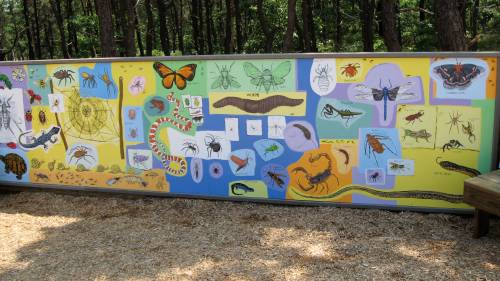
When you first meet someone, you only know three or so things about her, or him.  I like Diane because she plants edible weeds, because she looks natural in red lipstick at the beach, and because she is a painter.  Here is her bug mural, at the playground in Truro:

Diane's wall

Read Full Post »

short seasons

Strawberries and scapes, strawberries and scapes…

Fresh, abundant, ephemeral.  If we eat as much as we can every day, will the pleasure somehow last?

Read Full Post »

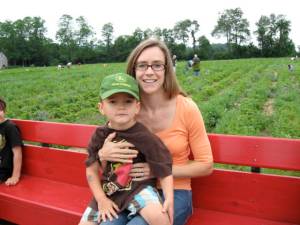
wagon

Strawberries were the totems of childhood today, at Cedar Circle Farm’s 7th annual strawberry festival.  Of the milling, stooping, picking, licking population, about two-thirds were fewer than four feet tall.  Many wore the totem on their shirts, hats, or cheeks. The folks at Cedar Circle make this day as much a celebration of childhood as of strawberries and local food in general.  There were three horse-drawn wagons, a mural-drawing section of the barn wall, a coloring station, face-painting teenage girls, a sandbox, strawberry smoothies and shortcake, coffee for the parents, puppetry, kite-making, tractors to sit on, and live music.  And, of course, picking.

tractors

wagon ride

We hit the face-painting table first; the boys both got trucks.

my son, the sceptic

my son, the sceptic

cheek truck

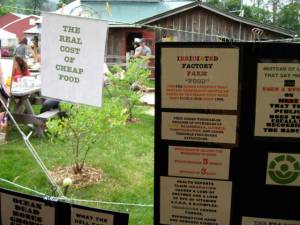
Then we walked around the food stations.  There were local sausages from Hogwash Farm on the grill, organic pizzas cooking in a wood-oven on wheels, and strawberry shortcake with whipped cream or vanilla ice cream from Strafford Organic Creamery.  In honor of this berry, which has been cultivated since medieval times, everything was very forward-looking.  The food was served on compostable dishes with compostable utensils; there was a complex trash station.  Near the coloring table there was a photo-and-text display (a low-tech, stop-time PowerPoint presentation hung with clothespins) about “The Real Costs of Cheap Food”, which included descriptions of chemicals that flow and leach from non-organic farms into ground water, lakes, and rivers, and a definition of food miles (how far a food travels from farm to table, with the fossil fuels required a big consideration), and some charming spelling errors.  There was also a photo-narrative of strawberry growing, from bed preparation during the winter to picking in June.  This display included lots of pictures with hay around the edges, in the middle, and present as a general tone (hay keeps down the weeds) as well as shots of very tan, lightly clad interns happily working the dirt.

real cost

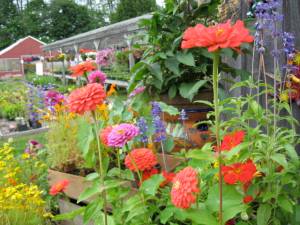
Cedar Circle grows eight varieties of strawberries, and an array of vegetables—all certified organic.

and flowers

and flowers

My mom and I, with the occasional help of Jack and his cousin Jeremiah who preferred sitting on tractors, and my sister, Bridget, who helped them up and down the tractor steps, picked four pounds of berries.  We chose two varieties: Wendy, known by its petite size and light sweetness, and Mesabi, which is bigger, and almost raspberry-like in flavor. The plants were so high that lifting the leaves to look for spots of red was like opening the curtains—in a doll’s house.  The pleasure of discovery became addictive.  It’s hard to stop, even when the basket’s full!

Strawberries fresh off the stem, warmed by the sun, melted into juice in an instant in our mouths.  There were many worshippers.

worshippers

Read Full Post »

Since this is a locavore blog, in some ways, I have to admit, I misrepresent myself.  For example: beer versus wine.  I’ve written more about beer, and expressed a lot of enthusiasm about local ales, but I’m really much more of a wine drinker.  Lately it’s been Spanish reds, and vinho verde.  I love the different tones of garnacha, and the refreshing effervescence of that Portuguese “green wine.”  I also love the whites of Alsace.  And the infinite varieties of rosé! From the elegant Tavel to the earthy South African pinotage rosé, I love them all.  If I still lived in Berkeley, there wouldn’t be the whiff of hypocrisy in calling myself a locavore eater and drinker, because I’d still be drinking those great Sonoma, Paso Robles, Santa Cruz, and Mendocino wines we could get in the grocery store.  I miss you, Bonny Doon.  Wish I could be there in the tasting room to try your new, more restrained bottlings, which I’ve now only read about, wistfully, in the New York Times. (Not to mention all the great things I could be eating: mission figs and meyer lemons from neglected trees on my block of Euclid Ave., for example….)

Enough gushing, now.  The reason I started writing this post has to do more with ale and my country-girl nostalgia.  In Burlington, at Greg and Patti’s, we started the evening with Otter Creek Copper Ale, which I love, and which brought back memories (not all pleasant) of my stint as an “environmental educator” at a school-trip camp near Middlebury, Vermont.  We slept in cabins so rustic, the frosty mid-March air gusted in the cracks between the aged two-by-fours during the night.  I slept in my -40 down “mummy” sleeping bag in long underwear, a sweater, and a wool cap.  The kids arrived on full school buses on Monday, we introduced them to things like recycling, organic carrots, and sphagnum moss, and they were gone by Friday.  And then, if it was sunny, we’d drag all of the Adirondack chairs out to the middle of the lawn at the camp’s center overlooking the lake, set a bunch of six-packs of all of the Otter Creek brews here and there, and sample them all afternoon.  Copper Ale, Pale Ale, Stovepipe Porter, Spring Ale, Mud Bock!  We were single, outdoorsy, and glad to be free.

Otter Creek Brewery is a family owned business in Middlebury, Vermont, which also makes certified organic beers under the Wolaver’s label.  They host a regular beer and cheese tasting, which at first glance smacks of wine-culture-imitation opportunism, but then I remember how good I think the sharp Vermont cheeses taste with beer.  Here’s how they advertise it:

Not only is Vermont home to 19 craft brewers (at last count), the most breweries per capita in the country, we also are lucky enough to have 35+ artisanal cheesemakers here, too!  This makes us arguably the best state for cheese and beer pairings in the country!

You know what else is good with beer?  Peanut butter.

Read Full Post »

honey

We drove up I89 yesterday to Vermont’s city, Burlington, to have dinner with Peter’s friend, the Irish poet, Greg Delanty, his wife Patti, and their son Dan (who gave Jack his outgrown tractor toys on indefinite loan).  It was rainbow weather.  The sky had been heavy and dark in Norwich—rain for days, all the Vermonters complaining about such an injustice, and on the solstice too!  But as we drove through the Green Mountains and into the Champlain Valley, the sky opened into a shifting patchwork of gray, white, and blue.  Some mountain tops were hidden in dark blurs, some were lit up bright green by shafts of sunlight. Some clouds were white wisps, some were poofy cumulous towers. We saw a rainstorm up ahead over the next valley, we were in it, and back in the hot sun again.

After this beautiful drive, we were welcomed onto a sunny deck by Patti, who is passionate about local food: there was late-afternoon local beer, and asparagus with dinner (to green up the Irish ham and potato plate).  This morning there were jumbo eggs from a nearby farm, toast from a nearby bread baker’s.

But the most delicious element of either meal was also the most local: Patti’s honey.  She keeps a hive in a wooden box in the side yard, the yellow walls of which match the yellow and purple trim on their old New England house, which stands at the corner of the lake-front street packed with other little old houses whose clapboards are whimsically painted other shades of purple, orange, or bright blue.  After breakfast, Jack and I went for a walk and stopped to sniff the roses, peonies, and lilies planted in abundant disorderly patches of overgrown grass in front of the porches along the way.  We saw bees dipping into these polleny perennials as well as into the flowering vines covering the fences and the little nosegays of wildflowers in cracks on the sidewalk and on the edges of driveways and yards.  Patti’s honey has all of the flavors and aromas of this big mixed bouquet.

Because of bees’ omnivorousness when it comes to nectar, and the portion of pollen that ends up in the honeycombs, eating local honey can help us ward off seasonal allergies, and is said to be an immunity booster in general.  But more importantly, honey is a comfort food for me: I associate it with childhood, with the pink and white clovers and buttercups of Vermont, and with Winnie the Pooh’s “little smackerel of something.”  I still enjoy it on toast and in tea, but there are more grown-up ways to eat it too: as a dressing for Mission figs and manchego; drizzled on soft goat cheese; or as a seasoning with braised lamb.

Read Full Post »

I was in such a hurry to post those pictures earlier, that I forgot to mention the culmination of the evening in a stunning performance:  2 1/2-year-old Mimi’s recitation of this poem by William Carlos Williams.

I have eaten
the plums
that were in
the icebox

and which
you were probably
saving
for breakfast

Forgive me
they were delicious
so sweet
and so cold

Read Full Post »

Last night we attended our last “green drinks” in Auburn.  (We move out on Tuesday.)  The table was full of draft ales and seafood: it was still in the upper-80s at six o’clock, we were thirsty and craving the light salty crunch of fried squid and sizzled scallops.  Jack proved his readiness to eat like a real Italian when he went back for thirds and fourths of calamari dipped in aioli.  Matt: “are you going to tell him what he’s eating?” “Not yet.”  Actually, he’d probably think it was cool to eat squid, like the penguins. (We’ve been watching lots of Planet Earth, the main themes and action of which are procreation and predation, i.e. sex and violence.  Jack watches with intent, nervous fascination, and we nervously watch him watching.)

Over the past few months, I’ve had a bunch of new friendships sprout up, and saying goodbye for this year-long hiatus feels a little unreal.  We’ll keep in touch online, of course, but the real medium of friendships for me is meals—not emails.  We’ve had relaxed-raucus cookouts, with burgers and brownies and our loudest-talking friends; platters of finger-friendly pita with hummus, tabouli, dolmas and Steele’s blue drinks; pesto-tossed pasta with Gulf shrimp, followed by Bonny Doon ice-wine and the short-bread I’d overcooked just long enough to get some nibs of chewy-crunchy crumble-resistance.  At Amsterdam Café, we said hello and goodbye at once to Scott and Charlie (they had water and salmon salads—restrained—and we had martinis and braised local lamb: a night out without Jack is splurge-worthy).

We’re happy that that friendship will overlap in space. Next spring, when they come with the architecture students to the foreign city which will have become home to us by then, we’ll share another meal or two.  It’s both impossible and easy to imagine this future, our next year in Rome.  Google Earth gives the thrilling illusion of presence, knowledge. Turn away from the screen, though, and we’re still in Alabama. It’s not unlike absorption in a novel, the world of which begins to feel like your world.  The real version becomes, for the time of reading, fixed, mute, invisible. But then it’s time to pack more boxes or clean the oven.  When I think about this future, though, it feels solid, because where Scott’s mind would fix on images of buildings, my mind anchors on images of food: huge fresh bunches of greens on the imagined counter in our little apartment kitchen-to-be; warm bowls of pasta lunch at Jack’s Italian pre-school; dishes of olives; butcher shops; espresso; crusty, chewy, flour-dusty bread; meals with new flavors, new friends.

And by the way, maybe these images are so palpable to me because the Rome Sustainable Food Project’s Facebook page makes it incredibly easy to imagine sinking my teeth into something exquisitely delicious!

oh, wow!

yum!

mmmm….

Crumbly Crunchy Shortbread
(The perfect, last-minute dessert that still impresses and requires no runs to the market.)

Preheat oven to 350°F.

1 ½ sticks butter (bakers usually recommend unsalted, but sometimes I use salted and/or cultured; in any case, use your absolute best butter)
2 c. all-purpose flour
½ c. sugar (organic, unrefined makes a warm and toasty cookie)
½ tsp. salt

Cut butter into little nubs. Mix all ingredients together in a bowl, and work with a pastry fork until the butter is petite-pea-sized. (Use a food processor in a pinch.) Dump mixture into a 9 x 9 x 2-inch baking pan (for thick cookies) and with a metal spatula press evenly onto bottom. Bake shortbread in middle of oven until just beginning to brown, 20+ minutes.

Read Full Post »
« Newer Posts