Feeds:
Posts
Comments

Posts Tagged ‘eat locally’

Everyone says it’s impossible to get a bad meal in Italy.  That’s not true.

After spending a wonderful morning in the galleries of the Museo Borghese, feasting our eyes on the Caravaggios, like his “Self Portrait as Bacchus,” and on the sculptures Bernini carved—improbably rendering marble as smooth and pliant as flesh—we took the bus back to Trastevere in search of a good lunch.  You can’t tell by the facade of authenticity, or by the menu, or the prices, or the aromas coming out of the kitchen.  But some meals are disappointing.  The pasta was greasy, the porcini were soggy, the stew was bland, the antipasti boring.

But we did see some other interesting sights.  An ivy covered house:

ivied house

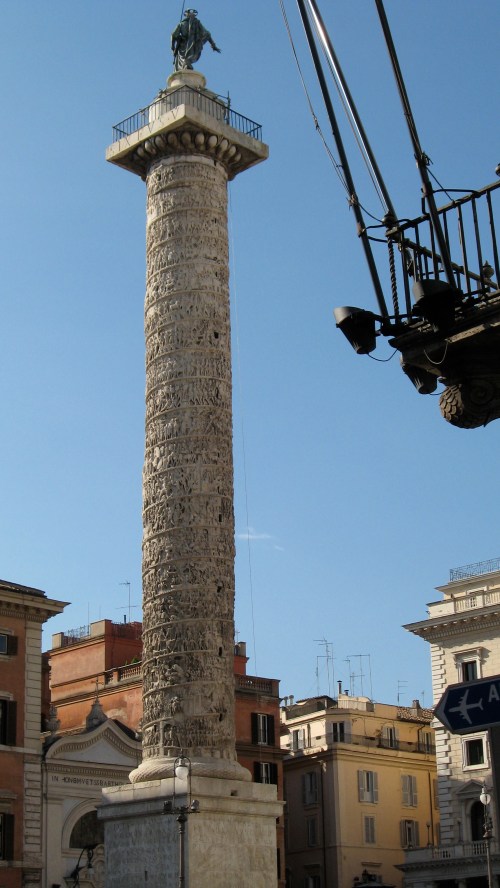
Marcus Aurelius’s copycat version of Trajan’s triumphal column:

marcus aurelius

and some black laundry items hanging out:

laundry

Today is Saturday.  We have big plans.  We’ll start at Dolci Desideri with Ramie and Harry, and then go to the market around the corner to buy some veggies for tonight’s dinner.  Then, I’m getting together with my new friend Ruth, who works for the non-profit Diversity for Life, an organization that promotes education in agricultural biodiversity (mainly in the U.S. and Africa, where it’s most needed).  After that, Jack and I will meet up with his friend Dylan for some play date fun.  Then dinner… what will I cook?

The day started off with a beautiful sunrise:

sunrise

we went

wewe

we

Read Full Post »

The other day, Jack and I went to a corner of the Bass Garden far away from the windows of the library.  We sat down beneath the olive trees and umbrella pines, and started to pick through the grass for pine nuts.  They kept falling from the trees as we foraged.  There were so many, but they were tricky to find by sight alone, because their black striations make them blend in with the shadows of the grass blades.  We found more by feel than by sight.

Jack decided to plant one, excited about the (far off) possibility of growing a tree.

planting a tree

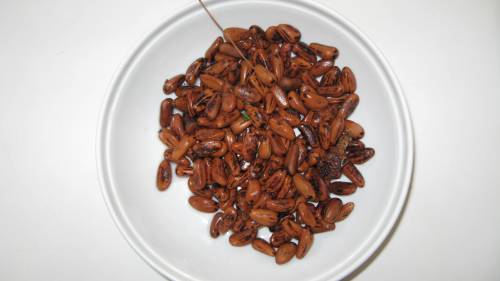
We gathered a big bowlful, but they’re not easy to eat.  The shell is so hard, and the nut so small and soft, that we often end up crushing the whole thing with out nut cracker.  Oh well. The novelty of it is fun.  And when we do get a whole nut, the taste is so nutty, with no bitterness.  There’s a touch of astringency at the end, but mainly the taste is of a toasty oil.  That’s not something you notice in a handful of frozen pine nuts thrown into a Cuisinart for pesto.

pignoli

Read Full Post »

Maybe it’s the weather.  (This morning, when Jack and I walked to the bus stop next to the Aurelian Wall, it was 41 degrees (F).)

It’s also the food.  The (nice) problem is that the food at the Academy is too good.  Sometimes, I just want to hole up in the apartment and eat a humble dinner that a kid can like.  I’m lucky enough to have a kid who likes some interesting foods, though he also loves pasta with olive oil, parmesan, and nothing else.

soup

One thing I’ve learned from Mona is that the traditional Italian diet is a peasant diet, and is based on the lowly triumvirate of greens, grains, and beans.  My soup takes two of those categories, in the form of farro, red lentils, and split peas, and swaps the greens for carrots and onions.  I also threw in some chunks of fatty pork belly (i.e. bacon) for flavor.  This is the easiest comfort food to make, and is good for locavores in the winter (I’m jumping the gun, here) because it involves dry and long-lived root ingredients.

Start by sauteing bacon, carrots, shallots or onions, and garlic.  Bring broth to a simmer, and pour in a cup of farro combined with split peas and red lentils.  Dump in the veggies, after they caramelize, and simmer until it’s all tooth-tender.  You can add more water or broth if it gets too low.  And you can season to your pleasure.  Tonight, because it was mainly for Jack, I just used a parmesan rind, salt, and pepper.  Other nights, I might have used a combination of lemon and marjoram or thyme; or cumin, cayenne, and coriander.  In any case, it will benefit from a drizzle of flavorful olive oil (my bottle says “gusto forte”) and a sprinkling of grated cheese.  Yum.

A chunk of bread and a glass of hearty red helps too.

Read Full Post »

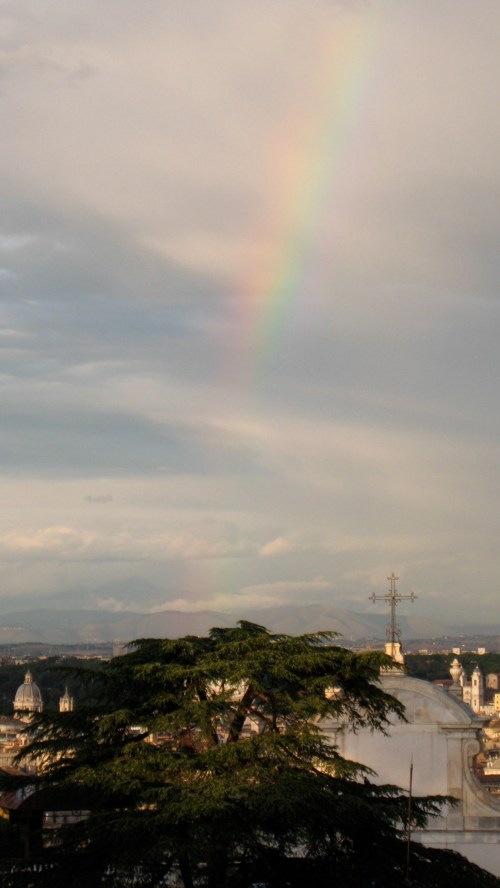
Fall fell in a swirl of branches, leaves, and whole trees.  Yesterday afternoon, we watched the pines and bamboo swaying in circles as the wind picked up.  Rain fell hard, and stopped quickly.  And then, the most magnificent double rainbow I’ve ever seen arched across the Rome skyline, and the mountains, free from the haze after a long hot summer, seemed etched into the sky.  This morning, the air was crisp, about 15 degrees cooler than yesterday’s, and smoke from burning piles of brush signaled the arrival of autumn.  We rode the bus to our usual stop, just past Piazza Ottavilla, where we saw a huge pile of downed trees and branches.  Later, I ran through the park at Villa Pamphili, and saw huge old pines and palms lying broken on the grass.

I had spent the morning on a long market circuit in Trastevere, stopping at my favorite shops: Antica Caciari for fresh ricotta, Canestro for organic cereals, grains, lentils, and peanut butter, and Antico Forno Roscioli for delicious bread and un cornetto integrale–a whole wheat croissant with bitter honey inside.  I knew I’d found an amazing baker when I saw the impossible combination of whole wheat flecks and buttery thin flaky pastry.  How do they do it?

I love walking around Trastevere because of its spider web of narrow off-angle streets that open onto beautiful architectural surprises.

Trast. arch

Rena sent me on a hunt for this place, which carries organic milk in a little fridge near the door.

checco

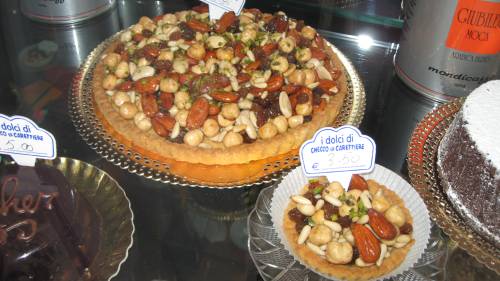
nut tart

Wow!  It looks pretty, but what would it be like actually to eat this nutty tart?

The Fontana d’Acqua Paolo, seen from the pedestrian bridge, Ponte Sisto, jutting up at the top of the hill, marked the line I’d need to walk to find the steep set of stairs that would lead me up the hill back home.

Ponte sisto

And now, the pictures we’ve all been waiting for…

Il Arcobaleno!

arcobaleno 1

arc 2

I’d been cooking dinner, when Jack, sitting at the high counter in the kitchen, said, “there’s a huge rainbow in the sky.” Uh huh.  I was busy.  But then, I decided to look, and couldn’t believe it.  We ran down the stairs, but not before Jack resourcefully thought to pull on his puddle boots.  We buzzed Lulu and Jesse’s apartment, and ran outside with them to stand in the street.  The rainbow made a full half-circle.  And then we realized it was doubled by a fainter, inverted rainbow above:

double bow

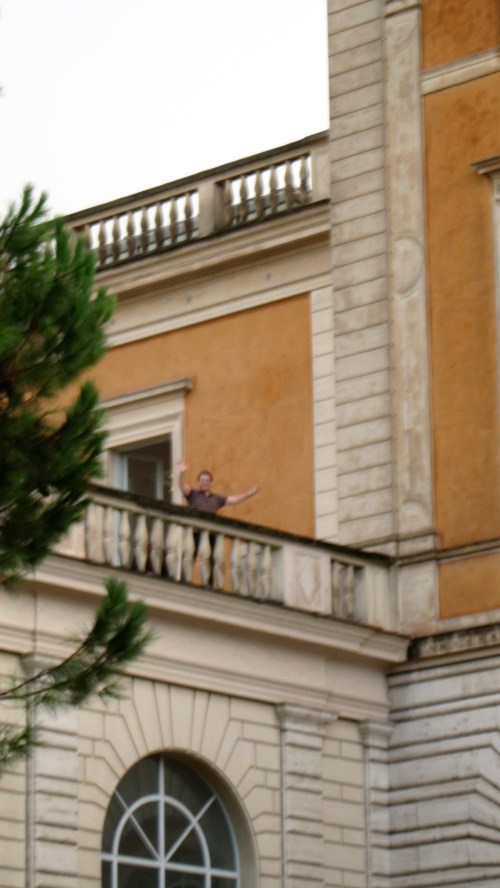
Peter called down from the terrace, where everyone else was watching it.

Peter on terrace

The view from up there was even more amazing.

arc from terrace

arc terr 2

Jack

Read Full Post »

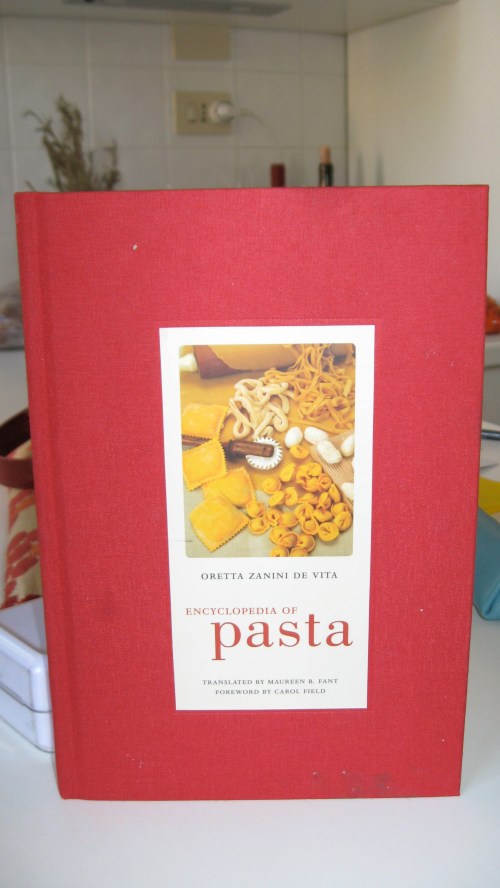
Yesterday, I attended a panel discussion celebrating the publication of the Encyclopedia of Pasta, by Oretta Zanini de Vita and translated into English by Maureen Fant. Also in attendance were Sheila Levine, the editor from UC Press, who co-founded that wonderful magazine, Gastronomica, which features stories about the intersection of food and culture; and Chris Boswell, the sous chef here at the American Academy, a former Chez Panisse chef who is passionate about things like heirloom wheat varietals, and who cooks us amazing dinners here five nights a week.  He co-founded the Rome Sustainable Food Project with Mona Talbott.

pasta book

The highlights of the discussion were the humorous bits.  The hundreds (or more?) of pasta shapes which have evolved over the past few centuries have names which carry stories—many of them humorous, and sometimes with political overtones, such as strangulapreti (priest stranglers), and sometimes simply naughtily ridiculous, such as cazzetti d’angelo (little angel’s balls).  Oretta’s book combines the lore and history of all of Italy’s known varieties of pasta, which she learned mainly through personal conversation and perusal of personal recipe collections.  Part of the value of the book, then, is that it captures in text an oral and manual tradition that is beginning to be lost to convenience foods.  There are also instructions for making all kinds of pasta, and descriptions of how they are traditionally served.

Oretta also has some strong opinions about historical chronology.  She said that not only were Italians making pasta two hundred years before Marco Polo was born, but that when Marco Polo got back from China, his mother probably served him a big bowl of pasta—an assertion she delivered with her characteristic exclamatory tone and gestures.

Then, we ate five or so takes on pasta for lunch.  My favorite was the lasagna—made with incredibly few ingredients: house-made lasagna noodles separated by thinly sliced, narrow zucchini and pulled smoked scamorza, a spun cheese like mozzarella but more flavorful.  It was a taste sensation to remember.

Read Full Post »

File:Rosetti02.jpg

Here is Dante Gabriel Rossetti’s luxuriant post-Romantic Persephone, holding the fruit that completed her curse and imposed the season of winter on the world.   Abducted by Hades, and held in his realm, she was tricked into eating four seeds of the pomegranate.  Every year thereafter, she was forced to spend four months in the Underworld.  During these months, her mother, Demeter, the goddess of fertility, who mourned the loss of her daughter, neglected her duties and let the fruitfulness of the world die away.

This fruit has incredible baggage.  It is associated with fruitfulness in many traditions, and carries the whiff of the forbidden in Greek myth and Hebrew tradition (some believe Eve ate not an apple but a pomegranate).  In a contemporary version of myth and the mysteries of the body—nutrition science—the pomegranate is again a hallowed fruit, worshiped for its antioxidants, the free radicals (a great phrase) that may help to reduce the likelihood of everything from heart disease to breast cancer from developing.  Many Americans spend as much on a bottle of pomegranate juice as they do on a bottle of wine, and feel just as cultured and more virtuous for doing so.

poms

The other afternoon, I thought I might be in paradise.  The sun was warm and the breeze was cool in the garden at the American Academy.  I lay down in the long grass beneath the long, bowed, branches of the pomegranate tree, which were heavy with fruit. I heard the happy voices of Jack and his friends, as they ran around, frolicking and gamboling.  (Here’s an opportunity to use that word unironically–almost.)  I reached up to pick the biggest fruit, and later on enjoyed seeing Jack discover all of the secret chambers full of sweet-tart drippy seeds.

open pom

eat pom

We seem to have avoided any curses, unless that thunder storm that woke us up this morning counts.

Read Full Post »

I met my friend Marjorie the other morning at one of the dolci destinations, Desideri, on Via Carini.  While I waited for her, and cooled down from the fast walk from Jack’s school, I checked out the amazing display of gelato and dolci—which refers to sweets of all sorts—in the display cases.  A steady, but meandering, stream of people stopped in to lean on the counter and order their morning treats—all kinds of cornetti, and cappuccino.

Marjorie arrived, and began to tell me all about the different sweets at this famous cafe.  I decided on an almond-covered cornetto, and she asked for un cornetto integrale—one made with whole wheat, and filled with bitter honey.  Wow!

Look at this beautiful cappuccino.

desideri capp

From there, we hurried over to Via Nicolini, to the block-long market, to get the good veggies before they were gone.  Marjorie took me to her favorite farmer-vendor, and we slowly admired everything on the table.  We heard two women exchanging recipe ideas and exclaiming about the first cucumbers and the last melons.

I bought too much, but I have no doubt it will all be cooked and eaten.

10-1 produce

I cooked the broad beans in a Roman style—sauteed with olive oil, tomatoes, and garlic, and dressed with plenty of chopped parsley.  The tastes were surprisingly complementary, and the taste of the beans was that of simple freshness.  It was clear they’d been picked that day.

Read Full Post »

It seems fitting that in such an ancient/modern city as Rome, hunter-gatherers should coexist peacefully with perennial lovers-on-blankets and with i-pod-wired joggers.  The largest public park, Villa Doria Pamphili, exemplifies this shared experience of urban life.

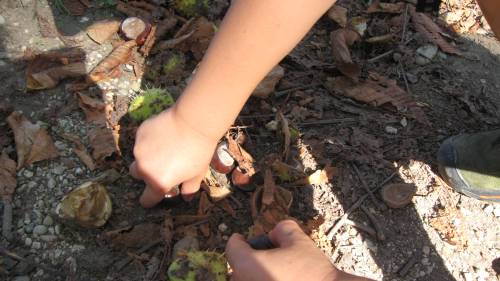
It’s relatively nearby the American Academy, and I’ve been running there on recent mornings.  While I admit I haven’t seen any true hunting, unless you count fit men doing pull-ups eyeing the passing women sweating it up in their requisite black tights, I have seen old men and young boys fishing in the pond, random gatherers of the chestnuts that are falling fast and hard from the trees, and a man with a large sack clipping the last of the dandelion greens, before the mowers arrived.  Free urban harvesting lives on.

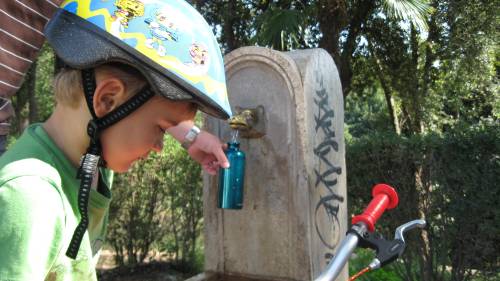
We took Jack there today, to ride his bike.  This park is one of the scenes I love about this city, because it blends the ancient with the baroque with the modern—not seamlessly at all, but with the surprise of oddly continuous juxtapositions.  When you take your eyes off of the contemporary Romans, who are surprising for their collective attractiveness and style, you see alongside these modern habits—jogging, doing leg-lifts and push-ups along the “Percorso Salute” (the Health Course) with its exercise stations marked out—the ancient forms of aqueducts and arches, the baroque curlicues of stone leaves and niches.  (Exercise and self-care aren’t modern inventions by far, but that’s another post.)

J aqueduct

gathering chestnuts

Villa Doria Pamphili is the largest public park in Rome.  The baroque villa, built on the prominent hilltop acreage in the early seventeenth century, is now a museum, and the former vineyard and garden—which also played an important strategic role in Garibaldi’s defeat of the French, and so in Italian unification as a nation, with Rome as the capital—is now a park landscaped as if designed to speak one word: leisure.

the villa

the villa

topiary mazes

topiary mazes

J & swans

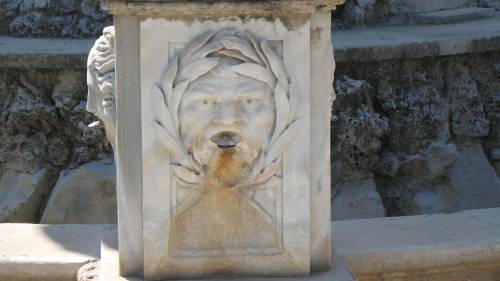
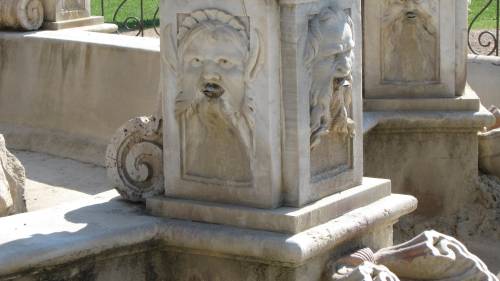
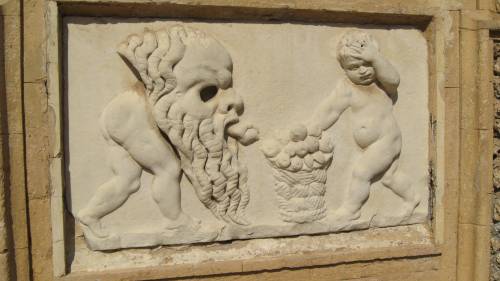
What I love best about the park, though, aside from the people watching, is the baroque interpretation of “pagan stuff”: weird wizardly men as the fountain faces, and funny scenes involving putti.  Here are a few of my favorites.

font face 2

fontana

font. face 3

nice ears

Check out these putti at play:

putti

Filling up, at the wolf’s mouth:

wolf fountain

This is a civilization that knows how to eat well, exercise well (though sometimes stopping for a smoke), drink well, sculpt well, kiss well, relax well.

I sauteed a huge bagful of dandelion greens tonight, which I’d bought at an open market stall a few days ago.  Wonder where those greens were gathered.

I’m not sure what we’ll do with Jack’s collection.  There is a good grill out back….

chestnuts

Read Full Post »

I love the way, in Italian, the word for “bakery” also means “oven.”   It’s a word- and food-lover’s favorite instance of synecdoche.  Jeannie introduced me to the family-run Antico Forno Marco Roscioli a few weeks ago, during our little culinary tour of Trastevere.  When I went back this week, it was because I had two cravings for the two things I bought there last time: fig bread, and the treat Jack and I like to call “secret cookies.”  Next time, I’ll get some of their pizza bianca and one of their famous apple torts.

The fig bread is made with farina integrale—whole wheat flour, which comes from local growers and millers.  Roasted walnuts and dried figs are rolled into the dough as it’s shaped for its last rise, and the interior comes out looking like this:

fig bread

Need I even say that it’s delicious in the morning, toasted and spread with butter or honey, served with a caffé con latte?

These other treats go well with a post-pranza (that’s lunch) espresso:

almond cookies

Made of the most delicate blend of flour and marzipan (I think), they are topped with sliced almonds and dusted with powdered sugar.  The first time I ate one, I was savoring the sweet, tender crumb when—oh my!—I came upon the concealed sugar-soaked sour cherry.  What a delight!  Jack is crazy for these cookies, and loves boastfully to tell his friends he knows their secret.  They are so rich, though, that these will be special treats.

For more on Forno Roscioli, and for some entertaining translations—such as “biological jam” for confettura biologica, by which they mean “organic jam”—check out their website here.

Read Full Post »

This past Saturday, we hosted our first dinner party here at our Rome apartment.  The guests were six parents and five children under age six.  It was a swirling whirl of activity, with chair and table shortages, and yet we broke only one wine glass.

I had planned the menu around several types of abundance and constraint: the produce that is in season at the markets, the number of guests who were omnivores, vegetarians, or plain-pasta-preferring children, and the odd assortment of cookery tools available to me in this lightly furnished apartment. Planning a meal like this has something in common with other types of composition—blank verse or water color, perhaps—in which there are particular forms and materials available, with particular possibilities and limitations.

Is this too cerebral an introduction to something as sensuous as a good meal?  The pleasures in cooking go both ways for me.  But let’s get down to what we had.

Id’ been wanting to cook that Roman cauliflower cousin, variously named broccoflower and broccolo romanesca.  I decided it in the meal for its strange, fractal, architectural beauty.

brocoflower

I had bunches of carrots, which I decided to braise:

carrots

I’d also been passing “the funghi guy” with his mini-truck full of chanterelles and porcini, every day.  The meal would have to include these things.

sizzling porcini

The menu came together, with a few more shopping trips:

For snacking and sipping, we had the following: wine-brined black olives, Jeannie’s treats—mozzarella wrapped in prosciutto on toothpicks with prugne (yes, prunes, or, dried plums, if you prefer)—and a deliciously crisp local organic white wine that Marjorie brought.

Next, came the kids’ meal: pasta with red sauce.  Really, why fancy it up with any other name?  They did have freshly grated parmigiano-reggiano, those lucky little blondies.  (Don’t worry—they’re drinking water, not that prosecco, which we drank):

kids meal

After clearing the kids’ dishes, I served up the main meal:  chicken legs braised in Sardinian white wine with porcini, polenta, braised carrots tossed with parm, and broccolo romanesco roasted with bread crumbs and fennel.  The only contorni (vegetable side dish) I managed to photograph was the cauliflower.  (It was delicious! I had some for lunch today, with some of the leftover chicken.  Maybe even better as a leftover.)

roast romanesca

There were so many conversations going on, many of which I barely dipped into, because I was busy talking with Jeannie and Marjorie about food and Rome.  Both of these new friends are passionate devotees of good, whole, local, organic food.  Jeannie is a journalist currently working on a book about food, and Marjorie owns a tourism business—called Insider’s Italy—that focuses on sustainable travel and food-related adventures in Italy.  Her newly created trip, “Farm to Fork,” is absolutely inspired.  Not only does the tour take families to the best markets in Rome for sustainably produced Italian specialties, but it also takes them back in history to the Roman markets of 2000 years ago, and is carbon-conscientious.  (You must check out their website.)

We had set the kids up with a movie, before we started eating.  They entered an instant collective trance:
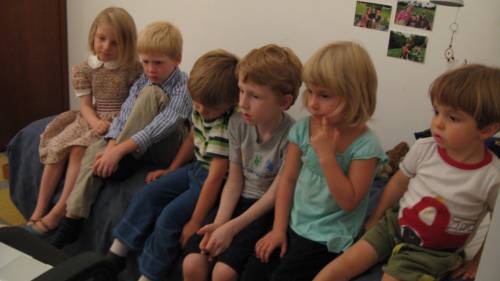
movie

We grown-ups were happily eating and talking, and almost didn’t notice that the silence behind the closed bedroom door had ballooned into a hurricane level of noise.  Uh oh.

Cookie time.  I’d bought thirty of those chewy/crunchy amaretti from the bread place on Quattro Venti. It was a fun night.

Roasted Broccolo Romanesca

2 heads broccolo romanesca, broken into its “trees”
3 cloves garlic, smashed
2 shallots, broken up
assorted dried or fresh herbs
1 fennel bulb, sliced
home-made rough-crushed breadcrumbs
plenty of olive oil, salt, and pepper

Combine these ingredients—reserving the breadcrumbs until later—on a pan.  Roast in a preheated oven (400-450) for 15-20 minutes.  Sprinkle with the olive-oil tossed breadcrumbs, and roast for another 10-15 minutes.  Serve warm or room temp.

Braised Carrots
based on Marcella Hazan’s recipe

8-10 large carrots
salt & pepper
1 tbs. sugar
2 tbs. butter
1/2 c. grated parmigiano-reggiano

Slice carrots into thin discs and spread in an even layer in your largest skillet. Just cover with water, sprinkle in the salt, pepper, sugar, and butter. Bring to a boil, then simmer until the carrots are wrinkly and almost browning.  If the water runs out, add a bit more, tiny bit by tiny bit.  Take off the heat and stir in the parm.  Serve immediately.

Chicken Legs Braised with Porcini

4-6 chicken legs
plenty of stock and white wine
3 garlic cloves
3 shallots
dried or fresh porcini
dried or fresh thyme
butter & olive oil

Brown the chicken legs in butter and olive oil over moderate heat until skin is crispy on both sides.  Add the smashed garlic and sliced shallot to the pan to brown a bit.  Pour in a combination of half wine/half stock just to cover the chicken.  Add porcini and thyme, salt and pepper.  Simmer for 30-45 minutes, until chicken is tender and almost falling off the bone.  If you want to, reduce some of the braising liquid with some butter for a richer sauce.

Read Full Post »

« Newer Posts - Older Posts »