Feeds:
Posts
Comments

Posts Tagged ‘eat locally’

Two incredible events punctuated this week: a wine tasting led by sommelier Pina Pasquantonio, and snow in Rome, which hasn’t happened since 1986.

The snow was thrilling!  A group from the Academy walked down to the Pantheon, to see the rare sight of snowflakes falling through the oculus.  I took Jack to school, where the children were jumping and dancing and shrieking about the neve.

The wine tasting, very nearly as thrilling, was a rare opportunity as well.  Most days, we know Pina as the most important administrator at the American Academy.  But she is also a certified sommelier, and in this role she is in her element.

Pina & Gianni, also a sommelier

The tasting began with a crash course in the geography and most important varietals of Italian wine.  Italy has the most grape varietals of any country in the world, and of the 850 or so, 350 have a special status. Could this be one reason wine-lovers trained in varietal-focused American wines find Italian wine-shopping so daunting?

We started with a spumante produced in the metodo classico, which means that the second fermentation occurs in the bottle, and not in a huge steel vat.  This wine, like all of the others we tasted, was a wonderful sense-experience.  Pina pointed out the bubbles, which were tiny and few, a sign of high quality.  She instructed us to taste, and then to eat a piece of bread with olive oil—made from her own olive trees—and then to taste again to experience the palate cleansing effect of this effervescent minerally wine. (This was Bellavista Gran Cuvée Pas Opere Franciacorta 2003 from Lombardia.)
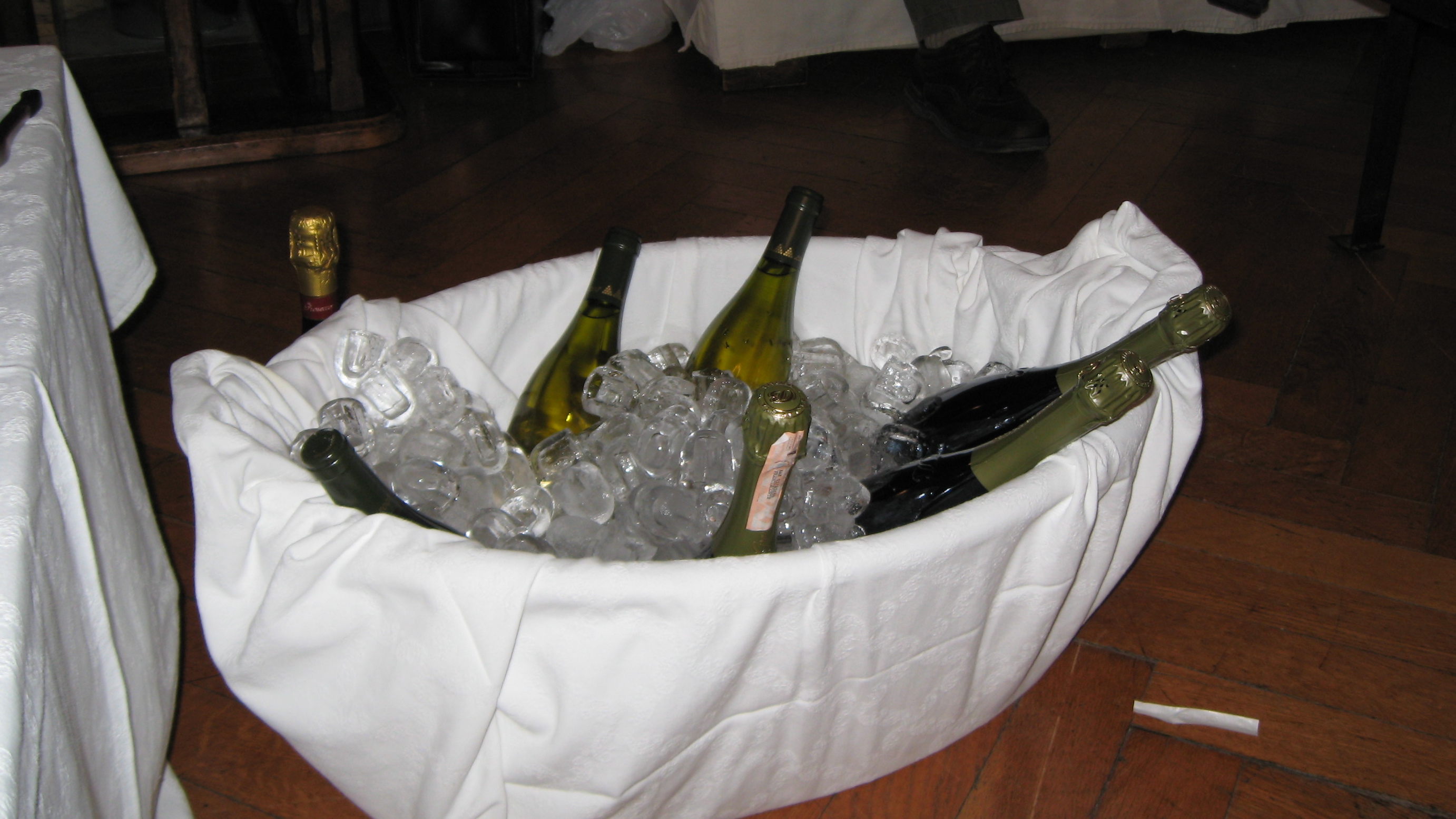
Next, we tasted a wine that was recently rated one of the top 100 wines in the world by Wine Spectator: Jermann, Vintage Tunina 2007 from Friuli-Venezia Giulia, a blend of Sauvignon, Chardonnay, Malvasia Istriana, Picolit, and Ribolla Gialla.  It was probably the most complex, interesting, and best white wine I’ve ever had.

These were followed by an incredible red that first silenced everyone and then inspired murmurs of sensuous pleasure—Nino Negri, Sfursat di Valtellina Cinque Stelle 2005, a Nebbiolo from Lombardia—and a dessert wine that awed us again with its amber glow and its multifaceted sweetness.  This was the Passito di Pantelleria Ben Ryé 2008, which Pina exclaimed smelled exactly like Sicily.

(Looking back at my photos, I realize that once the wines were poured, I was too busy to remember my camera.)

Read Full Post »

It’s cold, rainy, and February.  But with a fire in the fireplace, an amazing Indian lunch, and a handful of confetti, we brightened up this dismal day.

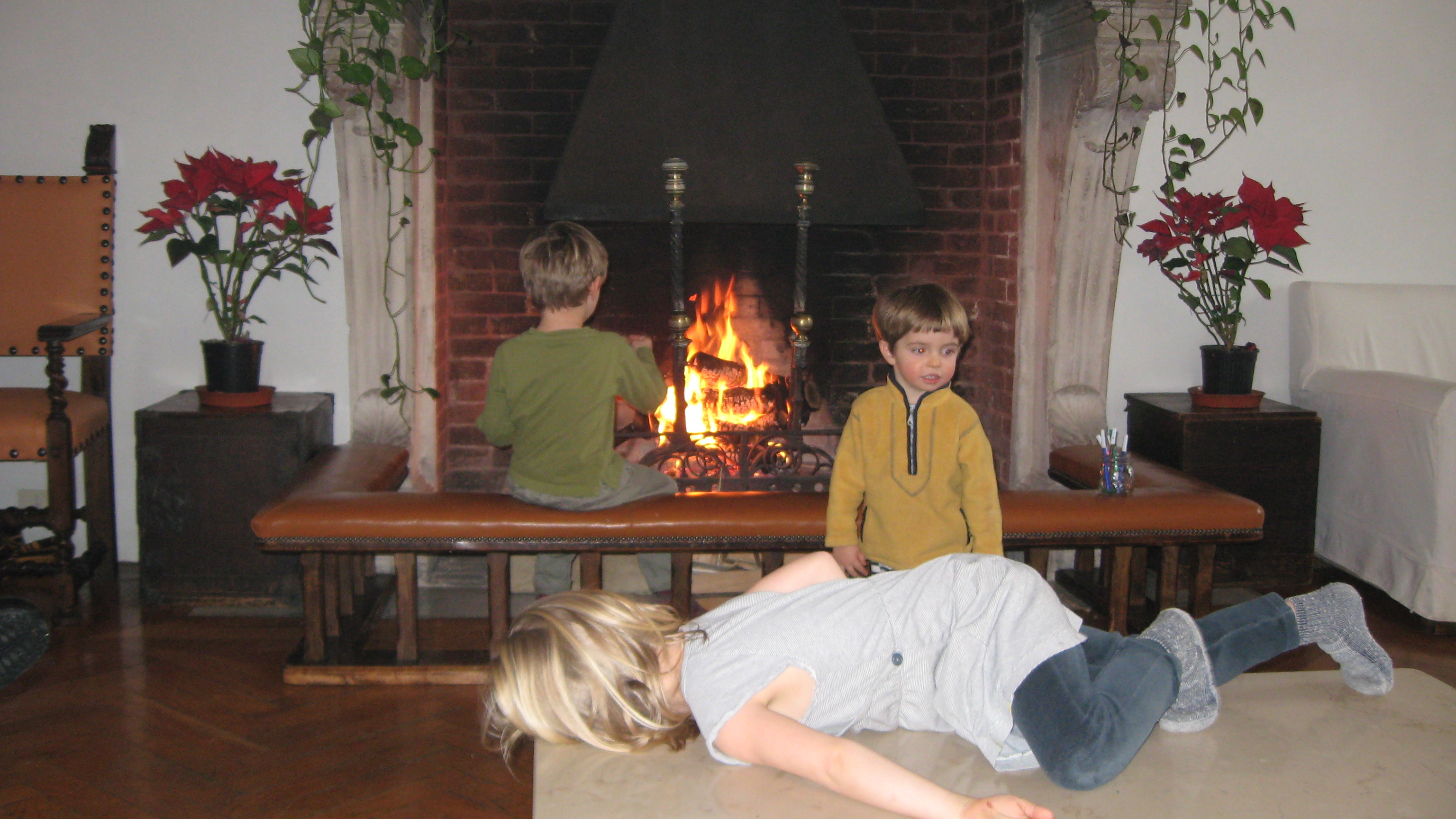
Jon and some of the kids went out to the Triangle Garden to gather some dampish wood.  It lit… and smoked and hissed… but also blazed, and had the kids alternately staring entranced at its flames and running helter skelter calling out for hot cocoa.  Lulu lolled, and Jack fanned the flames.

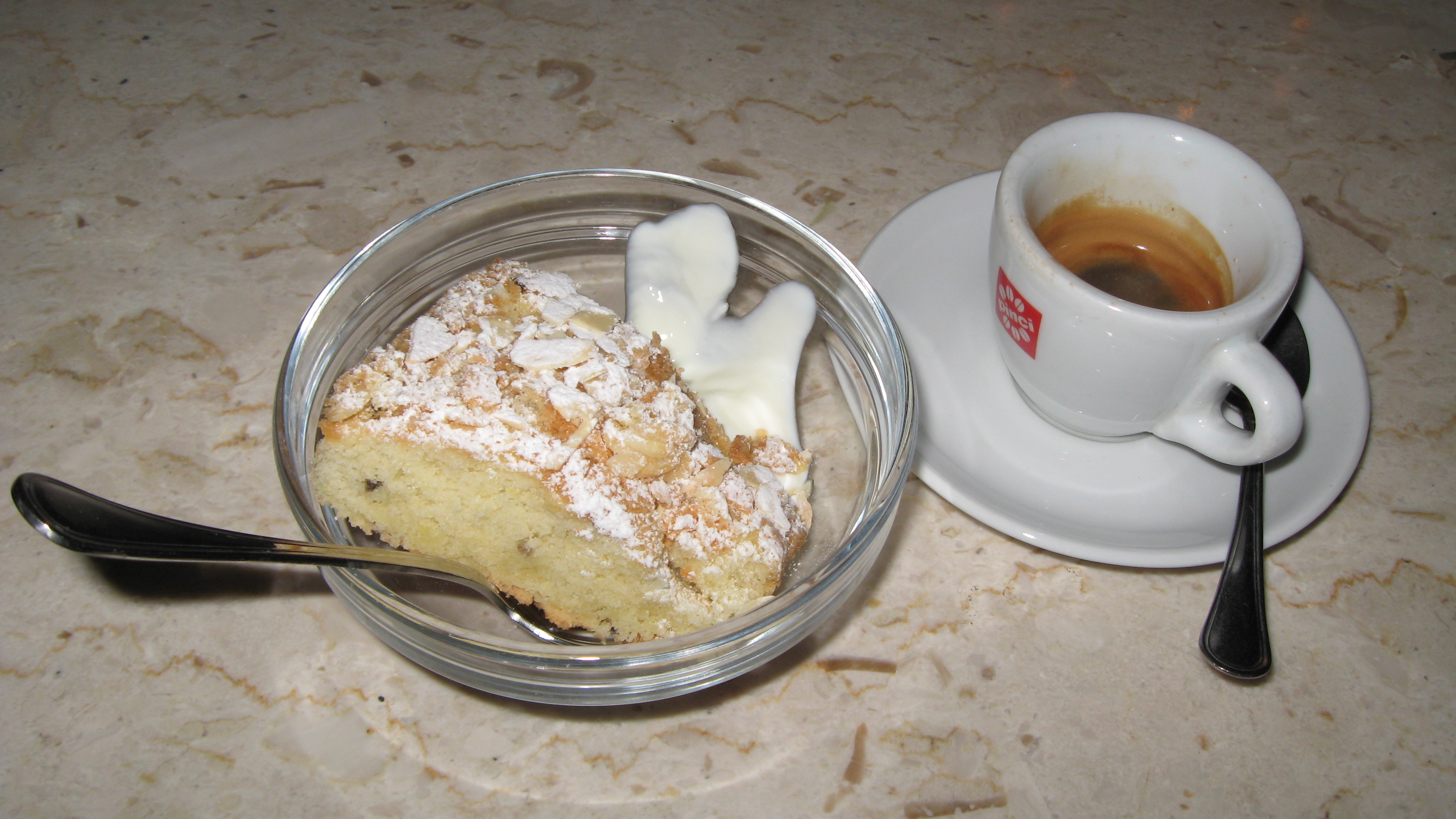
Mona and the cooks made the best Indian meal I’ve ever had, with curried chicken, dal, spiced rice, papadum, raita, two chutneys, and sauteed greens.  Everyone went back for more, and then we noticed the cake—a fluffy almond cake infused with toasted, crushed cardamom seeds.  With a dollop of tangy yogurt on the side, and a perfectly pulled esspresso, this dessert went down in history.

What an inspired culinary performance!

And despite the rain, Carnevale goes on.  We’re saving most of our confetti for tomorrow, when the sun will shine, but I sprinkled a handful down from the window on Jack, for whom the simple pleasure of watching brightly colored snow fall is close to ecstasy.

Read Full Post »

This distinction, between red and white, is an important and ubiquitous one in Roman society.  Well, at least when it comes to snacks and drinks and—if you’re talking to children—dinner.  There’s, of course, red or white wine.  (But these are just the most basic distinctions.  In addition to the great array of differences based on geography and terroir, there’s also the difference of fizz. But fizz, we’ve found, covers the spectra of bianco through rosato to rosso, and of seca to dolce.  In other words, it’s possible, and a pleasure, to find a dry fizzy pink wine and a sweet fizzy red wine.)

*     *     *

I thought moving to Italy would expand my son’s diet into the far reaches of foreign flavors and textures.  He already liked olives and peppers.  We seemed to be on the right track.  But for some reason, living in Rome has contracted his taste.  His favorite choice, when it comes to dinner, is pasta bianca or pasta rossa.  And usually, he’ll choose the bianca: pasta with olive oil and grated parmesan.  He seems to have given up green things, which drives me nuts, because there are so many more wonderful green things here than there have been anywhere else he’s lived—except Berkeley, where he lived when he was just cutting teeth.  Green leaves with cheese, green leaves with nuts, green leaves with sweet onions, green leaves with grains, gazillions of great greens!  He won’t have any of it.

*     *     *

The third important category of the rossa/bianca divide is pizza.

Pizza rossa is a thin, tasty crust spread with savory tomato sauce; each good forno will have its own sauce, some more salty or herbaceous than others.  Pizza bianca is a bubbly pizza crust topped simply with olive oil and salt.  Again, each forno’s dough has its own taste and consistency, and is topped with more or less salt.  You can also order pizza bianca morbida (soft) or dura (hard-crunchy). My favorite place to buy both is Panificio Beti, in our neighborhood.  The lines are always long, and the family behind the counter always bustling and full of banter.

These Roman basics serve as snacks or sides at any time of the day.  Italian life is riddled with rules, but, as far as I can tell, pizza rossa and bianca exist in a looser realm.  As a rule, Italians don’t eat on the run the way Americans do.  Even to-go coffee is a very rare sight.  But pizza rossa can be eaten with dignity while one is walking along the sidewalk.  The pizzeria guy will cut a piece in half, slap the parts together sauce-side-in, and wrap the bottom half in a piece of paper—a process that takes about a second and a half—so the snack is ready to eat as soon as it passes from his hand to yours.  I’ve seen people eat it for breakfast, for elevenses with beer,  for a late afternoon snack, and for dinner.

Last night, still satiated from the big Saturday Academy lunch, we had salad, pizza rossa, and vino rosso, for dinner.  Jack had the white ribs of the lettuce, pizza bianca, and milk.  I wish he’d broaden his taste at least to complete the color combo of the Italian flag.

Read Full Post »

Just when you think you can’t eat or drink anything else, someone has a party.  That’s just how the holidays are.  Yesterday, we invited a few friends who are leaving Rome today to have a low-key dinner with us.  I planned to make those cabbage-wrapped pork meatballs I wrote about recently.  Then, we got Nick’s invitation to join him and Rena and 15 others for a party the aim of which was to finish off the wild boar stew he’d made for Christmas dinner.  We decided to move the meal to our apartment, right next door, for reasons having to do with sleeping children and baby monitors. And then, we ran into Jason, who said he’d bring down his leftover rabbit stew.  Meat fest!

Sensing, perhaps, that this would be a meal of small restraint, our guests showed up with cookies, cheese, and panetone, and copious bottles of wine, Cointreau, limoncello, and scotch.

And I had decided that the dry little biscotti in the cupboard, however tasty on an abstemious day, would not stand up next to such a feast, and so I made chocolate mousse.

This is all that remains of a large bowl of the fluffy, dark, silky, luxuriant dessert:

To top it off, along with some light-as-air amaretti that Lisa and Philip brought, I whipped some Cointreau into the cream.  Oh, my!

The recipe I used was a doubling of this one from Bon Appetit, May 2001.  The sugar, eggs and milk were organic, and the chocolate 70% cacao.

Bittersweet Chocolate Mousse

Start this recipe six hours to one day ahead.

Yield: Makes 6 servings

1/2 cup whole milk
2 large egg yolks
4 tablespoons sugar
6 ounces bittersweet (not unsweetened) or semisweet chocolate, finely chopped
1 teaspoon vanilla extract
4 large egg whites
Pinch of salt

Whipped cream

Whisk milk, egg yolks, and 2 tablespoons sugar in heavy small suacepan to blend. Place over medium-low heat and stir until mixture thickens enough to coat spoon, about 7 minutes (do not boil). Remove from heat. Immediately add chocolate and whisk until smooth. Whisk in vanilla. Transfer mixture to medium bowl; cool to lukewarm, stirring occasionally, about 10 minutes. Beat egg whites and salt in large bowl until soft peaks form. Gradually add remaining 2 tablespoons sugar, beating until stiff but not dry. Fold whites into cooled chocolate mixture in 3 additions. Divide mousse among 6 goblets or transfer to serving bowl. Refrigerate until cold and set, at least 6 hours. (Can be made 1 day ahead. Cover and keep refrigerated.)

(Actually, I’d recommend making it a day ahead. The texture is better the second day.)

Read Full Post »

The day after Christmas: rain, cleaning up all done, children melting down, boredom, no hot water for a cathartic shower (again! really! what’s up with that?)….

For the fifth time today, Jack whined, “Mommy, I’m hungry.”  I looked around the kitchen—not much there.  Then I remembered the orange trees.  Let’s go pick an orange to eat!  Jack was ready for any kind of outing, so we put on our rain boots and rain coats and hoods, and walked out to the tree, which, from a distance, seemed to have no more fruit.  But when we got up close, and I crouched down to Jack’s height, I saw the clusters of ripening, reddening Tarocco oranges—the common Italian variety of what we call “blood orange.”  The pulp is not as red as that of its Spanish cousin, Sanguinello, and the fruit not as large as the most common variety in the U.S., Navel.  Threads of read are shot through the center of the deep orange fruit, and the juice is deliciously sweet.

Because of the structure, with little mini-sections in the center, I decided to juice it instead of peeling it and parting it and wasting the juice in the process.  Jack guzzled a cupful in seconds.  And then, within seconds, he was gone, having just received an invitation shouted up through the open window from the driveway below to come down to Lulu’s for hot cocoa.

I juiced the other orange we’d picked, poured it into wine glasses, and topped it off with the prosecco left in the fridge.  Wow!

You may remember my post on fruit/sparkling wine cocktails.  Now there’s a new one to add, and I’ll have to say, it definitely wins out over the Puccini and the Mimosa.

(Note to others in the AAR community: I only took a few. Really!  If you go too, leave some hanging to ripen, so the RSFP staff can make us the traditional Sicilian salad of Tarocco orange, sliced fennel, olive oil, and parsley… or so that Alessandro can mix up some perfected epitome of sparkling citrus cocktail, as he’s been known to do.)

Read Full Post »

That’s the name of the butcher’s shop where I’ll be buying the chickens for the Christmas potluck.

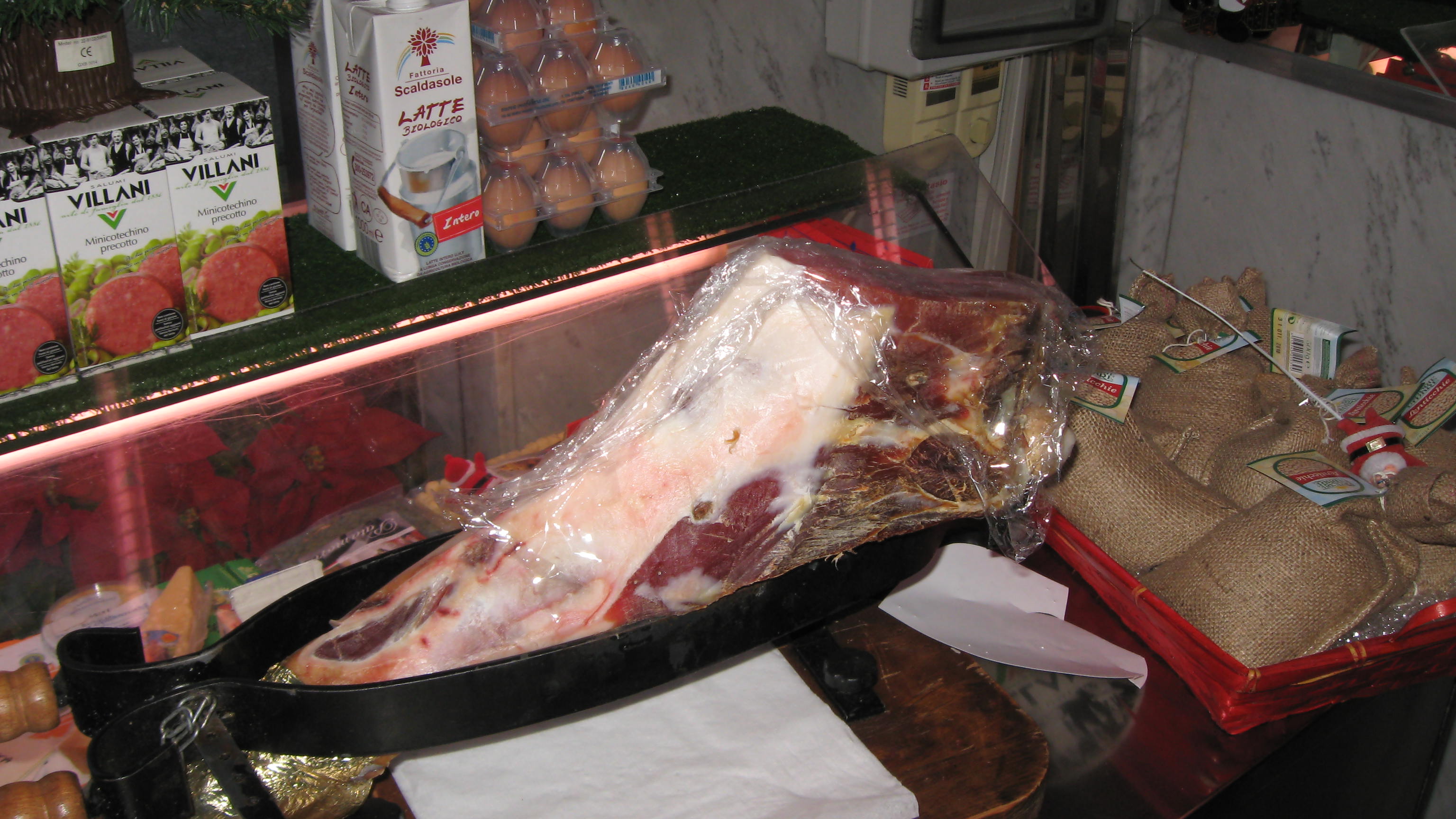
I love it there.  It’s the only place I can think of where amidst carcasses, I feel a sense of comfort.  The older couple who own it do everything with care and friendliness.  While his wife chats with shoppers who are also friends, the grandfatherly proprietor grinds the meat or slices the prosciutto by hand.

Everything he sells is local (or at least from Italy) and/or organic.  No Brazilian beef here.

We’re getting ready for a giant potluck dinner on Christmas day, and I find that I’m the event organizer, against all former inclinations.  I’ve been sending out slews of emails, mixing up cookie dough, entertaining kids in my kitchen while they cut the cookies and wait for them to puff up in the oven, and forgetting essentials at the supermarket.  For all these reasons, and the fact that Jack’s on vacation, my blogging pace has slackened.

Let me just tell you about a snack I like: wheaty long looped breadsticks with hot pepper flakes throughout.

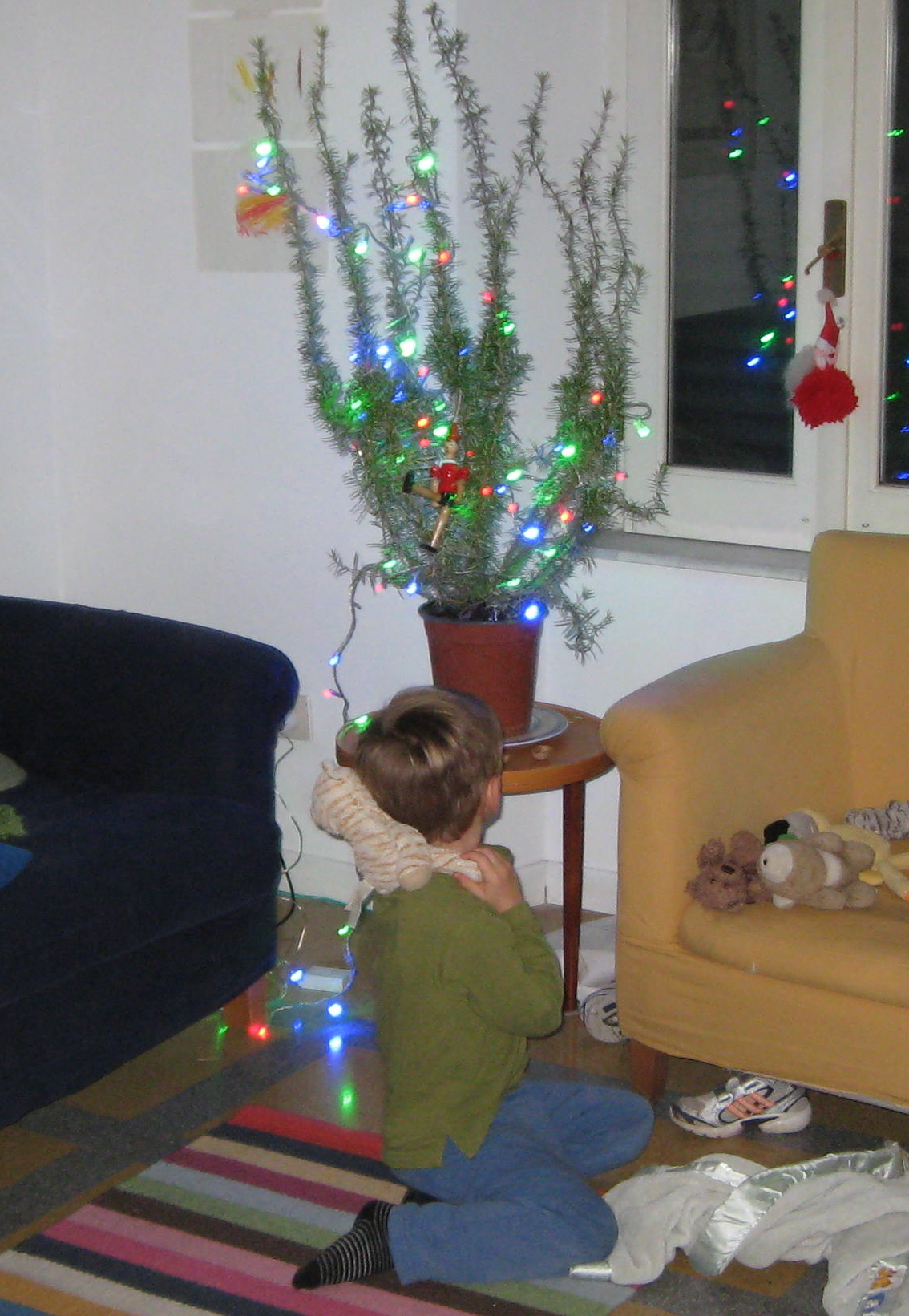
Another thing I’m excited about?  Our Christmas tree, which is a rosemary bush.

Read Full Post »

Of activity, that is.  (The real flurries are more like blizzards, falling on friends and relatives all up and down the east coast.)

But life here has been moving so fast, and what do I have to show for it? No photos of food, anyway.  The food has disappeared before the camera reached it.  Friday night they served latkes with dinner, and many of us ate three or more.  They were just so good!  Crispy crunchy on the outside, soft and hot on the inside, potato goodness throughout.  Our Saturday lunch was another bonanza of flavors.  The risotto, in particular, was impossibly delicious.  Lemony, smooth, perfectly toothsome.  That evening, yesterday, we hosted a pizza party.  Twenty or so friends filled our living room, bringing beer, wine, chocolate, good stories and loud laughs, and I somehow managed to keep serving hot pizza in defiance of the size of our oven.

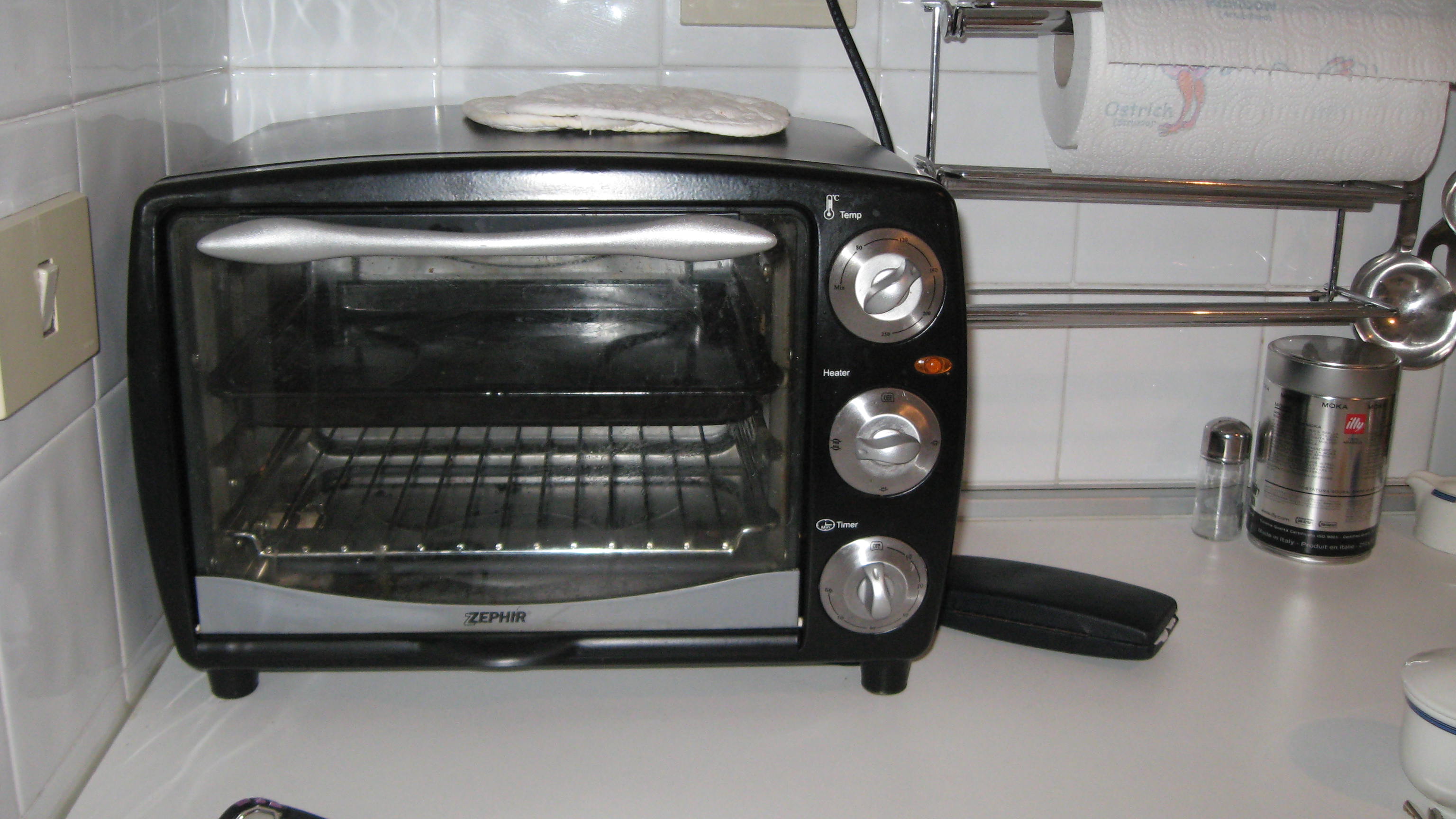
(I’ve actually done some roasting, baking, and pizza making in it.  My grandma used just a toaster oven for years….)

The pizza came from our local favorite, Pizzeria da Simone.  People are constantly coming in and out of this pizzeria on Via Carini, at all hours of the day.  Pizza rossa for breakfast?  No problem.  We got a whole range of toppings last night: zucchini blossoms and anchovies, sausage with cheese, sausage with mushrooms, spicy sausage with tomato sauce, mushrooms with tomato sauce, prosciutto with cheese, mortadella with artichoke hearts.  It was all devoured before I thought to take a picture.  I love Roman style pizza.  The crust is like what we’d call flatbread, but isn’t completely flat, and the toppings are combined in moderate twosomes or threesomes.  None of this deep dish everything nonsense.  (How will we ever reacclimate?)

This morning, Peter and I, along with Ramie, Rena, and Lisa, ran the 10K “Christmas Run” in Villa Pamphili.  The scene was a fascinating cultural tableau.  We were some of the only Americans in the crowd of 400.  The race was set to begin at 9:30, but the organizers and pace-setters lingered in the cafe adjacent to the “Punto Jogging” for an extra 15 minutes of leisurely cappuccino sipping.  Finally, after we had been jumping up and down in the 28-degree air (that’s Farhenheit!) waiting, the pace-setters, who wore color-coded balloons, took their places and the race got off to a silly, stumbling, good-hearted start.  Some of the runners, being typical Italians, talked the whole while.  Except on the uphills.   The course, like the balloon-following, was whimsical, winding through forest on narrow, muddy trails, and up grassy hillsides sparkling with frost, past fountains and the chestnut-lined avenue on this awesome piece of land that until recently was a massive chunk of private property on one of the prettiest hills in Rome.  I ended up running in a pack of middle-aged men, who were yelling and laughing to each other the whole time, (Ciao, bello!  Buon Natale!  Attenzione! along with much commentary on the mud puddles) and one other woman, who wore a set of red antlers.  Some people were dressed up as Babbo Natale (that’s Santa to you) and many wore the elf hats they gave us at registration.  It was a fun-run with decidedly Italian inflections of the good life: the cafe at the finish was mobbed with sweaty people sipping espresso, talking loudly, and gesticulating heartily.  The men wore tights, and the women’s black eyeliner was unmussed.

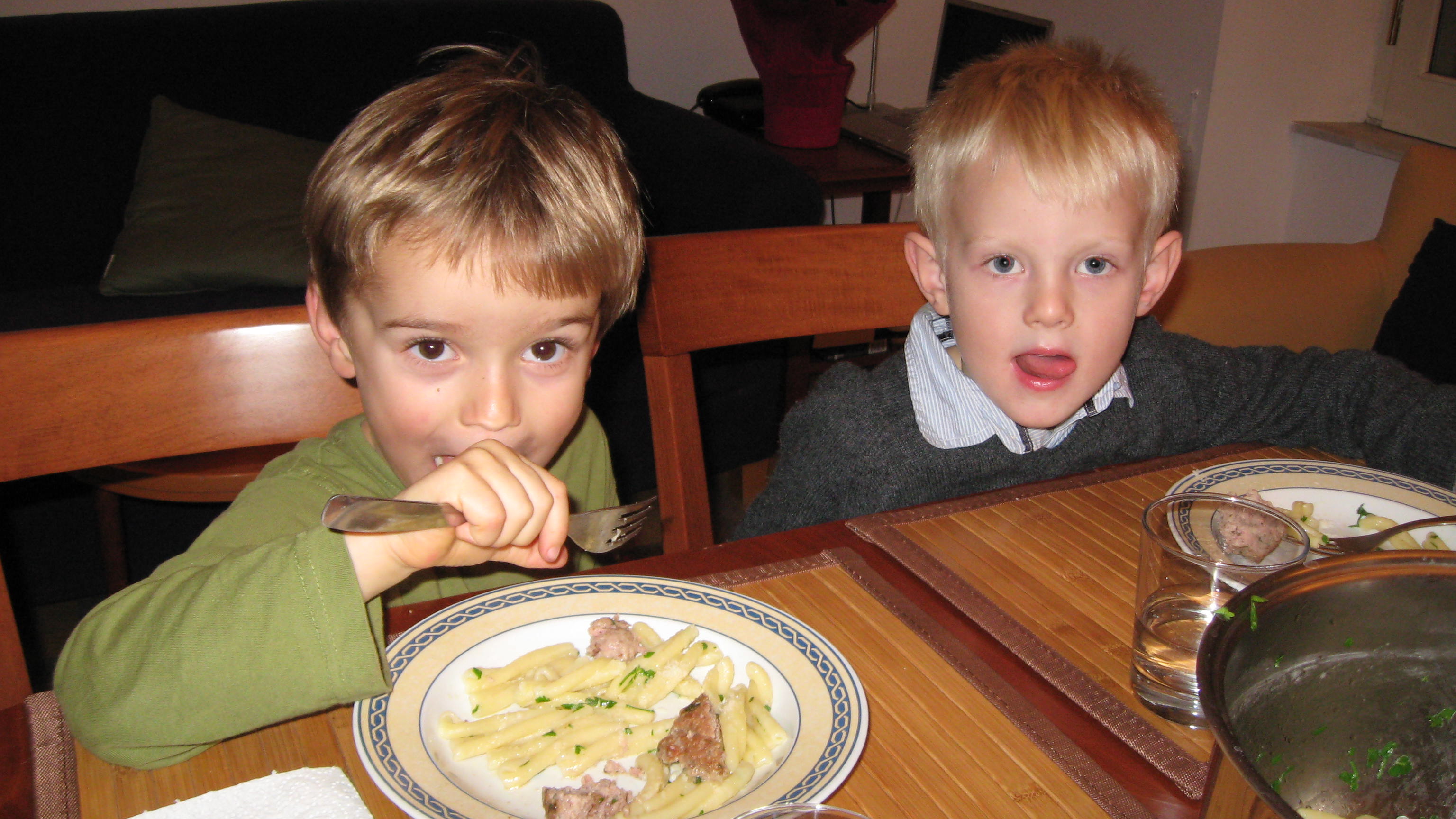
Back home, Peter and I polished off the leftover pizza, and I cooked some pasta for these elves:

Read Full Post »

Last night’s dinner was a celebration.  The meal marked the inauguration of the American Academy in Rome as a Slow Food Terra Madre Community.  Terra Madre is a network of food producers, purveyors, artisans, and consumers committed to making food sustainable for human economies and communities and for the planet.

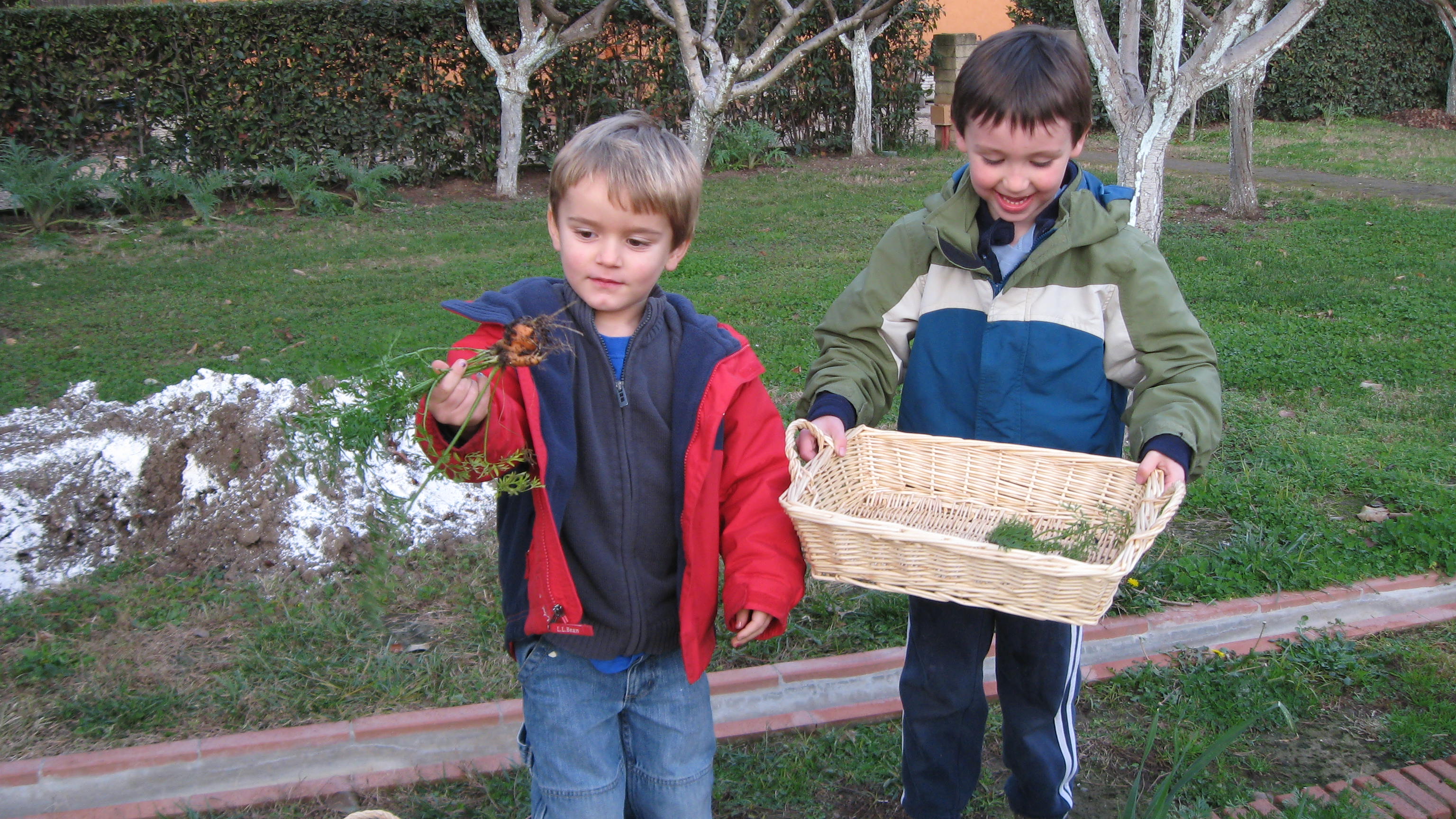
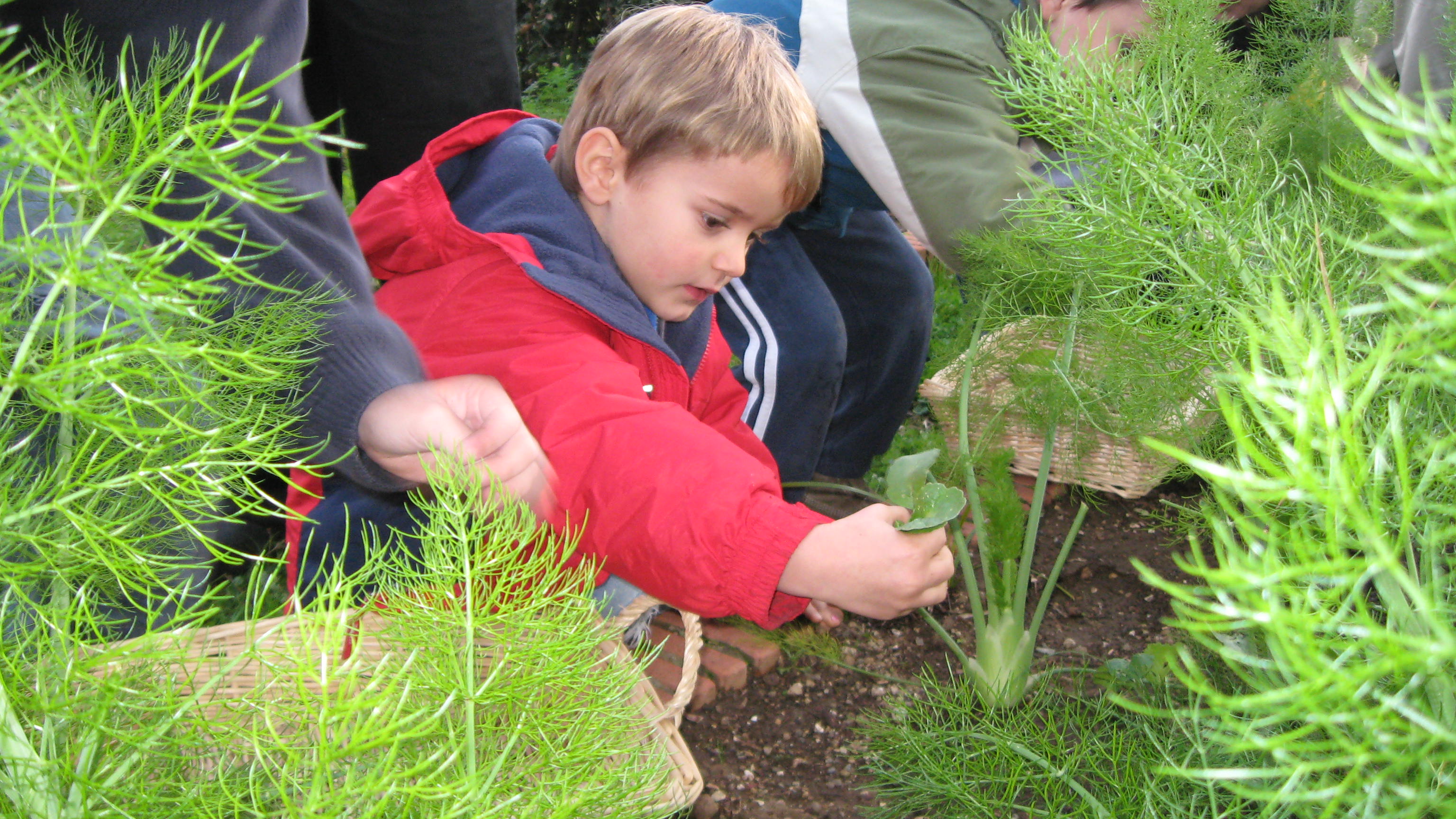
The event started at 4:00 in the afternoon with the children.  First, they all went out to the garden to gather carrots, radishes, and fennel for what turned out to be a radically simple salad of these three vegetables washed and simply sliced, with no accessorizing flavors or sensations.

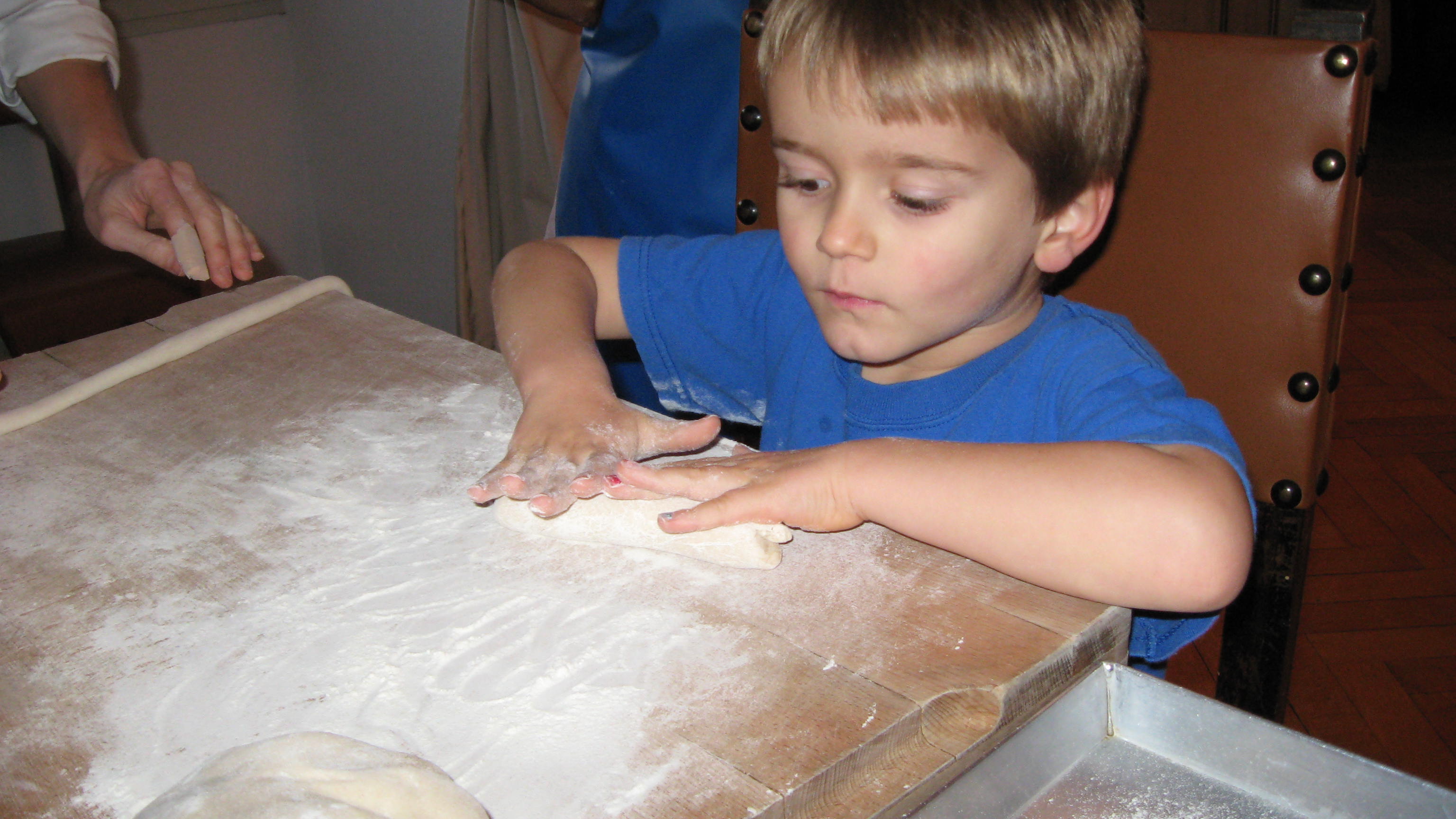
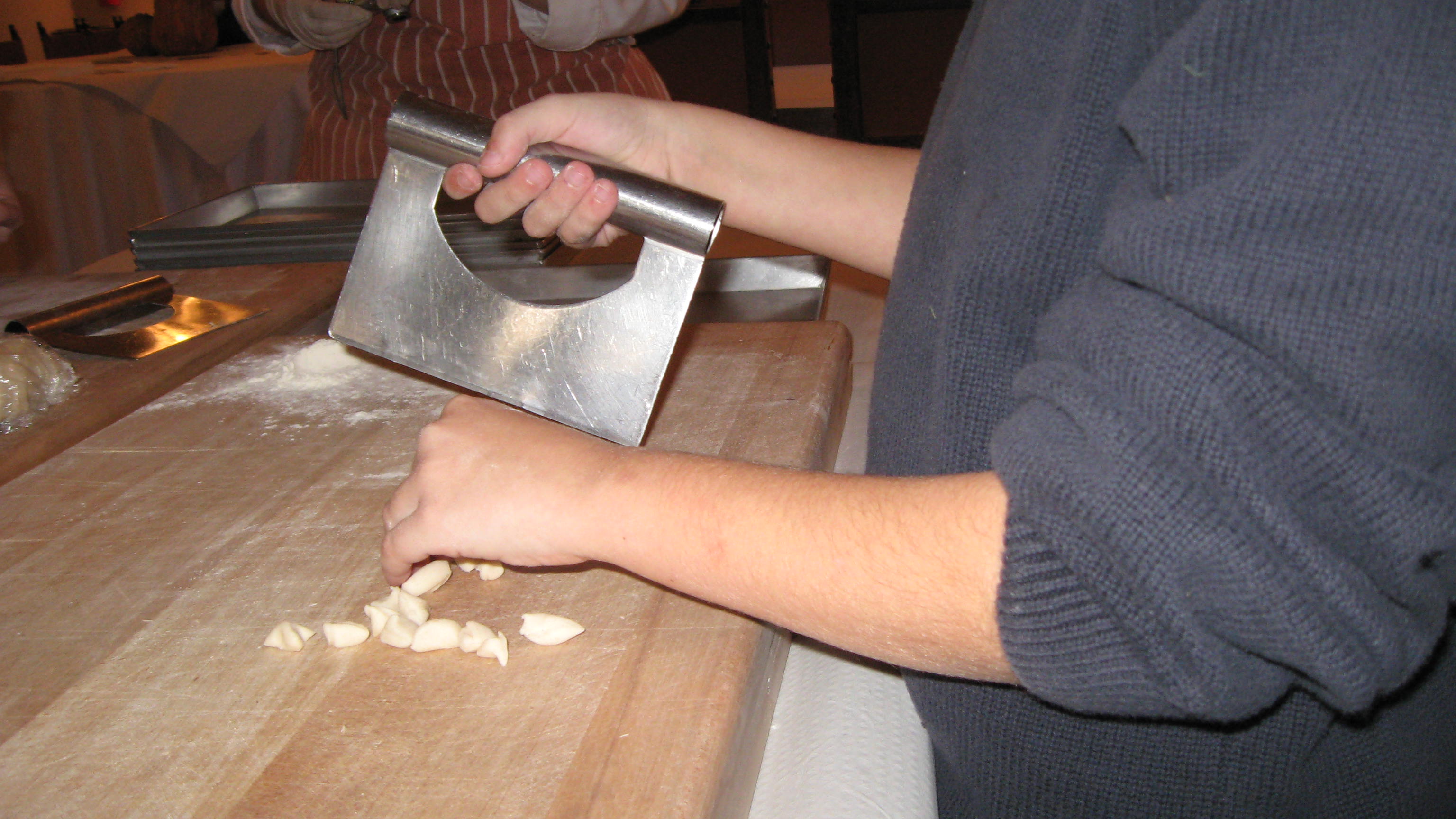
After that, the children followed the kitchen interns to one of the dining room tables, where a half dozen large cutting boards had been dusted with flour and set up with a ball of dough.  The task: to make orrechiette, or little ear-shaped pasta.  It was an interesting display of manual and cognitive development.  The 2-4-year-olds loved the feeling of dough in their fingers; they were happy to manipulate the soft irregular shapes, and completely disregarded the goal of shape.

The 8-10-year-olds worked with the manual confidence of seasoned chefs.  Confidence, that is, not skill.  They rolled the dough into snakes as fast as that, then chopped the snake into bits with fast loud chops, and squashed those bits into bowls as big as clamshells and as small as fingernails, quick as they could, talking Star Wars and Legos all the while.

The result (of their efforts and of those of the kitchen staff) was delicious: tender pasta tossed with pork sausage, chopped braised kale, and just enough red pepper flakes.

This meal, including arugula salad and a semifreddo with tart orange granita, culminated in speeches by the presidents of Slow Food Italia and of Slow Food Roma, and with the presentation of a certificate recognizing the efforts of the Rome Sustainable Food Project, and naming the Academy a Terra Madre Community.

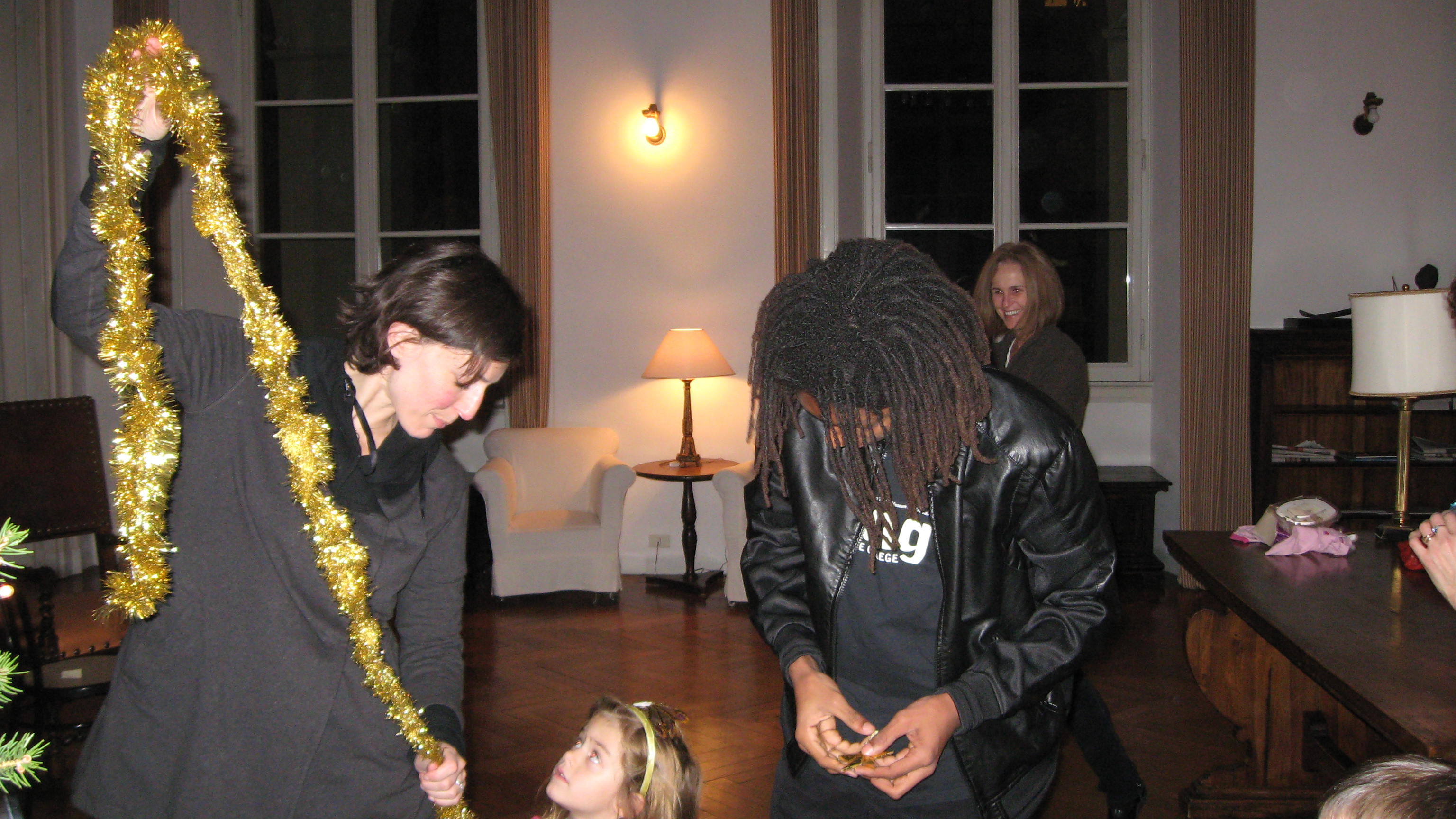
Then, we drank “after dinner drinks” and decorated the Christmas tree.

Read Full Post »

I haven’t actually been making or eating as many meatballs as it may seem from the frequency of their appearance in these posts.  But last night I did make a new (for me) variation on an old theme: meatballs that were halfway between Lions Heads from Shanghai cuisine and Milanese, with some of my favorite flavorings thrown in.  The dish was inspired by a cabbage-wrapped meatball meal the RSFP kitchen cooked for us about a month ago.

In the morning, at the market, I bought some pork which the butcher ground on the spot.  I love that they do this.  Then they show it to you, as if to say, “is this to your liking?”  I bought a big cabbage and some parsley, and started to plan the process in my head.

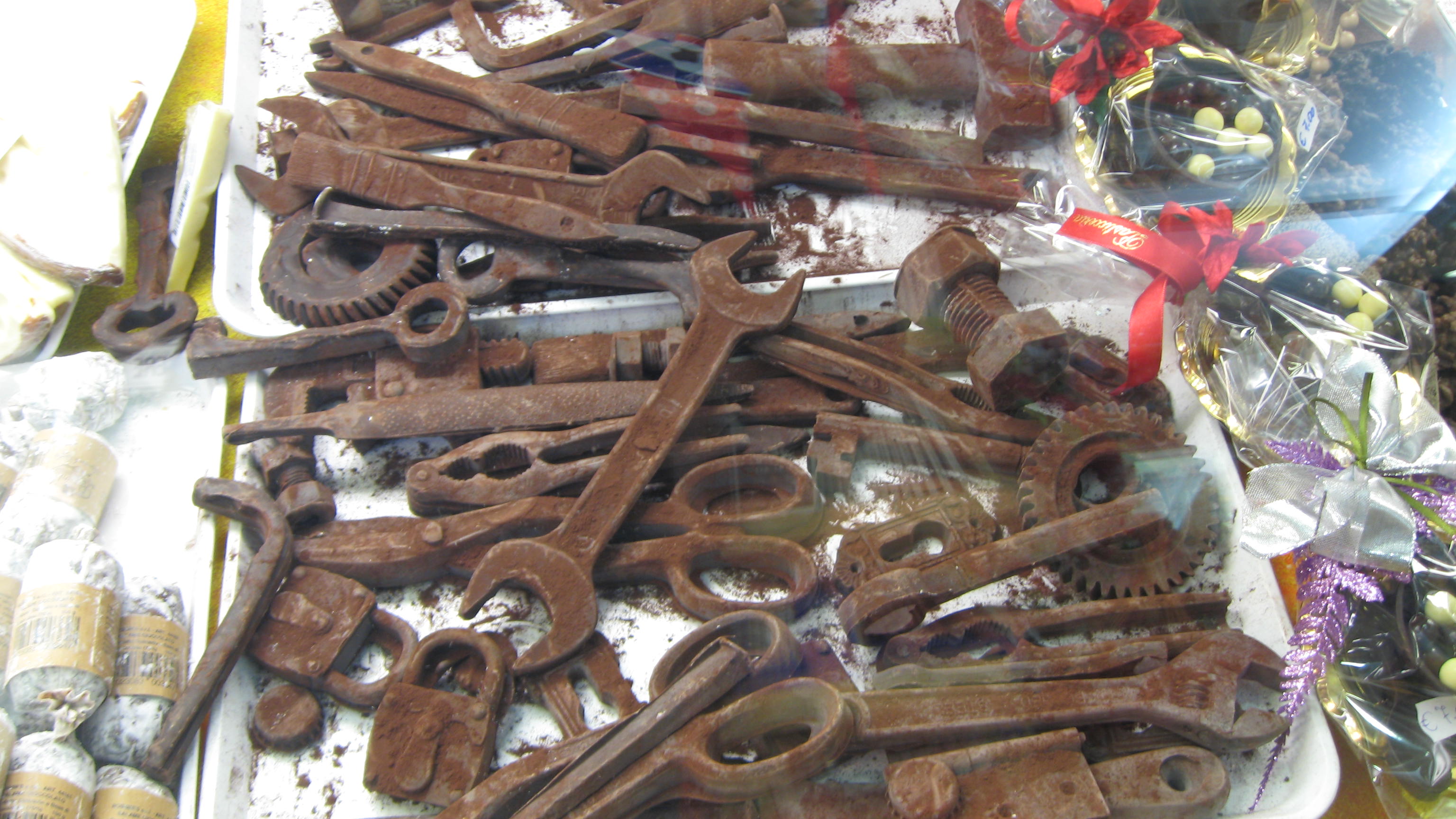
While shopping, I also bought a city bus and admired some chocolate tools:

Harry, Jack, and a serious toy

Dolce Desideri has fun with chocolate

Prep:

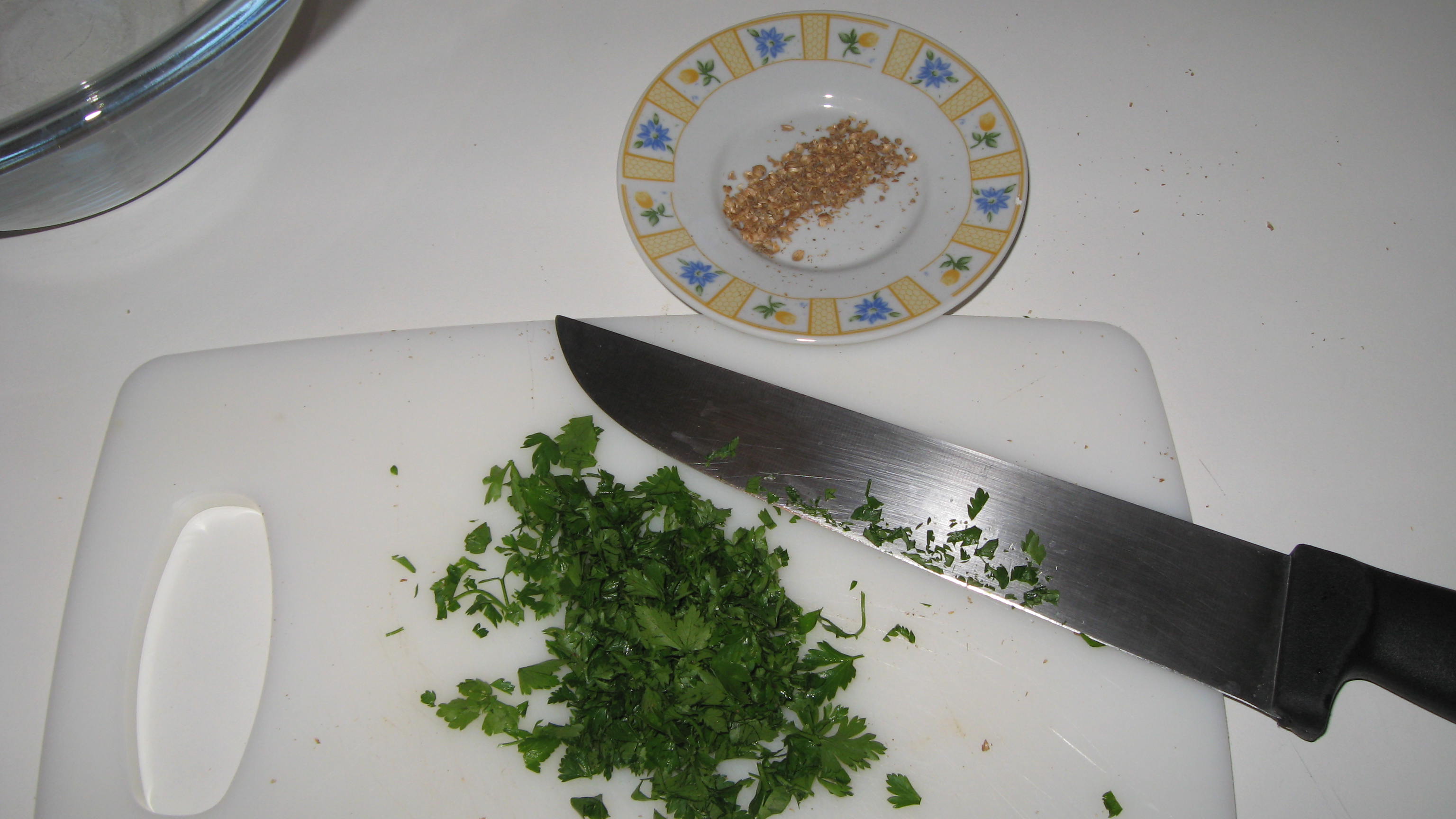
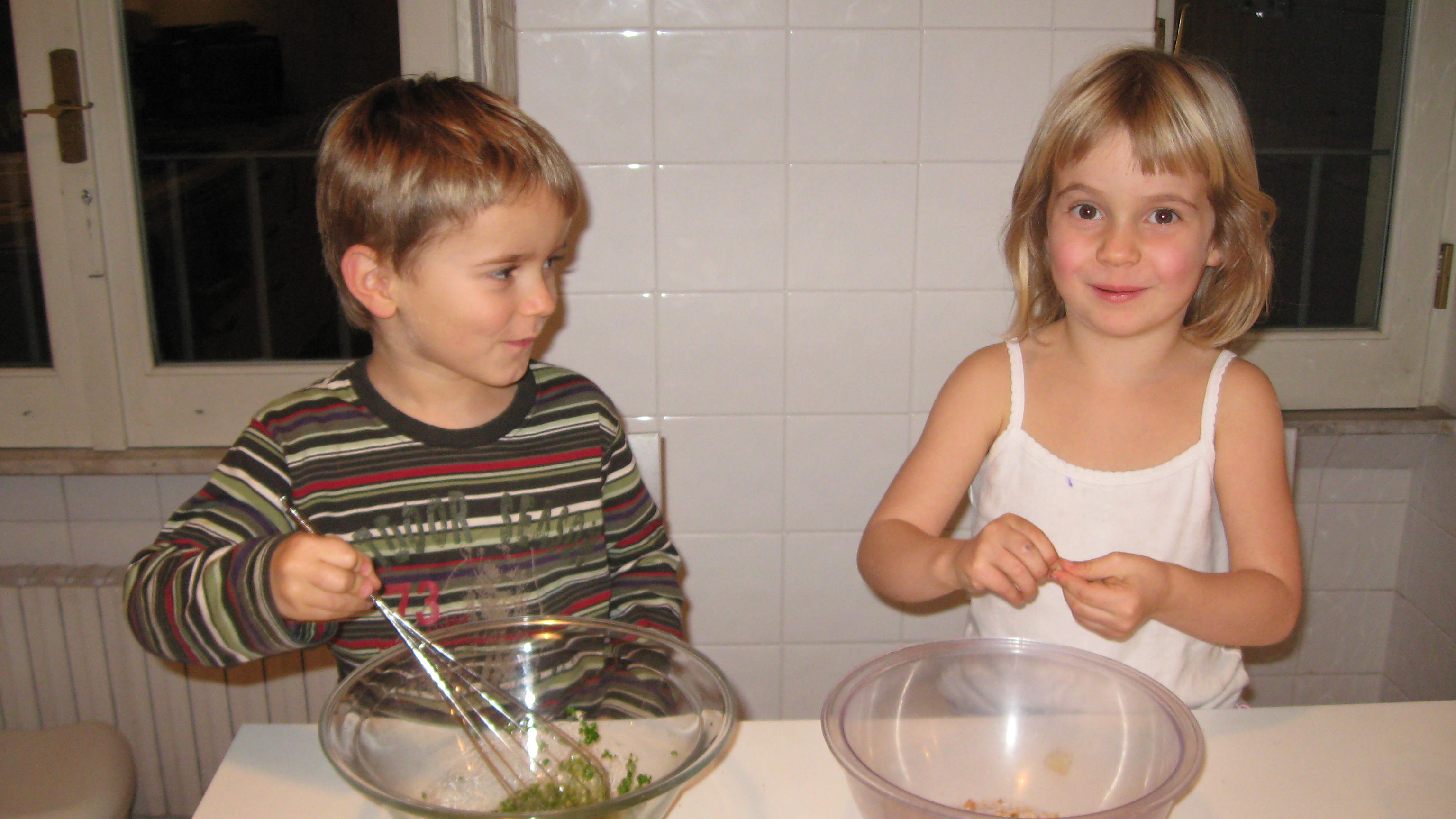
Then, the meatballs: ground pork, breadcrumbs, 1 egg, salt and pepper, a generous pinch of freshly crushed coriander seeds, and small pinches each of ground cumin and cinnamon. I rolled them into a generous size—something between a golf ball and a billiard ball.  I browned them in the pan, while the cabbage leaves blanched.  Then, when all was cool enough to handle, I wrapped each ball in a leaf and set them on a plate while I deglazed the pan, randomly, with sweet vermouth.  (It was the only non-quaffable alcohol in the pantry, and turned out to be the best secret ingredient!)  Then, I put in the meatballs and poured in some stock, covered them, and simmered for 15 or so minutes.  Meanwhile, I cooked some pasta and tossed it with olive oil and parsley.

We took a break from mask-making to eat.

Jack & Felix

swaddled polpette

Then, we got ready for dancing.

Felix, Jack, Pio

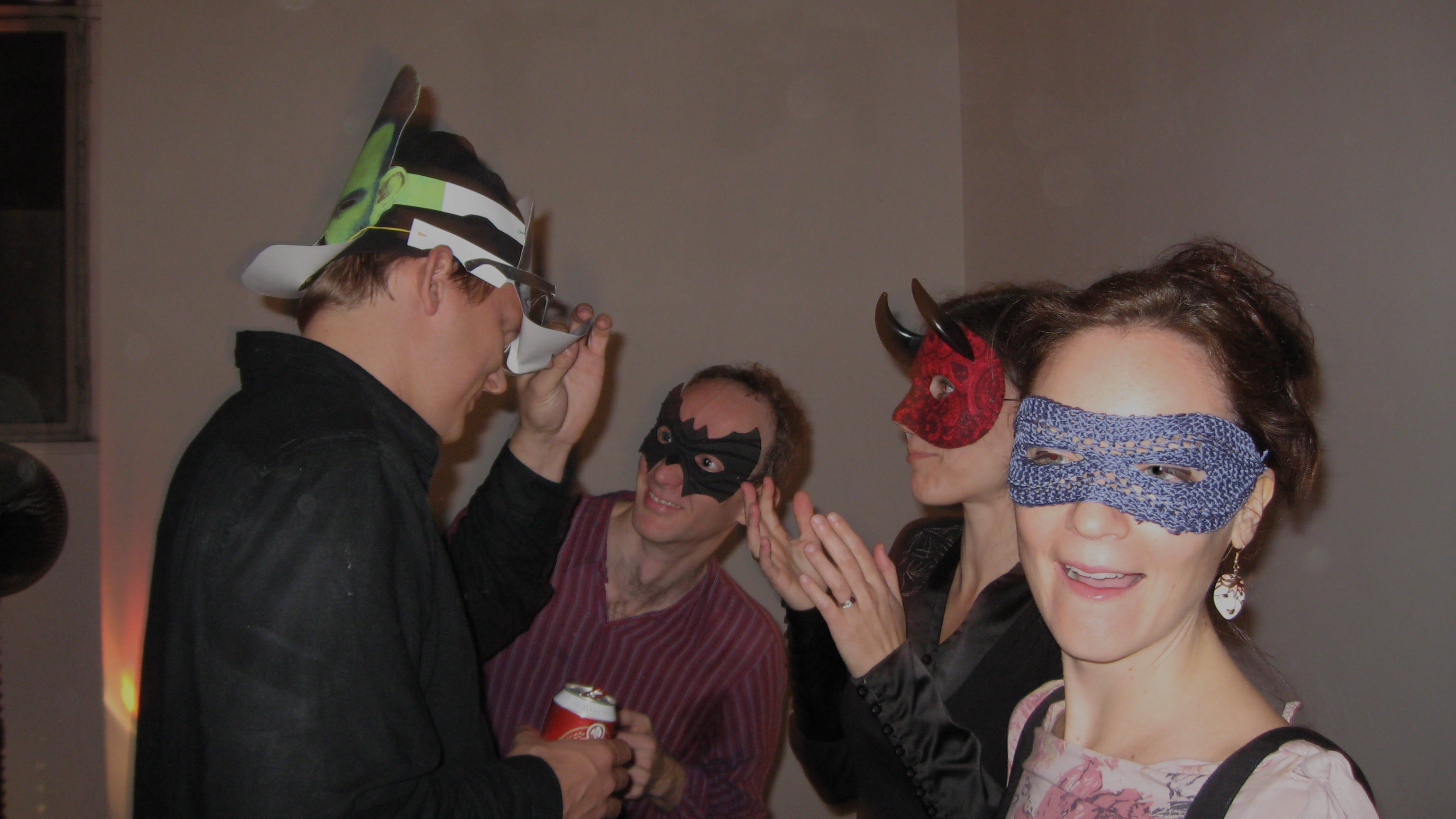
Who are these masked dancers?

Read Full Post »

No.  I’m not talking about that mystery conglomeration “corn dog” that masquerades as meat, but meatballs, served cocktail-catering-style on little wooden skewers.  We took Jack to a cocktail reception last night, and his favorite items were the polpetti, or, meat lollipops.  (My favorite was the split date posing as a dish for gorgonzola and a walnut quarter.)

The reception, here at the Academy, was for the new American ambassador to Italy, David Thorne.  Alice Waters was also there, having come from a big Slow Food event, and planning to stay in Rome through Thanksgiving.  I think you can guess which dignitary I was most excited about meeting.

This morning, Jack said, “Mommy, can you make polpetti?”  Yes! And you can help!  So, after dropping him off at school, I stopped at the Super Carni—a little butcher’s shop owned by a grandparently couple, which sells lots of organic products—and asked for “del bovino per polpetti.”  Probably not very correct, but he understood.  Remember how I mentioned that Italians are always, in a tacit and politely bossy way, telling you the proper way to do things?  Well, I had asked for beef, but after half-picking up a piece of beef, he set it down and reached instead for the chunks of veal, which he then put through the old-fashioned meat grinder twice, making sure the texture was to his satisfaction.  I love the immediacy of this operation.

And of this one:

For the recipe, check out this post.

Read Full Post »

« Newer Posts - Older Posts »