Feeds:
Posts
Comments

Posts Tagged ‘Amy Campion’

It’s rainy, school’s out, and everything’s closed for the feast of the Immaculate Conception.  We made pizza for lunch, and now Jack is busy with various projects involving wooden trains, plastic tractors, blocks, legos, paint, and books.  I’m drinking espresso, listening to Let It Be, and reading various things on the Slow Food website.

This week, Slow Food’s Terra Madre project will have a worldwide celebration of eating locally and sustainably.  Here’s their description of the Terra Madre network:

In 1999, Slow Food launched the Presidia project which has since involved thousands of small producers across the world, strengthening local economies and saving cheeses, breads, vegetable varieties and breeds from extinction. The worldwide Terra Madre network was launched in 2004 to give a voice and visibility to these farmers, breeders, fishers and artisan producers, and to bring them together with cooks, academics, youth and consumers to discuss how to improve the food system and strengthen local economies. Today the Terra Made network is made up of more than 2,000 food communities.

Here at the American Academy, we’re going to celebrate by making the family dinner, on Friday night, a Terra Madre feast.  Mona has done an amazing job over the past few years of connecting with farmers and food producers in the area, and this meal will also mark the birthday of the American Academy’s Rome Sustainable Food Project as a Slow Food Community.  I like how the Terra Madre poster explains the impetus behind this event: “Animati dall’entusiasmo di Mona Talbott….”  Yes! Many great things that happen here have been animated by the enthusiasm of Mona Talbott.  I’m excited for this meal, as is Jack, because he gets to help, with the other kids, to make orecchiette and harvest lettuce from the garden.

A bunch of lucky school kids in Rome will get to go to the Italian School of Film Animation to watch Ratatouille and Totò Sapore e la magica storia della pizza. (Sounds fun. I’d like to see it.)  There are also compost and juice-making workshops for ragazzi e bambini.  Ooohh, fun!  Dirt and fruit, sticky hands, making messes!

I highly recommend reading Slow Food International’s Seven Pillars.  This is where it’s at.

For other Slow Food items of interest, you can check out their website.  And here’s a description of the Terra Madre celebrations.

Read Full Post »

I haven’t actually been making or eating as many meatballs as it may seem from the frequency of their appearance in these posts.  But last night I did make a new (for me) variation on an old theme: meatballs that were halfway between Lions Heads from Shanghai cuisine and Milanese, with some of my favorite flavorings thrown in.  The dish was inspired by a cabbage-wrapped meatball meal the RSFP kitchen cooked for us about a month ago.

In the morning, at the market, I bought some pork which the butcher ground on the spot.  I love that they do this.  Then they show it to you, as if to say, “is this to your liking?”  I bought a big cabbage and some parsley, and started to plan the process in my head.

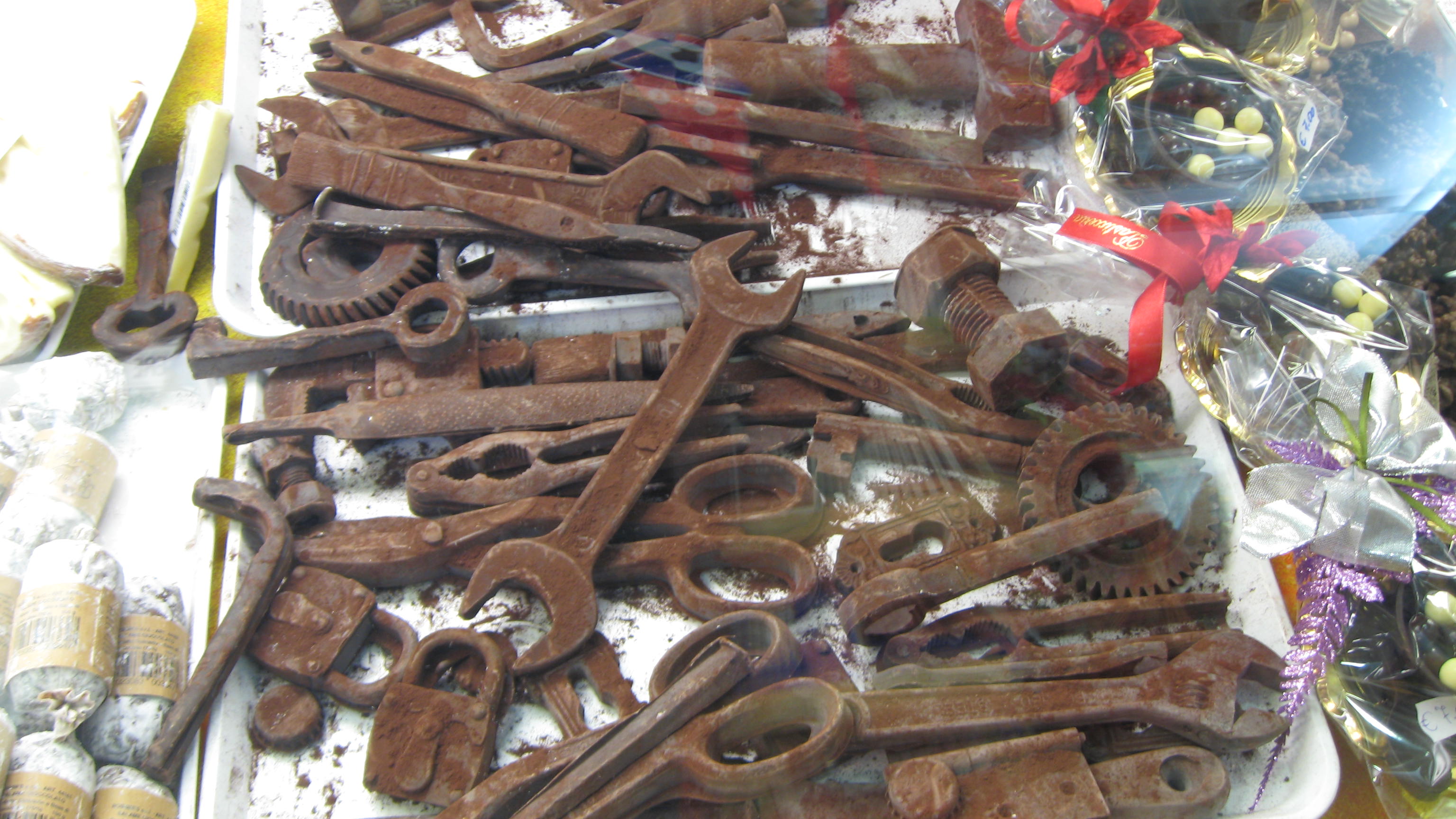
While shopping, I also bought a city bus and admired some chocolate tools:

Harry, Jack, and a serious toy

Dolce Desideri has fun with chocolate

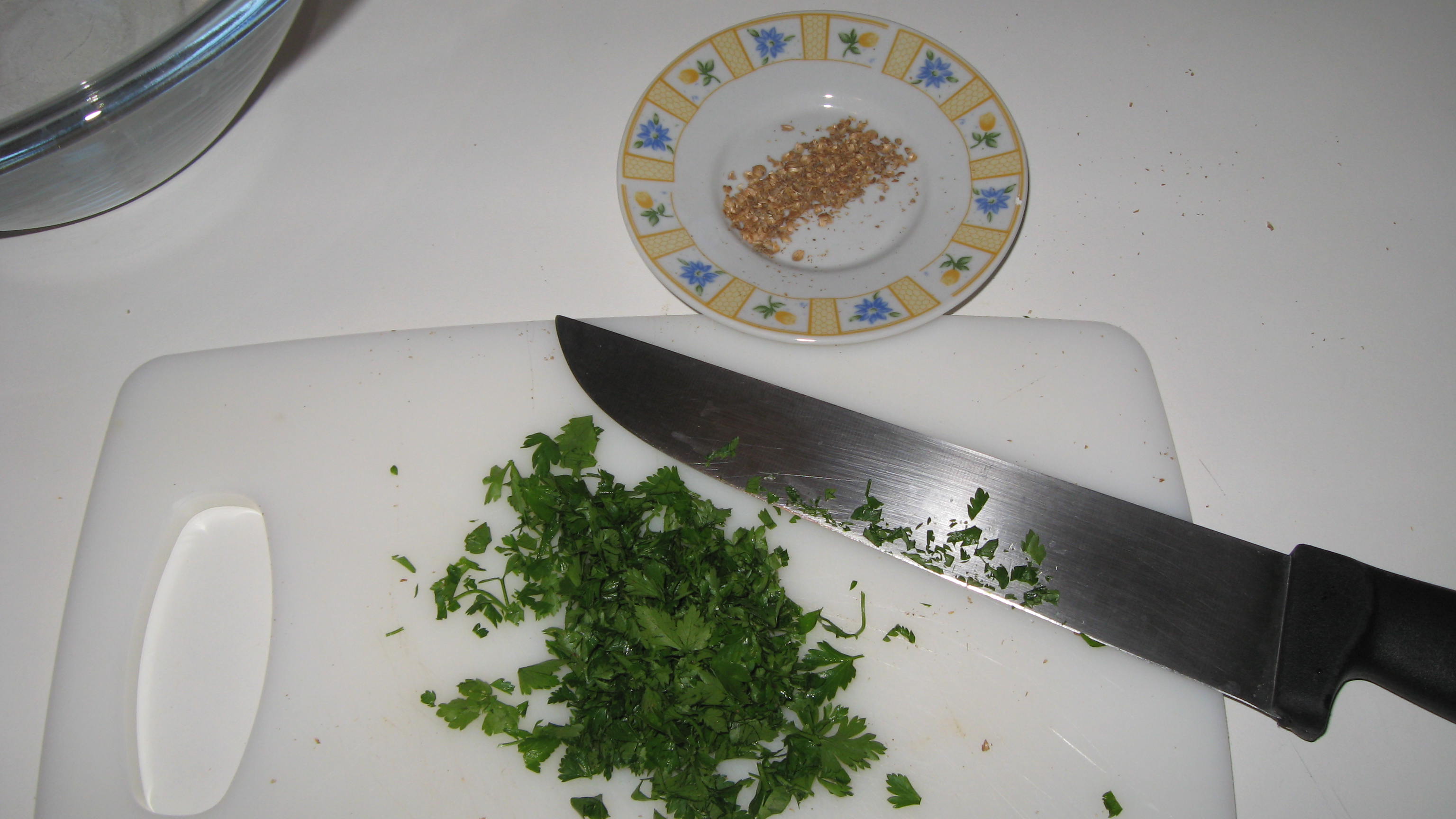
Prep:

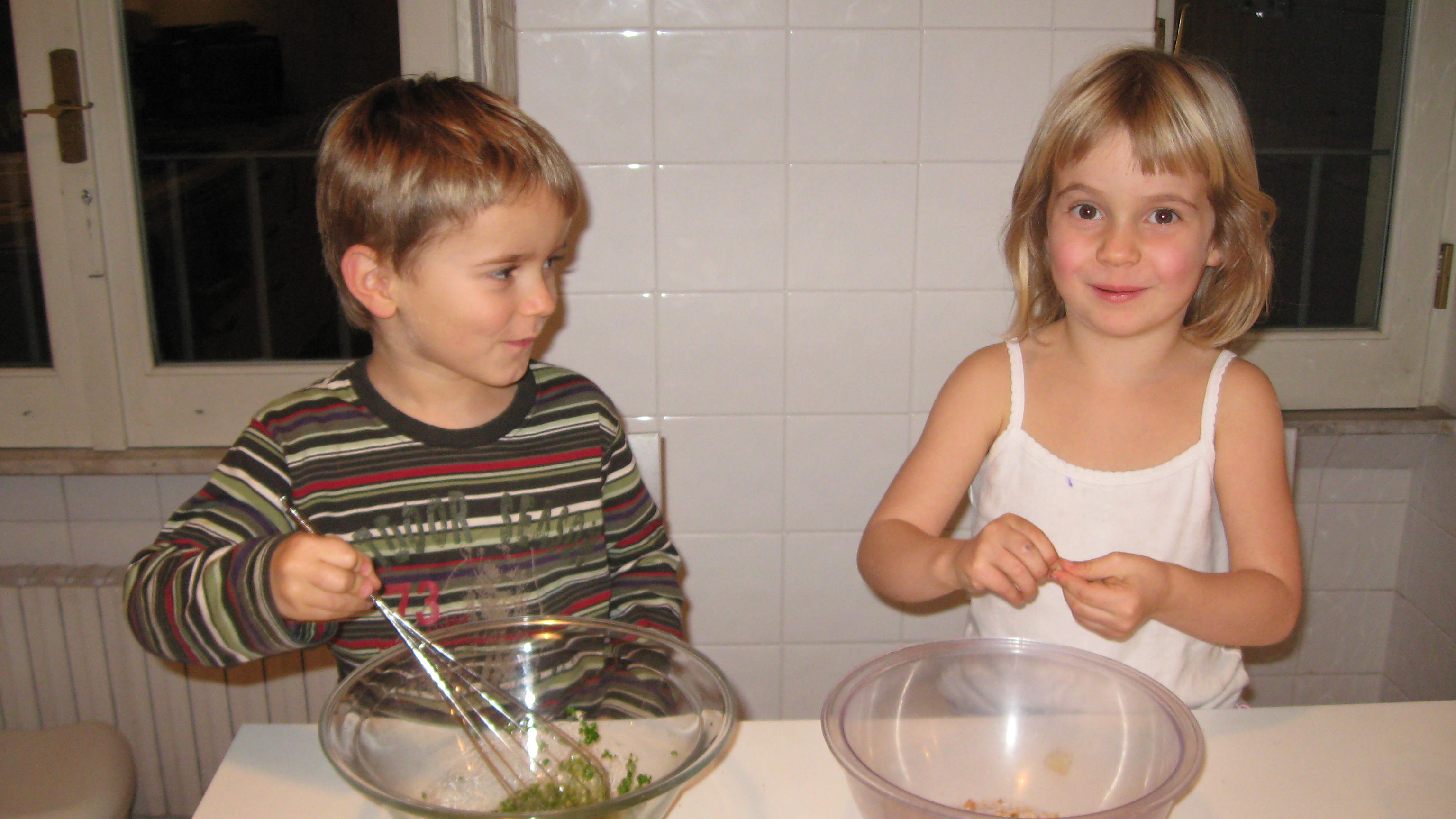
Then, the meatballs: ground pork, breadcrumbs, 1 egg, salt and pepper, a generous pinch of freshly crushed coriander seeds, and small pinches each of ground cumin and cinnamon. I rolled them into a generous size—something between a golf ball and a billiard ball.  I browned them in the pan, while the cabbage leaves blanched.  Then, when all was cool enough to handle, I wrapped each ball in a leaf and set them on a plate while I deglazed the pan, randomly, with sweet vermouth.  (It was the only non-quaffable alcohol in the pantry, and turned out to be the best secret ingredient!)  Then, I put in the meatballs and poured in some stock, covered them, and simmered for 15 or so minutes.  Meanwhile, I cooked some pasta and tossed it with olive oil and parsley.

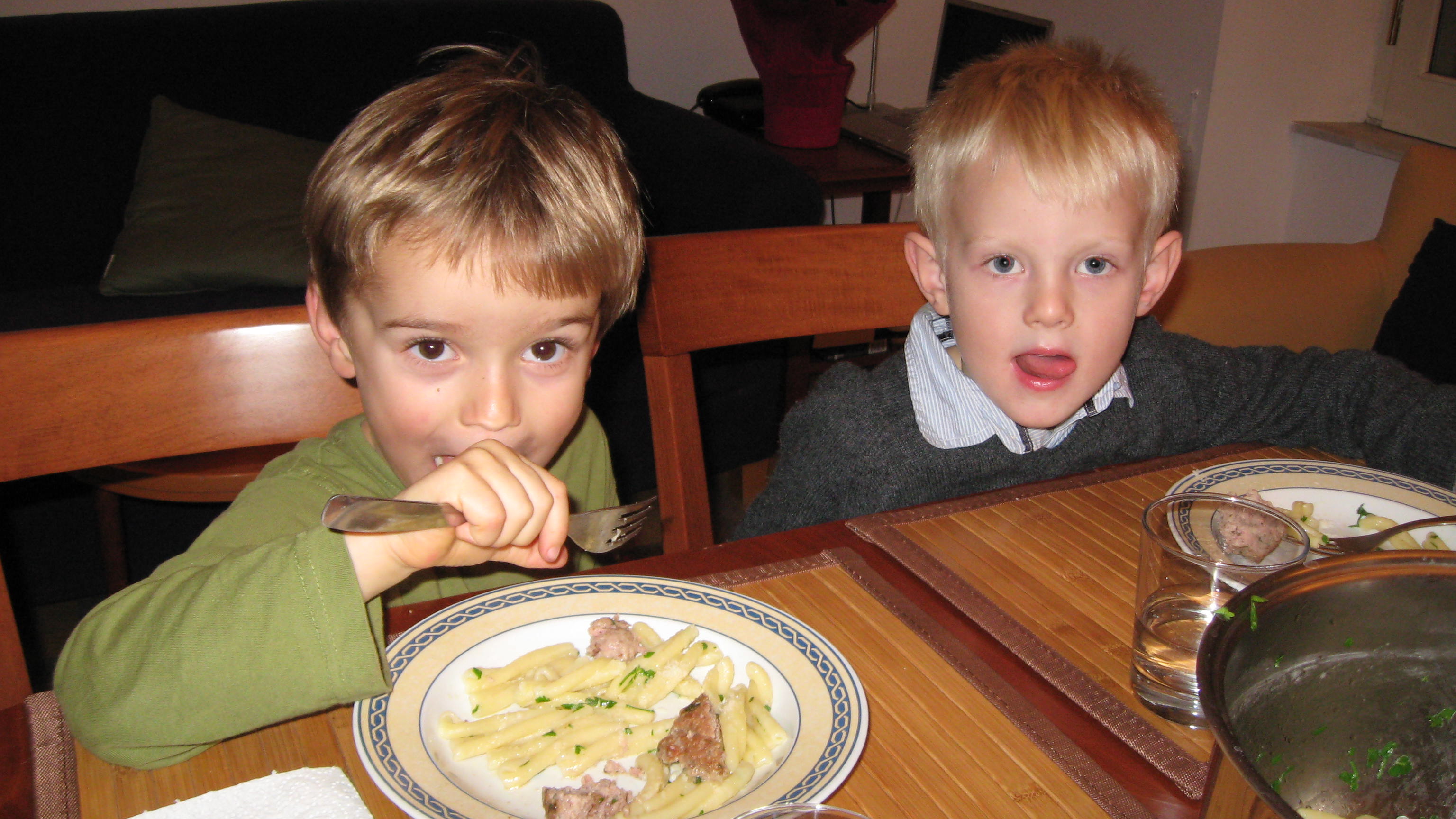
We took a break from mask-making to eat.

Jack & Felix

swaddled polpette

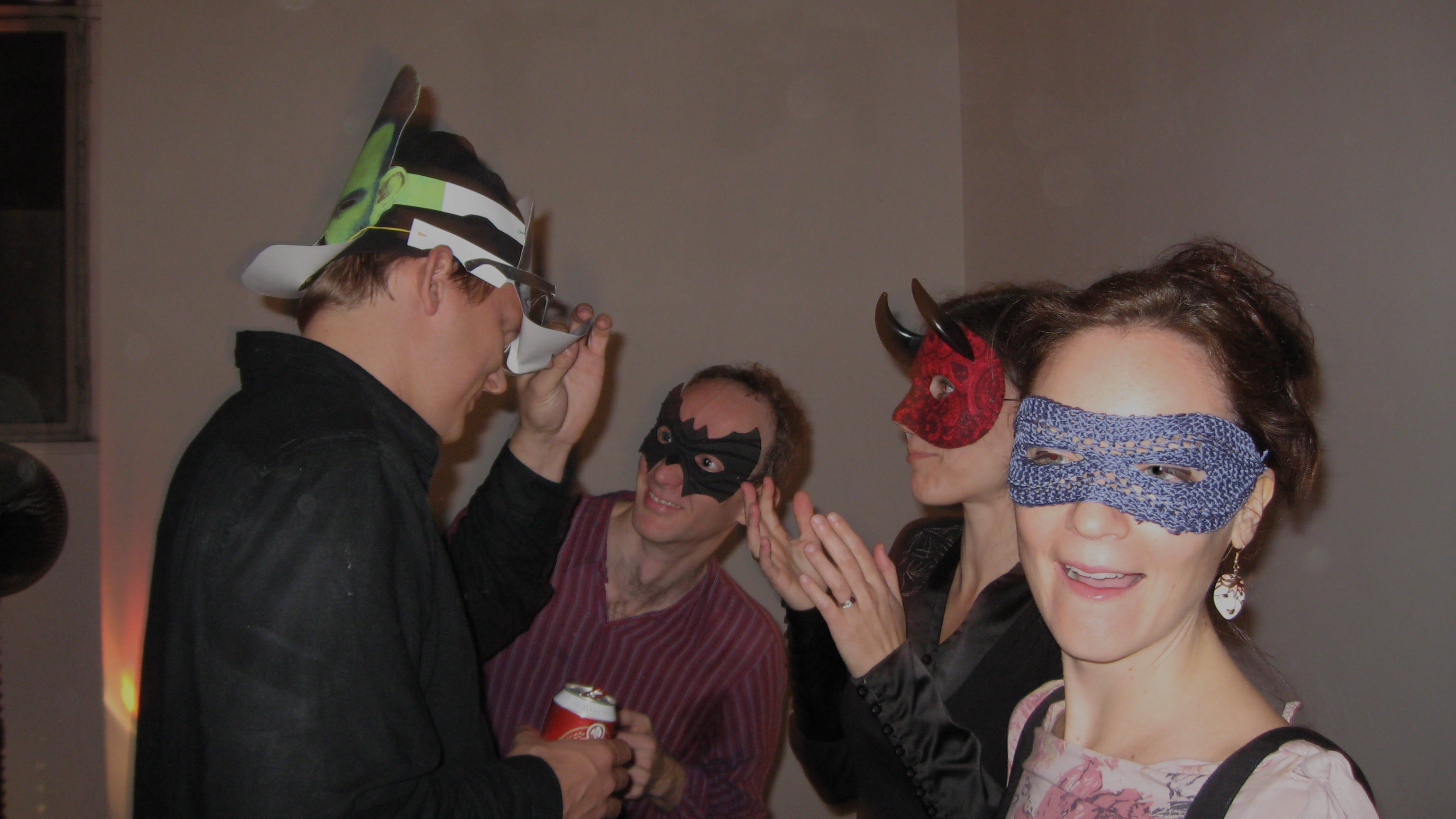
Then, we got ready for dancing.

Felix, Jack, Pio

Who are these masked dancers?

Read Full Post »

Last night, the RSFP served ossobuco.  The platters came out piled with hunks of glistening meat and bone.  Something about about the primal nature of this meal brought out the sillies in us.  We started trying on each others’ glasses.  Some began eating with their fingers.  There was quizzing on food and sex.  And then the marrow sucking began.  While this was going on, there was laughter, of course, which caused a fleck of marrow to fly, projectile-style, from one man’s lips to another man’s shirt.  (You know who you are, friends….) He wore the badge of grease for the rest of the evening, which ended with grappas, noccinos, and amaros.  I wish I had a picture of my friends holding greasy bones up to their puckered lips.  And they, I’m sure, are glad I don’t!

The vegetarians may have been horrified, and luckily for them, were not at our table.  The combination of disgust at the finger-licking sensuality of this unabashedly carnivorous meal, and the ethical divide would be enough for some harsh condemnation of the bacchanalian scene.

Is it enough to say that we know, because of the dedication of Mona and Chris to finding sustainable, local food, that these animals we ate were raised and killed with care and humanity?  Many prefer not to think about this, but when you’re sucking the marrow out of leg bones, the fact of your dinner’s other form as a cute little calf is hard to avoid.

Another way to think about it is as veal shanks braised in stock and white wine and garnished with gremolata—a simple dressing of parsley, garlic, and lemon.  Another perspective is health: a quick google search suggests that bone marrow is nutritious and may even help to account for the low incidence of heart disease in offal-loving societies.

It was, then, a most basic and most complex feast.  And it was delicious.

Since I don’t have any pictures, I’ll direct you to this video of Mark Bittman and Fergus Henderson roasting bones and then spreading the “jiggly” marrow on toast.

Read Full Post »

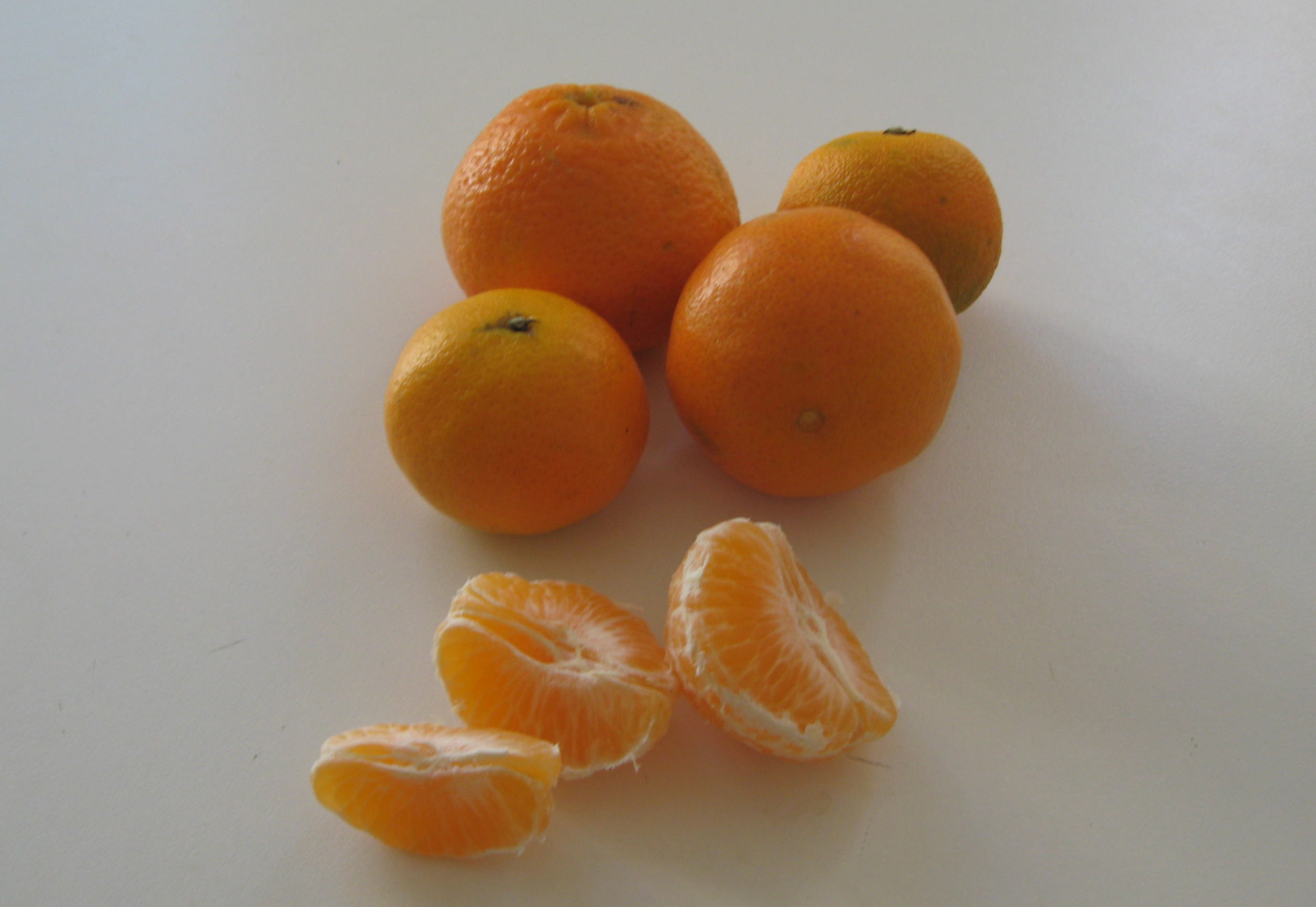
This is a seasonal pleasure. Clementines daily. Jack using his baby-Italian to exclaim “mandarino piccolo!”  The way the fresh scent stays on your fingertips—zest from the peel.

As an early afternoon, pre-Thanksgiving dinner drink, they served “Puccinis”—prosecco with freshly squeezed mandarin (clementine) juice.  This is free association at the service of the endless plethora of unnamed drinks.  Taxonomies of tipsiness.  Puccini’s Turandot is a Mandarin princess.

Who can melt her ice?

But why, then, are Bellinis (prosecco and peach nectar) called Bellinis?  Did he have something to do with peaches?  Not exactly, but this is an associative tipsy taxonomy, so the explanation arrives accordingly.  According to Wikipedia: “Because of its unique pink [?] color, which reminded Cipriani [the Venetian bar owner and namer] of the color of the toga [?] of a saint in a painting by 15th-century Venetian artist Giovanni Bellini, he named the drink the Bellini.”

This, of course, is not the eponymous saint, but the Madonna, in a triptych we saw in Venice and which now hangs in postcard form in our studio.

https://i0.wp.com/www.lib-art.com/imgpainting/9/0/6809-frari-triptych-giovanni-bellini.jpg

https://i0.wp.com/www.wga.hu/art/b/bellini/giovanni/1480-89/2frari/134frax9.jpg

Beautiful illusions of paint.

Then, there was another cocktail, recently.  Lauren asked Alessandro to make a drink he enjoyed making.  We all heard the shaker.  It was frosty and pale orange.  Others ordered the same.  I asked him, “What’s it called?” and he said “Seedecara.” Hmm… that must be some Italian artist I don’t know.  Then, I heard Luca pronounce it, with slightly less inflection: “sydecara.”  Oh!  It’s a sidecar! Brandy, Cointreau, lemon juice. Thank goodness I skipped that one.

Read Full Post »

No.  I’m not talking about that mystery conglomeration “corn dog” that masquerades as meat, but meatballs, served cocktail-catering-style on little wooden skewers.  We took Jack to a cocktail reception last night, and his favorite items were the polpetti, or, meat lollipops.  (My favorite was the split date posing as a dish for gorgonzola and a walnut quarter.)

The reception, here at the Academy, was for the new American ambassador to Italy, David Thorne.  Alice Waters was also there, having come from a big Slow Food event, and planning to stay in Rome through Thanksgiving.  I think you can guess which dignitary I was most excited about meeting.

This morning, Jack said, “Mommy, can you make polpetti?”  Yes! And you can help!  So, after dropping him off at school, I stopped at the Super Carni—a little butcher’s shop owned by a grandparently couple, which sells lots of organic products—and asked for “del bovino per polpetti.”  Probably not very correct, but he understood.  Remember how I mentioned that Italians are always, in a tacit and politely bossy way, telling you the proper way to do things?  Well, I had asked for beef, but after half-picking up a piece of beef, he set it down and reached instead for the chunks of veal, which he then put through the old-fashioned meat grinder twice, making sure the texture was to his satisfaction.  I love the immediacy of this operation.

And of this one:

For the recipe, check out this post.

Read Full Post »

We’re so coddled here, with the wonderful food prepared for and served to us at the Academy.  So it was with real satisfaction last night that I prepared a meal requiring what felt like authentic labor: beheading fish and whisking for a good half hour.

The meal was utterly simple, and maybe that’s why it was so much fun to make.  I started in the morning at the open air market on Via Nicolini, where I bought a pile of fresh sardines.  The fishmonger threw in a handful of parsley too, which is one of the nice gestures these Roman vendors always make.  It’s both generous and bossy of them: “here, have some herbs” and “if you’re going to cook that, you really should have this.”  (This attitude actually seems to be a regional—or even national—trait.)  I bought lemons at another stall, mixed chicories at another, some apples, brocoletti, and then some pizza bianca at Pasticceria Beti.

Here are the fish, before their “dressing”:

There are a few ways to prepare sardines—going from minimally to maximally meticulous.  I chose the middle road.  The minimal would be just to clean the scales off and cook them whole.  The most thorough would be to cut the heads off, clean the guts out, and bone them before cooking.  The middle way, which Robinson Crusoe would have advised, is to break the heads off with your hands; the attached guts follow; and the boning is easier to do when the fish are cooked anyway.

Sardines are very nutritious, as they are rich in omega-3 fatty acids and low in the mercury and other contaminants that settle in the big fish higher up on the food chain. They are very high in selenium and vitamin B12 and high in calcium, niacin, and phosphorus.  Are these good reasons to feel virtuous even when you fry them in butter?

After a good descaling rinse, they’re ready to be dredged in salted flour and fried up in a mixture of butter and olive oil, at high heat.

Before doing that though, I made the aioli with a whisk—and with the assistance of Junior Wells’s Hoo Doo Man Blues, prosecco, and Peter.  I followed Alice Waters’s recipe from The Art of Simple Food.  Start with garlic and a pinch of salt mashed with a mortar-and-pestle; add a 1/4 tsp. of water and an egg yolk. Starting drop by drop, whisk in 1 c. extra virgin olive oil. (When you’re not working with the help of electricity, this takes a good long time.)

The resulting meal was simple, cheap, yummy, and fun.

Read Full Post »

Images are powerful—especially moving ones.

I’ve done so much reading about the industrial food system, about big organics, about sustainable agriculture.  None of the content of Food Inc., which I saw yesterday at the American Academy screening, came as a surprise to me, but it still made a powerful impression because of the combination of music, images, sounds and words that only film can do.  The timing involved in these combinations—as in the moment when a voice (Eric Schlosser’s, I think) says that one hamburger may contain meat from thousands of cattle, while we watch a huge turd-like tube of ground beef ooze out of a stainless steel hole—induces a visceral response in a way that a book or an article in the New York Times can’t do.  I hope lots of people see the film.

Other strong impressions:  the scenes depicting the terrible treatment of workers were very moving—especially the night-scene of the illegal immigrant arrests, when the workers who are part of the system that ensure cheap food for Americans are rounded up and shoved like animals—in fact, much like the chickens, pigs, and cows we also saw being rounded up for slaughter.

Another: almost everyone is overweight—the farmers, the families, the politicians.  The only ones who are thin are the heroes of the film, and some of the male illegal immigrant workers.

And another: the scene of the family stopping at a fast food restaurant for their dinner, because a dinner for four only costs $11.98 and because their commute will not get them home until 9 at night.  This scene is followed by a trip to the grocery store: the youngest (overweight) daughter wants fresh fruit, so they look at the price of pears.  Too expensive.  They move on to the processed food aisle.

The major flaw in the film is the treatment of this family’s situation, however.  The issues of economic class are presented, and then left hanging.  Yes, Michael Pollan speaks and has written about the need for policy change that will make healthy food cheaper than processed corn-based food.  But this hugely important idea  is only given a few seconds in the film, whereas the hammer-it-home message at the end of the movie is given many minutes and many flashy images.  This message—that you vote with your fork “three times a day”—is deeply flawed.  On the one hand, it would have us all following Samuel Kayman’s implicit advice to shop at Wal-mart for our food.  But more importantly, this message blatantly ignores that family who eats fast food for dinner.  Not only does it ignore them, it disenfranchises them.  They are too poor to vote with their fork.

There was much more attention to the issue of food safety, and some optimism about effecting policy change in the direction of greater food safety.

In the end, though, even though there were gestures of hope—like the inclusion of Joel Salatin’s paradigmatic farm—the overall effect was bleak.  I hope we can achieve major policy changes, of course I do.  But Food Inc.’s most lasting impression is that big business controls the government, and that without millions of dollars to use as weapons against it, Monsanto will take over the world.

The colorful gleams of text at the end—“you vote with your fork”—were pretty pathetic talismans held up against that dark overlord.

For some follow-up thoughts on a more positive note, please check out the next post.

Read Full Post »

Another winding walk today—this time down the stairs rather than up to the park.  I had a few various goals: to see the turtle fountain Jim Ackerman told us about the other night; to buy some whole-grain flour and some nuts at Canestro; to see some new narrow streets; and, if possible, to find chocolate chips for cookies.

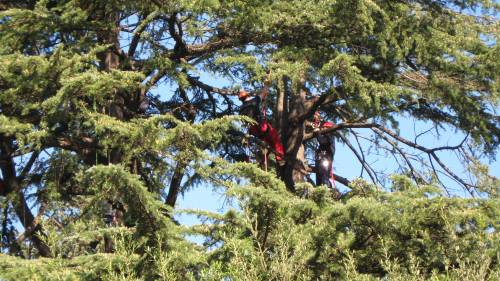
When I stepped out onto Via Angelo Masina, our street, I saw a bunch of men way up high in the trees.  It was a tree-trimming class!  (Later, all fifteen or so of them were packed into the little Academy bar smelling of beer and sweat and sap—quite a different crowd from the usual.)

IMG_2751

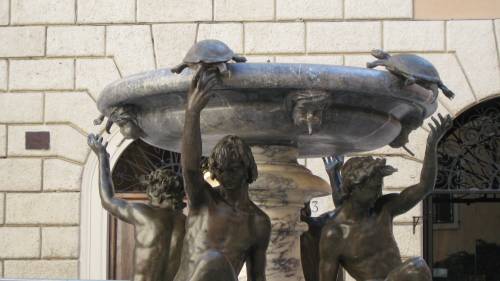
I walked the now-familiar route down the two sets of steps to Trastevere, and then across Ponte Garibaldi and off to the right, into the Ghetto.  I found the turtle fountain—a beautiful, delicate image of humans helping animals—or doing something balletic with them, anyway.

IMG_2754


Here was a little, covered-over door.  Why was it made so small?

IMG_2756

There are mysteries here in this city.  Often, there are explanations, but often, those explanations present more mysteries, or at least curiosities.

I never found any chocolate chips—after looking and asking in four stores!

Read Full Post »

1.  To walk about at large, to roam without restraint; to move about freely in space, wander at will.

2.  To speak or write at some length; to enlarge; to be copious in description or discussion.

IMG_2736

I spent the morning expatiating, in both senses of the word, with my friend Camilla in the Villa Pamphili park.  We wandered through sun and shade, stepped around puddles, paused and gestured for emphasis, and covered all of the topics new friends find themselves covering: life, plans, confusions, kids, other new friends, grandparents, religion, food, tea or coffee, sisters, blogs, books, jobs, husbands, hometowns, the past, cooking, friends, writing, childhood, life in Rome.  She’s come to Rome from Oslo with her husband and two little boys, and will be here for four years while her husband works at the Norwegian Institute.  We walked slowly while the Roman joggers passed us, listening to their i-pods, talking on their mobiles.  Vivi Bistrot had just opened for the day, so we sat in the sun on their patio for a good hour, eating cornetti integrale with bitter honey and sipping tea (Camilla) and cafe latte (me).

New friendship is like getting to know a new place in a particular season.  You think you have a good idea of what a landscape or city looks like, in the fall, say.  The light slants a certain way, the trees and flowers have certain aromas, it’s cool in the shade and warm in the sun.  We met each other two months ago.  We’re both 34 and living temporarily in Rome.  Our lives exist as they do here and now in the particularity of these circumstances.  But as we walk and talk, through the seasons, we’ll get to know each other in different air, light, and seasons.

Thinking about this brings to mind my good friend Liz. When we met, I was pregnant with Jack, just on the cusp of the biggest change I’ve ever gone through.  We know each other well, but she’s always known me as a mother.  I’m the same person, but also very different. I wonder what she’s doing, now.  Still working on that community garden?  I don’t want to say we’ve lost touch, but the lines of communication have stretched thin.  I miss her….

Read Full Post »

Dylan turned five, and Jim turned ninety.  We celebrated with them both.  It was a busy, delicious day filled with tasty tidbits—of both food and conversation.

Dylan and his parents live in a fourth floor walk-up in Trastevere.  Sarah offered me a cafe latte as soon as we arrived, which was welcomed on a blustery morning.  She had clearly been working for hours on the food, which was spread on their square table that sits invitingly in the middle of the open eat-in kitchen.  There were assorted sandwiches for the kids to scarf down, two kinds of chicken salad with greens, a cous cous salad, a hummus platter, sliced cheeses and salumi, crackers, two kinds of cupcakes, and, warming in the oven, pizza rossa (pizza topped with tomato sauce) and lasagna!  The party rolled along at an Italian pace, with people arriving as late as 12:30 for an 11:00 party.  The kids went from sandwiches to cupcakes to chocolates, in between sessions of semi-organized play, and the parents went from coffee and oatmeal cookies to wine and lunch. The crowd was made up of Arcobaleno and ex-pat community friends; most of the parents switched fluently from Italian to English, and the kids played together in a happy bilingual, prelingual, nonsense, and gestural chaos.  I tried to get a picture of the “fishing for chocolate” game, but only captured a bit of the party’s buzz:

IMG_2741

IMG_2743

The rest of the afternoon was down-time for me, but Jack was ready for more socializing, so we invited Lulu up from apartment 1.   She and Jack play together so agreeably.  They played “store,” which involved emptying Jack’s clothing drawers onto the bed and making play money.  They drew and painted pictures of “ghosts eating people.”  They played “boat” in a printer box, and rode up and down the hallway on Jack’s scooter.  We made kettle popcorn, and Lulu told us that her dad is such a kettle corn expert that every kernel is popped.  She also told us it was her mom’s fortieth birthday.  Happy birthday, Anna!

After putting Jack to bed, and leaving him with his kitchen-intern babysitter, Jaimi, we went next door to the Ackermans’ apartment for a birthday dinner party.  What an honor to be Jim and Jill’s guests!  They are the most elegant, lively, curious scholar-artist couple, and they brought together some wonderful company. And Jill, who loves to help out in the Academy kitchen, cooked a fabulous, finger-friendly meal.

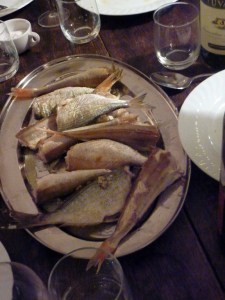
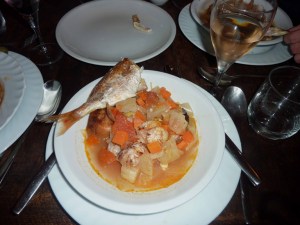
We started with steamed artichokes—it’s high carciofi season here in Rome—dipped in brown butter.  Next, along with Mona’s chestnut bread, Jill served her own fish stew, with a soaked crouton, flavorful aioli, tiny local clams and some small whole-roasted fish to lay on top.  Jeffrey managed to get a good picture of this dish:

-2

-1

After arugula salad, before melon and crostata, and with vin santo, we read aloud some short pieces we’d brought with us to honor Jim—as a friend, historian, Michaelangelo scholar, man, artist or all of these together.  Since the text I read is in the public domain, and was the least personal, I’ll copy it out here.  It’s Lord Byron’s description of seeing and being in St. Peter’s Basilica, from Canto IV of Childe Harold’s Pilgrimage.

Thou movest—but increasing with the advance,
Like climbing some great Alp, which still doth rise,
Deceived by its gigantic elegance;
Vastness which grows—but grows to harmonize—
All musical in its immensities;
Rich marbles—richer painting—shrines where flame
The lamps of gold—and haughty dome which vies
In air with Earth’s chief structures, though their frame
Sits on the firm-set ground—and this the clouds must claim

Thou seest not all; but piecemeal thou must break,
To separate contemplation, the great whole;
And as the ocean many bays will make,
That ask the eye—so here condense thy soul
To more immediate objects, and control
Thy thoughts until thy mind hath got by heart
Its eloquent proportions, and unroll
In mighty graduations, part by part,
The glory which at once upon thee did not dart,

Not by its fault—but thine: Our outward sense
Is but of gradual grasp—and as it is
That what we have of feeling most intense
Outstrips our faint expression; even so this
Outshining and o’erwhelming edifice
Fools our fond gaze, and greatest of the great
Defies at first our Nature’s littleness,
Till, growing with its growth, we thus dilate
Our spirits to the size of that they contemplate.

Childe Harold’s Pilgrimage, Canto IV, stanzas 156-158

Read Full Post »

« Newer Posts - Older Posts »