Feeds:
Posts
Comments

Posts Tagged ‘Amy Campion’

Sunday morning was spectacularly sunny, and warming up quickly.  We had our first spring day (followed by more rain today).  It was perfect for our walk—with Anna, Jon, Lulu, Jesse, Rena, Nick, and Zoe—down the hill and across the Tiber to the old Jewish ghetto where one special forno makes perfect doughnuts.

When we got to the octagonal tower next to the old Cenci palazzo, we could smell the sweet warm scent of baking dough.

There was a line out the door, as expected.

(Those cakes in the window are ricotta-chocolate chip and ricotta-cherry tortes, with their crumbly, not-too-sweet burnt sugar crusts.)

Jon went in with a handful of change, and came out with the last 4 doughnuts.  Just in time!  These kids would have been inconsolable.

These are the antithesis of Krispy Kremes: dense, chewy, and just slightly sweet.

Read Full Post »

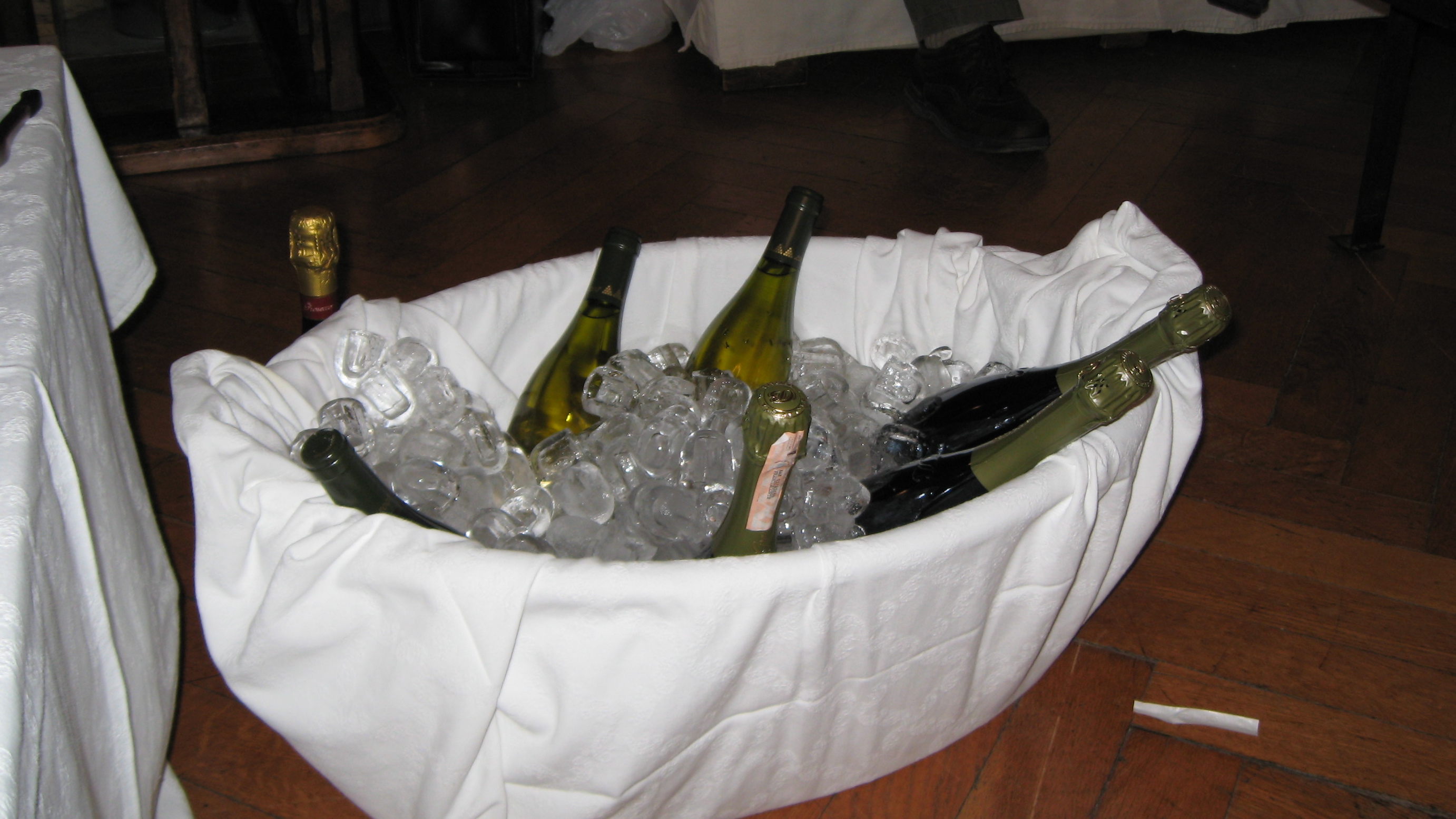
Two incredible events punctuated this week: a wine tasting led by sommelier Pina Pasquantonio, and snow in Rome, which hasn’t happened since 1986.

The snow was thrilling!  A group from the Academy walked down to the Pantheon, to see the rare sight of snowflakes falling through the oculus.  I took Jack to school, where the children were jumping and dancing and shrieking about the neve.

The wine tasting, very nearly as thrilling, was a rare opportunity as well.  Most days, we know Pina as the most important administrator at the American Academy.  But she is also a certified sommelier, and in this role she is in her element.

Pina & Gianni, also a sommelier

The tasting began with a crash course in the geography and most important varietals of Italian wine.  Italy has the most grape varietals of any country in the world, and of the 850 or so, 350 have a special status. Could this be one reason wine-lovers trained in varietal-focused American wines find Italian wine-shopping so daunting?

We started with a spumante produced in the metodo classico, which means that the second fermentation occurs in the bottle, and not in a huge steel vat.  This wine, like all of the others we tasted, was a wonderful sense-experience.  Pina pointed out the bubbles, which were tiny and few, a sign of high quality.  She instructed us to taste, and then to eat a piece of bread with olive oil—made from her own olive trees—and then to taste again to experience the palate cleansing effect of this effervescent minerally wine. (This was Bellavista Gran Cuvée Pas Opere Franciacorta 2003 from Lombardia.)

Next, we tasted a wine that was recently rated one of the top 100 wines in the world by Wine Spectator: Jermann, Vintage Tunina 2007 from Friuli-Venezia Giulia, a blend of Sauvignon, Chardonnay, Malvasia Istriana, Picolit, and Ribolla Gialla.  It was probably the most complex, interesting, and best white wine I’ve ever had.

These were followed by an incredible red that first silenced everyone and then inspired murmurs of sensuous pleasure—Nino Negri, Sfursat di Valtellina Cinque Stelle 2005, a Nebbiolo from Lombardia—and a dessert wine that awed us again with its amber glow and its multifaceted sweetness.  This was the Passito di Pantelleria Ben Ryé 2008, which Pina exclaimed smelled exactly like Sicily.

(Looking back at my photos, I realize that once the wines were poured, I was too busy to remember my camera.)

Read Full Post »

It’s cold, rainy, and February.  But with a fire in the fireplace, an amazing Indian lunch, and a handful of confetti, we brightened up this dismal day.

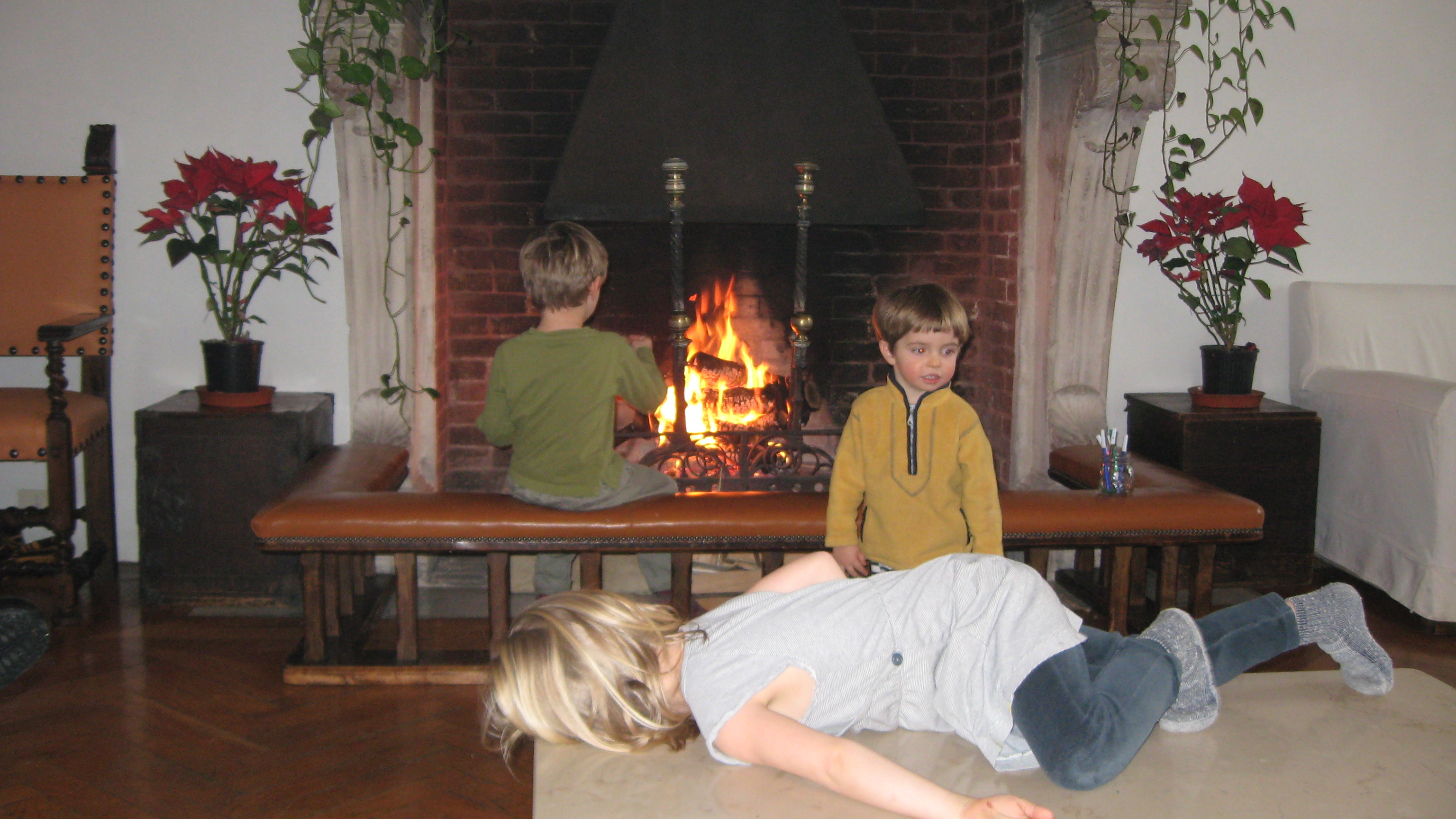
Jon and some of the kids went out to the Triangle Garden to gather some dampish wood.  It lit… and smoked and hissed… but also blazed, and had the kids alternately staring entranced at its flames and running helter skelter calling out for hot cocoa.  Lulu lolled, and Jack fanned the flames.

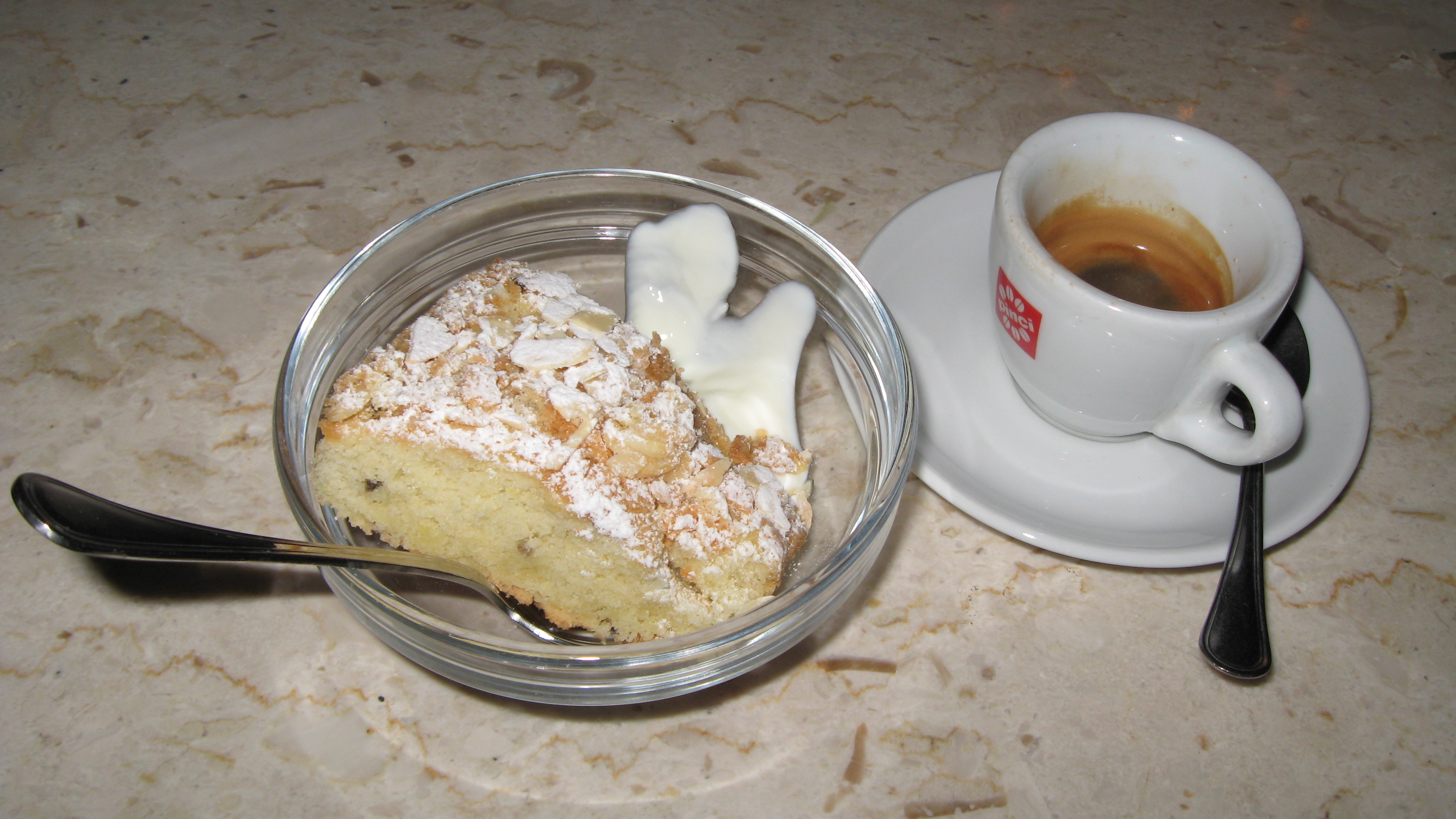
Mona and the cooks made the best Indian meal I’ve ever had, with curried chicken, dal, spiced rice, papadum, raita, two chutneys, and sauteed greens.  Everyone went back for more, and then we noticed the cake—a fluffy almond cake infused with toasted, crushed cardamom seeds.  With a dollop of tangy yogurt on the side, and a perfectly pulled esspresso, this dessert went down in history.

What an inspired culinary performance!

And despite the rain, Carnevale goes on.  We’re saving most of our confetti for tomorrow, when the sun will shine, but I sprinkled a handful down from the window on Jack, for whom the simple pleasure of watching brightly colored snow fall is close to ecstasy.

Read Full Post »

I went on a walk this morning, after a doppio cappuccino didn’t help my concentration.  Down the steep steps, around the curve of Via Garibaldi, through some narrow Trastevere streets, across Ponte Sisto to Campo di Fiori, where Giordano Bruno presides over the messy mosaic of the open air market.  I stopped in some shops with “Saldi” signs—holiday sales still going on.  (Found a rust-colored viscose-velvet skirt that has a nice swing to it.)  I walked by Roscioli and didn’t go in, for once.

I took lots of pictures of architectural angles that struck me, and found, on my way back up the steps to the Janiculum that the door to the courtyard where the Tempietto stands was open.  This is a symmetrical, serene little place.  A tiny round temple that somehow feels proportionally perfect inside the plain block of a cloister courtyard, it was designed and built by Donato Bramante around 1502.  All of my new architect friends have me thinking about how the treatment of space translates—and translates into—emotions.  The dignity and simplicity of the Doric columns, the details, down to the rainwater drain, made me feel a subdued awe, peace, calm, as if the world, for a moment, had some harmony.

Tempietto seen through the entrance arch.

rainwater drain

Soon, though, I realized that the two guys in easy conversation at the gate, jingling their keys from time to time, were waiting for me to leave.  We all laughed when I finally caught their eye and hurried out.

After my brisk communion with commerce, architectural curves, and sacred spaces, I arrived just in time for lunch at the Academy.  It was one of those days when everything was good—especially the baked scamorza in a spicy tomato sauce, the farro roasted with lemons and fennel, the ricotta al forno, and the dessert: torta mimosa.  This cake would be perfect at a wedding. It is white, fluffy, with citrus hints and intensities in its delicate layers of crumb and buttercream.  The frosting on the outside is dusted with crumbly crumbles of the cake’s delicious crumb.  Of course I didn’t get a picture, and when I looked for one on google, all I found were these, which are vulgar, garish, impostors of the angelic dessert we ate today.

If you’d like to see my pictures of some architectural history and whimsy that’s at every turn in Rome—like this curvaceous facade—go to my Flickr page.

Read Full Post »

We’re in the season of Carnevale, the forty days before Lent, which used to be, for Italians, one long party, when masquerade meant license.  (For some of Lord Byron’s lines on this tradition, check out my fritter post.)  Speaking of fritters, frappe—a crispy, ruffled kind of fried dough topped with a blizzard of powdered sugar—is now in all of the forno windows, beckoning people with its simple mix of sweet, fat, once-a-year bliss.  On our way to the market this morning, Ramie and I stopped at Dolce Desideri (as usual).

There are all kinds of other traditional Carnevale pastries, too, some of which are variations on what we call “doughnut holes” and Italians call “bombe.”  (I have to admit, I sometimes give in to Jack’s whine on the way to school, and stop at Caffe Tazza D’Oro, where I get a cappuccino and he gets “una bomba piccola,” a little ball of sweet, sugar-crusted dough small enough to fit in my fingers’ OK sign.)

From Desideri, we went to the market to stock up on delicious seasonal greens. I bought a little head of treviso radicchio that looks like an overblown dark rose.

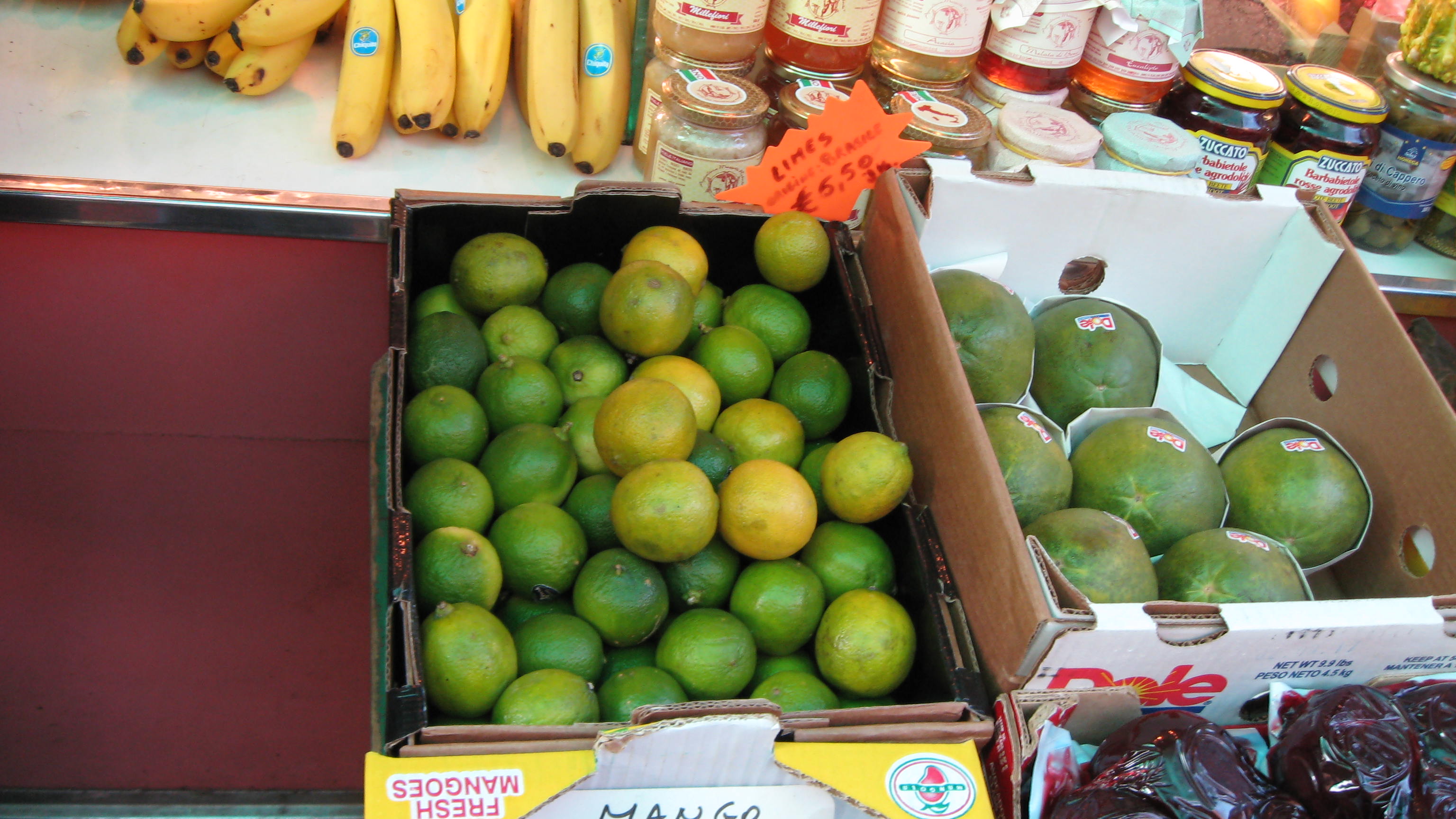
The presence of limes at this stall made us realize there is a complete lack of limes in Italian cooking—at least around here.  Why?  Every other citrus fruit grows in abundance, in the gardens here, in the playground at Jack’s school, in courtyards all over the city.  But this is the only place I’ve ever seen limes.
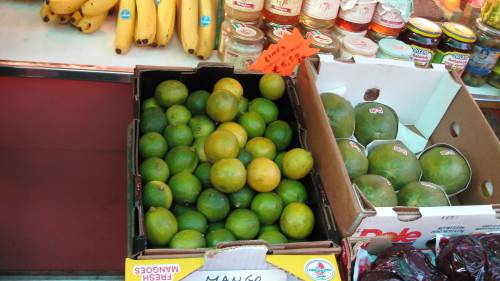
This is also the place to get ginger root, dried fruits, bulk nuts, and spices.

From there, I went to my favorite local forno to get some pizza bianca.

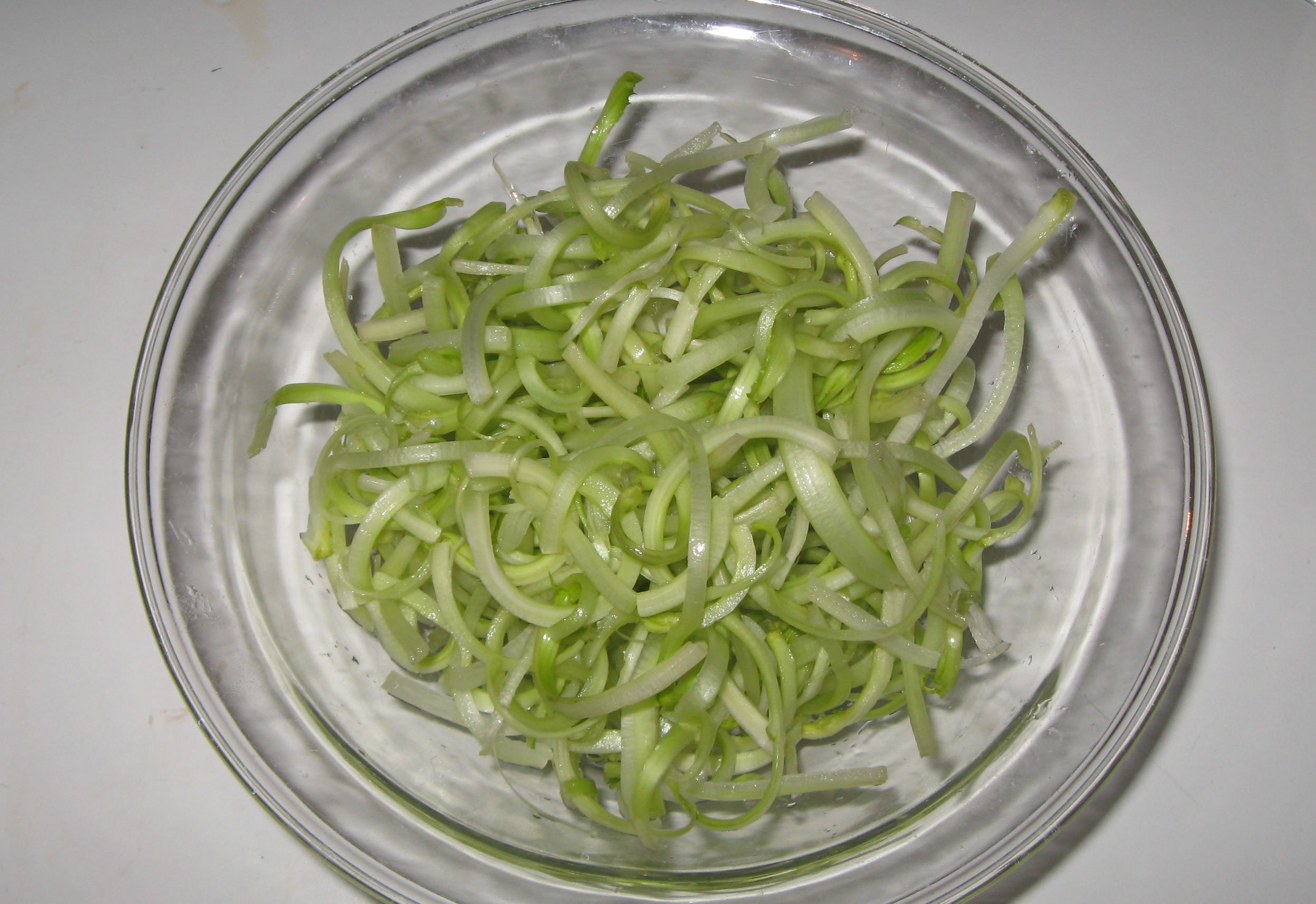
I also bought some puntarelle, which I later tossed in the traditional Roman way with lots of garlicky vinaigrette and chopped anchovies.  Puntarelle are the hearts of a tall chicory variety, sliced lengthwise and soaked in cold water, which makes them curl and takes off some of their bitterness.

The recipe at epicurious.com suggests substituting endive, if you can’t find any chicory.  (I’ve adjusted the amounts a bit from their recipe):

  • 3 garlic cloves, chopped
  • 6 anchovy fillets, rinsed, patted dry
  • Large pinch of coarse kosher salt
  • 1/4 cup extra-virgin olive oil
  • 1 tablespoon red wine vinegar
  • 1/2 teaspoon Dijon mustard
  • 4 large heads of Belgian endive (about 1 1/3 pounds), halved lengthwise, then cut lengthwise into thin strips

Mix garlic, anchovies, and salt in small bowl. Mash with back of wooden spoon or firm spatula until paste forms. Whisk in oil, vinegar, and mustard. Season dressing to taste with salt and generously with pepper.

Place endive in large bowl of ice water. Refrigerate 1 hour. Drain well. Place in clean bowl. Toss with anchovy dressing and serve.

Read Full Post »

This distinction, between red and white, is an important and ubiquitous one in Roman society.  Well, at least when it comes to snacks and drinks and—if you’re talking to children—dinner.  There’s, of course, red or white wine.  (But these are just the most basic distinctions.  In addition to the great array of differences based on geography and terroir, there’s also the difference of fizz. But fizz, we’ve found, covers the spectra of bianco through rosato to rosso, and of seca to dolce.  In other words, it’s possible, and a pleasure, to find a dry fizzy pink wine and a sweet fizzy red wine.)

*     *     *

I thought moving to Italy would expand my son’s diet into the far reaches of foreign flavors and textures.  He already liked olives and peppers.  We seemed to be on the right track.  But for some reason, living in Rome has contracted his taste.  His favorite choice, when it comes to dinner, is pasta bianca or pasta rossa.  And usually, he’ll choose the bianca: pasta with olive oil and grated parmesan.  He seems to have given up green things, which drives me nuts, because there are so many more wonderful green things here than there have been anywhere else he’s lived—except Berkeley, where he lived when he was just cutting teeth.  Green leaves with cheese, green leaves with nuts, green leaves with sweet onions, green leaves with grains, gazillions of great greens!  He won’t have any of it.

*     *     *

The third important category of the rossa/bianca divide is pizza.

Pizza rossa is a thin, tasty crust spread with savory tomato sauce; each good forno will have its own sauce, some more salty or herbaceous than others.  Pizza bianca is a bubbly pizza crust topped simply with olive oil and salt.  Again, each forno’s dough has its own taste and consistency, and is topped with more or less salt.  You can also order pizza bianca morbida (soft) or dura (hard-crunchy). My favorite place to buy both is Panificio Beti, in our neighborhood.  The lines are always long, and the family behind the counter always bustling and full of banter.

These Roman basics serve as snacks or sides at any time of the day.  Italian life is riddled with rules, but, as far as I can tell, pizza rossa and bianca exist in a looser realm.  As a rule, Italians don’t eat on the run the way Americans do.  Even to-go coffee is a very rare sight.  But pizza rossa can be eaten with dignity while one is walking along the sidewalk.  The pizzeria guy will cut a piece in half, slap the parts together sauce-side-in, and wrap the bottom half in a piece of paper—a process that takes about a second and a half—so the snack is ready to eat as soon as it passes from his hand to yours.  I’ve seen people eat it for breakfast, for elevenses with beer,  for a late afternoon snack, and for dinner.

Last night, still satiated from the big Saturday Academy lunch, we had salad, pizza rossa, and vino rosso, for dinner.  Jack had the white ribs of the lettuce, pizza bianca, and milk.  I wish he’d broaden his taste at least to complete the color combo of the Italian flag.

Read Full Post »

The noun form of fritter—the one that speaks of food—derives from the Latin verb for “fry,” frigere. Although I’m writing a food blog, this is not the form of fritter I’m concerned with today.

The other form, the transitive verb usually followed by “away” derives not from any culinary activity but from the Old English word fitt, meaning “part” or “piece.”  When you fritter away your time or money, you disperse it little bit by fragment, almost unconsciously….

What I’m getting at is the reason I haven’t been posting much recently.  We have seven months left in Rome, and I’m determined to finish and file my dissertation before those months are up.  Therefore, my life must be lived with as little frittering of any sort as possible.  I’m sure I’ll find a snatch of time here and there to post some words about some thoughts on food.  Just less frequently.  And, of course, some forms of frittering can always be justified.  As Lord Byron says, “Oh pleasure, you’re indeed a pleasant thing.”

Or, wait!  Maybe I can sometimes bring these diverse writing projects together.  Byron wrote some funny verses on being a carnivore during the Venetian Carnival:

This feast is named the Carnival, which being
Interpreted, implies ‘farewell to flesh’:
So call’d, because the name and thing agreeing,
Through Lent they live on fish both salt and fresh.
But why they usher Lent with so much glee in,
Is more than I can tell, although I guess
‘Tis as we take a glass with friends at parting,
In the stage-coach or packet, just at starting.

And thus they bid farewell to carnal dishes,
And solid meats, and highly spic’d ragouts,
To live for forty days on ill-dress’d fishes,
Because they have no sauces to their stews,
A thing which causes many ‘poohs’ and ‘pishes’,
And several oaths (which would not suit the Muse),
From travellers accustom’d from a boy
To eat their salmon, at the least, with soy;

And therefore humbly I would recommend
‘The curious in fish-sauce’, before they cross
The sea, to bid their cook, or wife, or friend,
Walk or ride to the Strand, and buy in gross
(Or if set out beforehand, these may send
By any means least liable to loss),
Ketchup, Soy, Chili-vinegar, and Harvey,
Or, by the Lord! a Lent will well nigh starve ye;

That is to say, if your religion’s Roman,
And you at Rome would do as Romans do,
According to the proverb,—although no man,
If foreign, is oblig’d to fast; and you,
If protestant, or sickly, or a woman,
Would rather dine in sin on a ragout—
Dine, and be d—d!  I don’t mean to be coarse,
But that’s the penalty, to say no worse.

(From Beppo, 1818)

Read Full Post »

On a blue moon!

Was there an eclipse, too?  Some thought they saw a shadow on the moon. Or maybe it was just an edge of one of those fast flying clouds.

Romans brought in the new year with a week of crack bang boom, at all hours of the day and night.  Boy, do they love fireworks!

Last night, it rained in gusty downpours, and the fireworks competed not only with fog and water but also with thunder and lightning.

Thunder sounds different here than it does anywhere else I’ve lived—as if it’s banging around in a bowl, as if its rumbles bounce off of the Apennines and then bounce hollowly off of the rooftops of Rome with deflected force.  It sounds more like fireworks than like the sky breaking.

The other booms last night were the prosecco corks popping!  Buon anno!

Read Full Post »
The day after Christmas: rain, cleaning up all done, children melting down, boredom, no hot water for a cathartic shower (again! really! what’s up with that?)….

For the fifth time today, Jack whined, “Mommy, I’m hungry.”  I looked around the kitchen—not much there.  Then I remembered the orange trees.  Let’s go pick an orange to eat!  Jack was ready for any kind of outing, so we put on our rain boots and rain coats and hoods, and walked out to the tree, which, from a distance, seemed to have no more fruit.  But when we got up close, and I crouched down to Jack’s height, I saw the clusters of ripening, reddening Tarocco oranges—the common Italian variety of what we call “blood orange.”  The pulp is not as red as that of its Spanish cousin, Sanguinello, and the fruit not as large as the most common variety in the U.S., Navel.  Threads of read are shot through the center of the deep orange fruit, and the juice is deliciously sweet.

Because of the structure, with little mini-sections in the center, I decided to juice it instead of peeling it and parting it and wasting the juice in the process.  Jack guzzled a cupful in seconds.  And then, within seconds, he was gone, having just received an invitation shouted up through the open window from the driveway below to come down to Lulu’s for hot cocoa.

I juiced the other orange we’d picked, poured it into wine glasses, and topped it off with the prosecco left in the fridge.  Wow!

You may remember my post on fruit/sparkling wine cocktails.  Now there’s a new one to add, and I’ll have to say, it definitely wins out over the Puccini and the Mimosa.

(Note to others in the AAR community: I only took a few. Really!  If you go too, leave some hanging to ripen, so the RSFP staff can make us the traditional Sicilian salad of Tarocco orange, sliced fennel, olive oil, and parsley… or so that Alessandro can mix up some perfected epitome of sparkling citrus cocktail, as he’s been known to do.)

Read Full Post »

That’s the name of the butcher’s shop where I’ll be buying the chickens for the Christmas potluck.

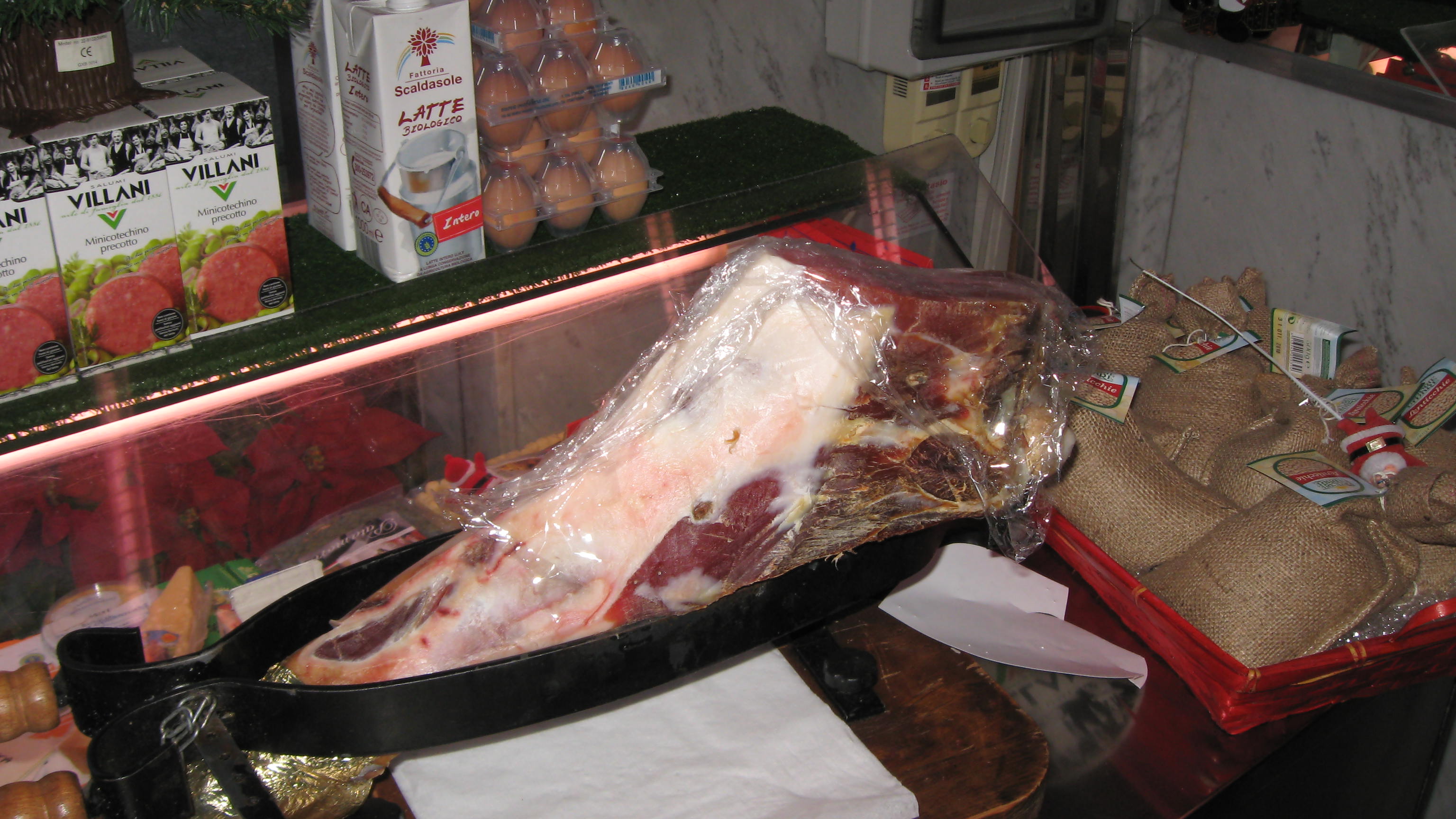
I love it there.  It’s the only place I can think of where amidst carcasses, I feel a sense of comfort.  The older couple who own it do everything with care and friendliness.  While his wife chats with shoppers who are also friends, the grandfatherly proprietor grinds the meat or slices the prosciutto by hand.

Everything he sells is local (or at least from Italy) and/or organic.  No Brazilian beef here.

We’re getting ready for a giant potluck dinner on Christmas day, and I find that I’m the event organizer, against all former inclinations.  I’ve been sending out slews of emails, mixing up cookie dough, entertaining kids in my kitchen while they cut the cookies and wait for them to puff up in the oven, and forgetting essentials at the supermarket.  For all these reasons, and the fact that Jack’s on vacation, my blogging pace has slackened.

Let me just tell you about a snack I like: wheaty long looped breadsticks with hot pepper flakes throughout.

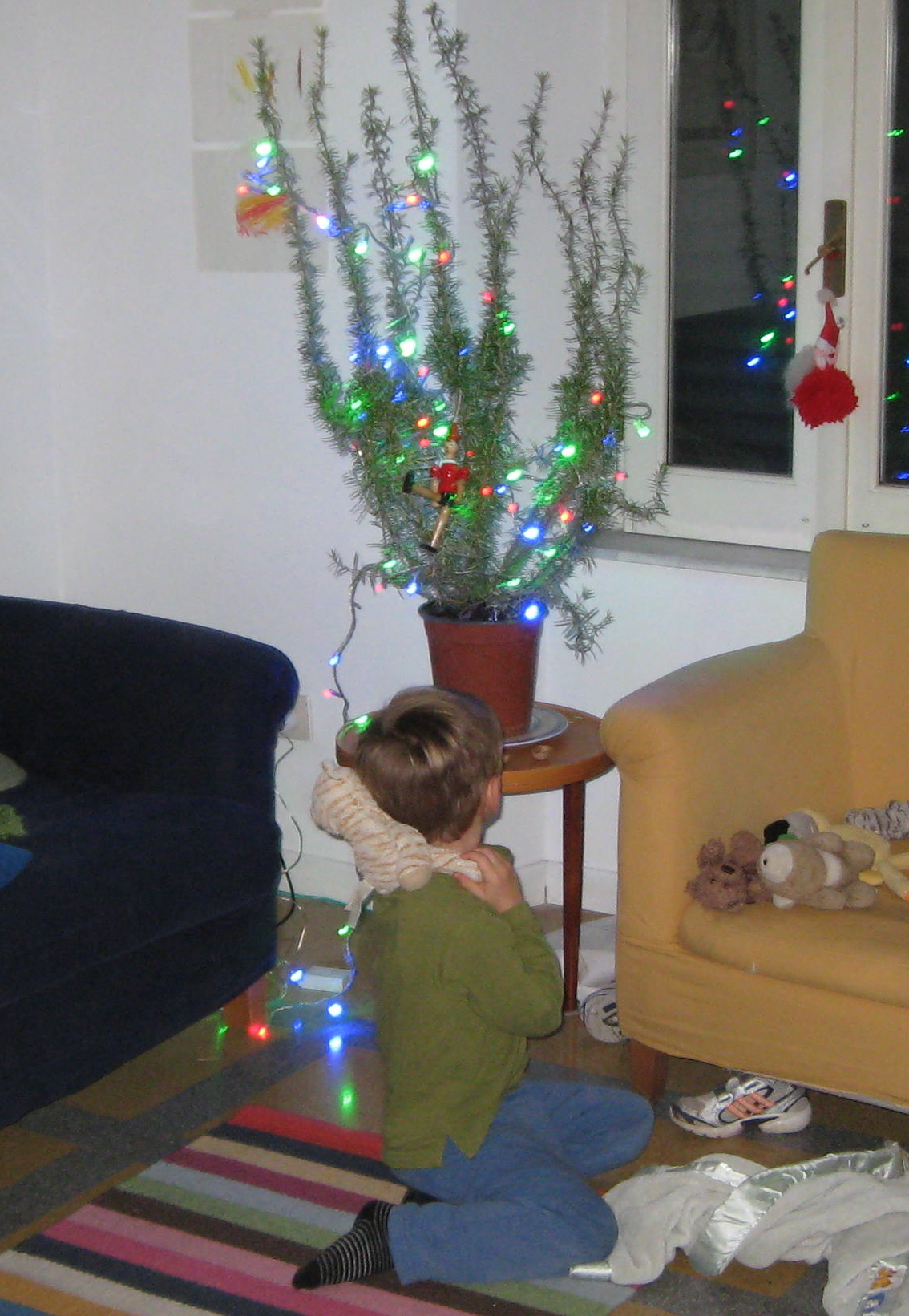
Another thing I’m excited about?  Our Christmas tree, which is a rosemary bush.

Read Full Post »

« Newer Posts - Older Posts »