Feeds:
Posts
Comments

Archive for the ‘Sweet Things’ Category

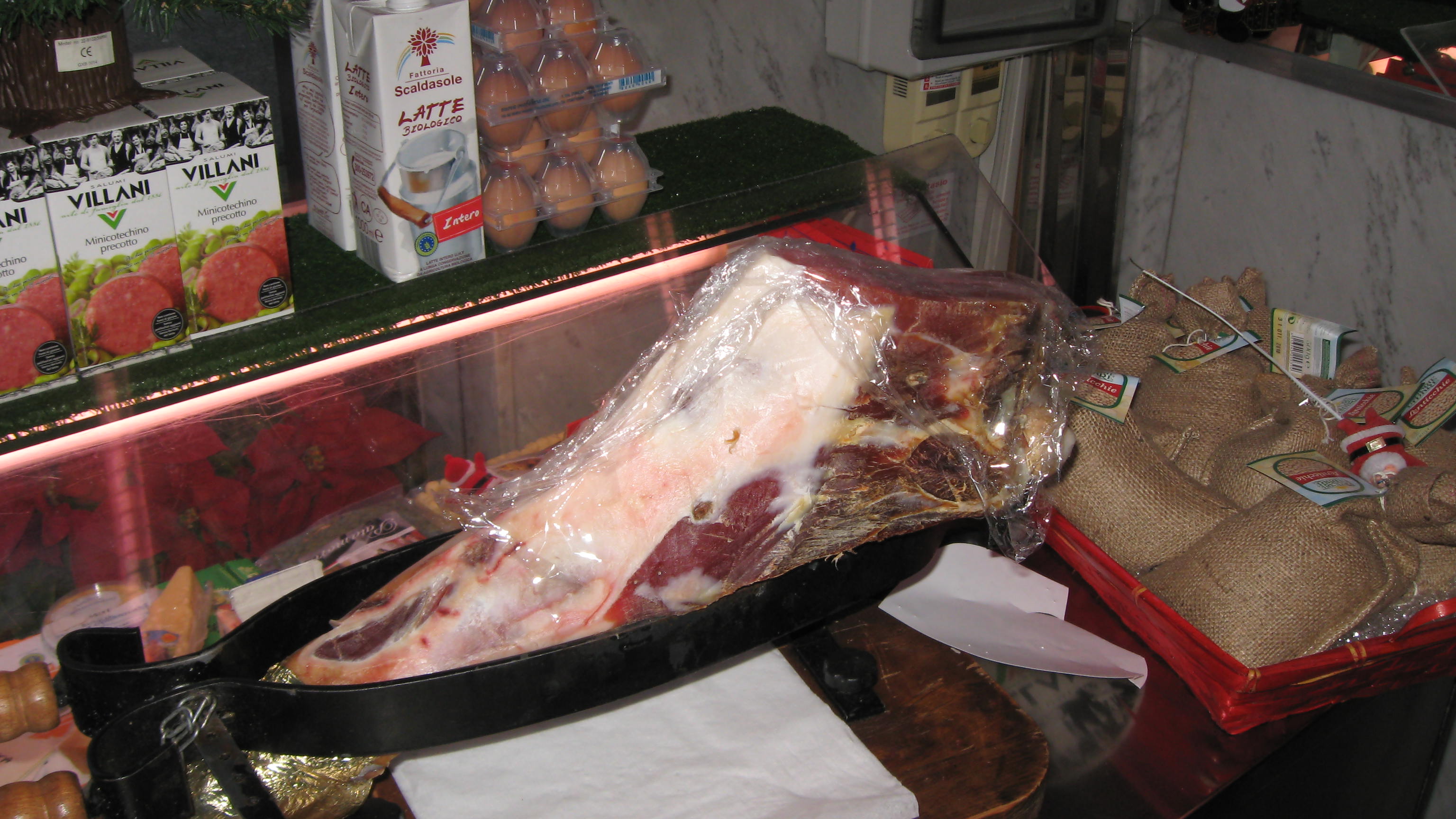
That’s the name of the butcher’s shop where I’ll be buying the chickens for the Christmas potluck.

I love it there.  It’s the only place I can think of where amidst carcasses, I feel a sense of comfort.  The older couple who own it do everything with care and friendliness.  While his wife chats with shoppers who are also friends, the grandfatherly proprietor grinds the meat or slices the prosciutto by hand.

Everything he sells is local (or at least from Italy) and/or organic.  No Brazilian beef here.

We’re getting ready for a giant potluck dinner on Christmas day, and I find that I’m the event organizer, against all former inclinations.  I’ve been sending out slews of emails, mixing up cookie dough, entertaining kids in my kitchen while they cut the cookies and wait for them to puff up in the oven, and forgetting essentials at the supermarket.  For all these reasons, and the fact that Jack’s on vacation, my blogging pace has slackened.

Let me just tell you about a snack I like: wheaty long looped breadsticks with hot pepper flakes throughout.

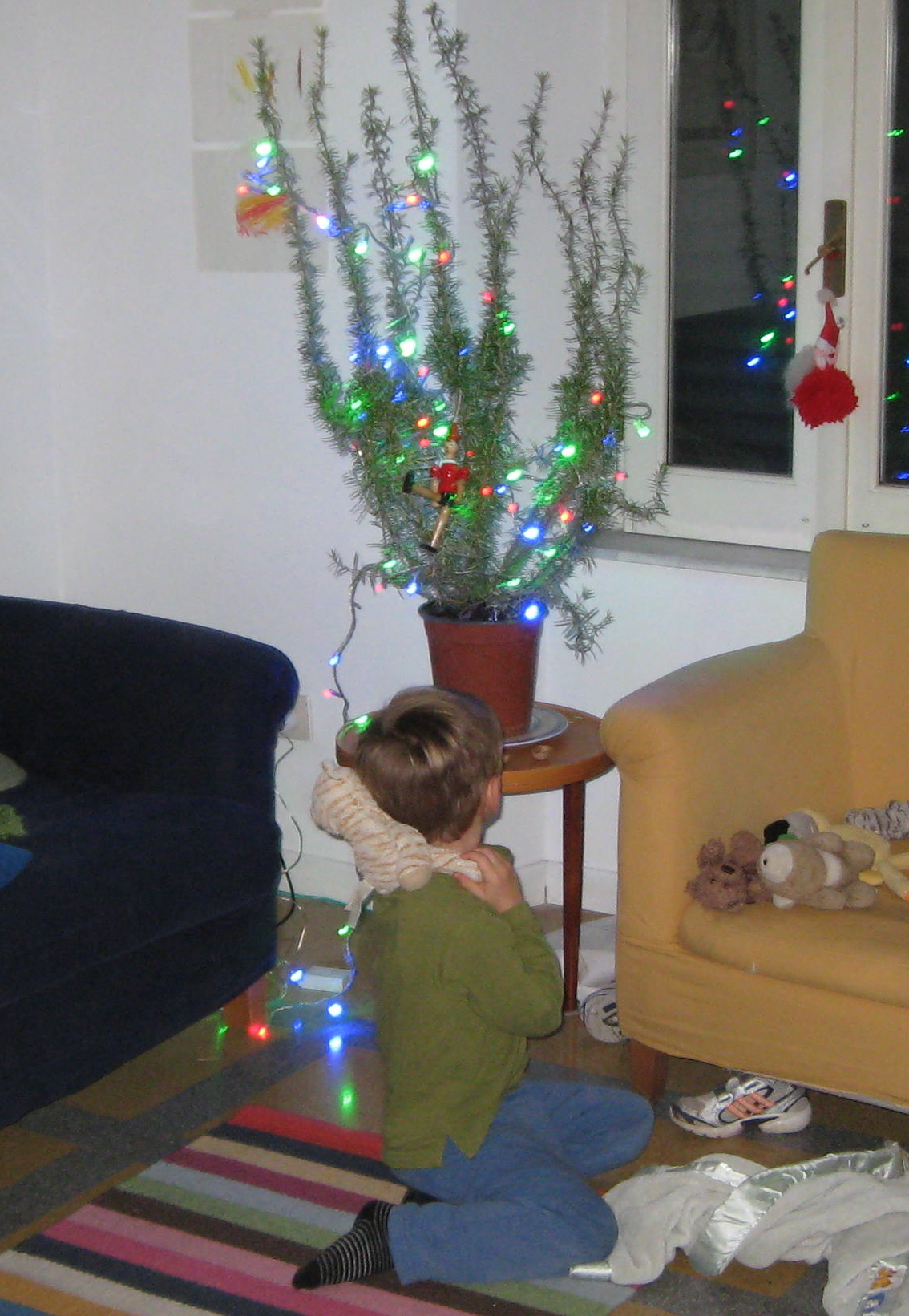
Another thing I’m excited about?  Our Christmas tree, which is a rosemary bush.

Read Full Post »

Last night, the RSFP kitchen did it again.  They had us swooning and stuffing our bellies and calling out for more.  This time, the dish was fish-n-chips.  One of the kitchen interns, Camilla, had been homesick for Scotland and this specialty, so she and the crew fried up a massive amount of fish and potatoes.

She began the meal by suggesting we end with whiskey, and by reciting a Robbie Burns blessing: ”Some hae meat and canna eat, And some wad eat that want it;
But we hae meat, and we can eat, And sae the Lord be thanket.”

Some in this crowd were so happy to eat good fried food, they went around scavenging from plates the kids had abandoned.  There was homemade tartar sauce and homemade ketchup, malt vinegar, and beer.  One friend said, “whatever we have to do to make this meal local and sustainable [the goals of the RSFP], so that we can have it all the time, let’s do it.  Put in a fish pond in the Bass Garden!”

And then, when we thought we couldn’t eat another bite, out came the toffee cake—the most moist decadently delicious burnt butter sweet sugar whipped cream confection imaginable.  (Camilla, will you give me the recipe?)

The couches in the salone soon became the meal recovery center.

Read Full Post »

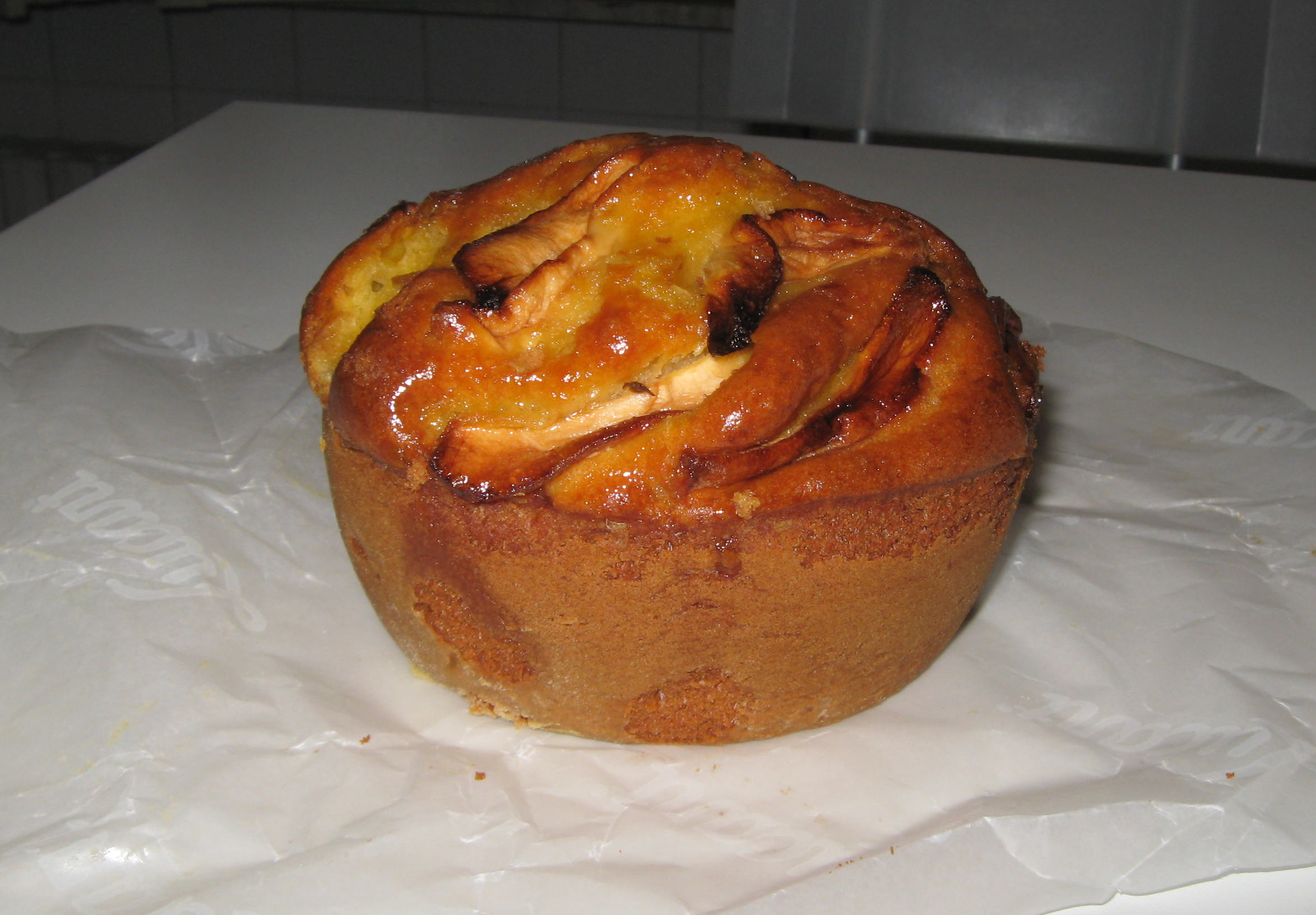
The forecast was for rain for the long Thanksgiving weekend, but each day, we had mist and then sun.  That was a nice turn of events, because we had lots of touring of Rome to do with our visitors.  Yesterday morning, I had to swear to everyone that I didn’t plan it this way, but en route to Piazza Navona and the Pantheon, we ended up walking by both Antica Caciari (where we bought fresh ricotta, fresh pesto, and fresh sausages) and Roscioli, my favorite forno (where we bought fig bread, hearty bread for dinner, and a torta di mele—apple cake—the last of which I’ve been wanting to buy since I first laid eyes on it).

Some other observations…

Sorry, this is gross and unappetizing, but interesting.  Don’t park where the starlings roost:

What would beauty be without shit?

Now, though, let’s turn to beauty.

Lion and pinecone: fierce, lordly, evergreen; pignoli, carne, regeneration, peace, power, teeth, needles, mane, shade.

Giant Bernini-designed river god, at ease in his musculature, reclining in the center of Piazza Navona:

The oculus:

Another, humbler, dome:

Mmmm… so moist and appley.

Read Full Post »

I’ve been thinking about these a lot, lately, because of the work I’ve been doing for Bioversity.  And because of the food I’ve been eating here in Rome.  Farro four times a week? And cauliflower, I have to admit, has been an underutilized species in my household, if not in general—until this fall.

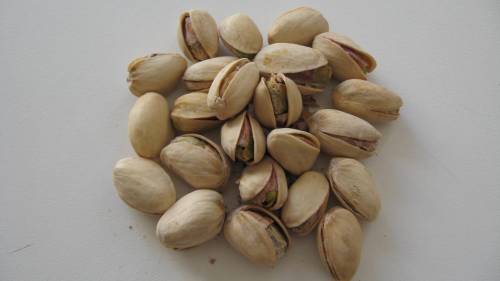
I’ve written about farro, and I’ll write about some others in the future, but right now, I’m thinking about one NUS in particular which I was surprised to see on the list: pistachios (in Italy)!

IMG_2748

What about pistachio gelato?  And those gorgeous green cakes we saw in Venice?

IMG_2500

Most of those pistachios come from Iran.  The word pistachio derives originally from the Aramaic word pistaqa (rendered phonetically), and Iran is still the leader leader in pistachio production and exportation. According to the International Society for Horticultural Science, “in 2003, Iran as the most important pistachio exporter and USA as the second exporter [had] a share of 69% and 8.9% respectively in the world exports.”

Bioversity, an organization in Italy dedicated to researching and educating about agricultural biodiversity, and to revitalizing neglected and underutilized species, led a campaign starting in 1993 to conserve and promote the production of pistachios (and arugula, oregano and hulled wheats) in Italy.  NUS are important as we think about the future of agriculture because of their ability to grow in climates other, perhaps higher yeilding, crops will not—for example the hot, arid climate of southern Italy.

Pistachios are a good source of protein, fat, fiber, vitamin B6 and thiamine.  They also make a delicious snack, especially when salted!

The most pistachioish gelato I’ve ever tasted was made at Il Gelatone in Venice.  Mmm!  I hope the pistachios didn’t come from one of the most repressive regimes in the world….

IMG_2663


Read Full Post »

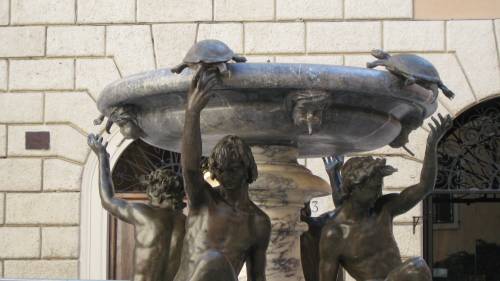
Another winding walk today—this time down the stairs rather than up to the park.  I had a few various goals: to see the turtle fountain Jim Ackerman told us about the other night; to buy some whole-grain flour and some nuts at Canestro; to see some new narrow streets; and, if possible, to find chocolate chips for cookies.

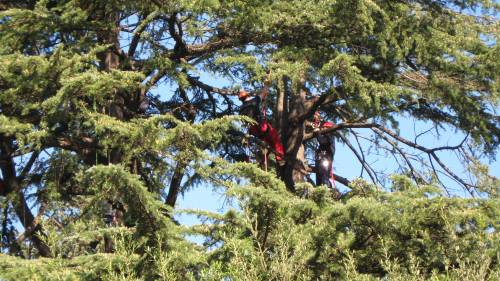
When I stepped out onto Via Angelo Masina, our street, I saw a bunch of men way up high in the trees.  It was a tree-trimming class!  (Later, all fifteen or so of them were packed into the little Academy bar smelling of beer and sweat and sap—quite a different crowd from the usual.)

IMG_2751

I walked the now-familiar route down the two sets of steps to Trastevere, and then across Ponte Garibaldi and off to the right, into the Ghetto.  I found the turtle fountain—a beautiful, delicate image of humans helping animals—or doing something balletic with them, anyway.

IMG_2754


Here was a little, covered-over door.  Why was it made so small?

IMG_2756

There are mysteries here in this city.  Often, there are explanations, but often, those explanations present more mysteries, or at least curiosities.

I never found any chocolate chips—after looking and asking in four stores!

Read Full Post »

Dylan turned five, and Jim turned ninety.  We celebrated with them both.  It was a busy, delicious day filled with tasty tidbits—of both food and conversation.

Dylan and his parents live in a fourth floor walk-up in Trastevere.  Sarah offered me a cafe latte as soon as we arrived, which was welcomed on a blustery morning.  She had clearly been working for hours on the food, which was spread on their square table that sits invitingly in the middle of the open eat-in kitchen.  There were assorted sandwiches for the kids to scarf down, two kinds of chicken salad with greens, a cous cous salad, a hummus platter, sliced cheeses and salumi, crackers, two kinds of cupcakes, and, warming in the oven, pizza rossa (pizza topped with tomato sauce) and lasagna!  The party rolled along at an Italian pace, with people arriving as late as 12:30 for an 11:00 party.  The kids went from sandwiches to cupcakes to chocolates, in between sessions of semi-organized play, and the parents went from coffee and oatmeal cookies to wine and lunch. The crowd was made up of Arcobaleno and ex-pat community friends; most of the parents switched fluently from Italian to English, and the kids played together in a happy bilingual, prelingual, nonsense, and gestural chaos.  I tried to get a picture of the “fishing for chocolate” game, but only captured a bit of the party’s buzz:

IMG_2741

IMG_2743

The rest of the afternoon was down-time for me, but Jack was ready for more socializing, so we invited Lulu up from apartment 1.   She and Jack play together so agreeably.  They played “store,” which involved emptying Jack’s clothing drawers onto the bed and making play money.  They drew and painted pictures of “ghosts eating people.”  They played “boat” in a printer box, and rode up and down the hallway on Jack’s scooter.  We made kettle popcorn, and Lulu told us that her dad is such a kettle corn expert that every kernel is popped.  She also told us it was her mom’s fortieth birthday.  Happy birthday, Anna!

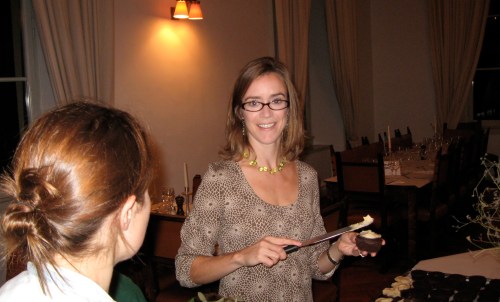
After putting Jack to bed, and leaving him with his kitchen-intern babysitter, Jaimi, we went next door to the Ackermans’ apartment for a birthday dinner party.  What an honor to be Jim and Jill’s guests!  They are the most elegant, lively, curious scholar-artist couple, and they brought together some wonderful company. And Jill, who loves to help out in the Academy kitchen, cooked a fabulous, finger-friendly meal.

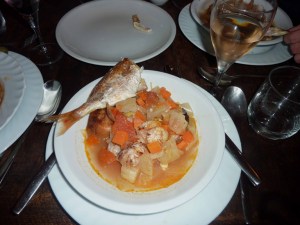
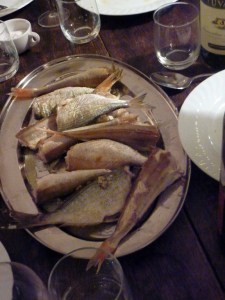
We started with steamed artichokes—it’s high carciofi season here in Rome—dipped in brown butter.  Next, along with Mona’s chestnut bread, Jill served her own fish stew, with a soaked crouton, flavorful aioli, tiny local clams and some small whole-roasted fish to lay on top.  Jeffrey managed to get a good picture of this dish:
-2

-1

After arugula salad, before melon and crostata, and with vin santo, we read aloud some short pieces we’d brought with us to honor Jim—as a friend, historian, Michaelangelo scholar, man, artist or all of these together.  Since the text I read is in the public domain, and was the least personal, I’ll copy it out here.  It’s Lord Byron’s description of seeing and being in St. Peter’s Basilica, from Canto IV of Childe Harold’s Pilgrimage.

Thou movest—but increasing with the advance,
Like climbing some great Alp, which still doth rise,
Deceived by its gigantic elegance;
Vastness which grows—but grows to harmonize—
All musical in its immensities;
Rich marbles—richer painting—shrines where flame
The lamps of gold—and haughty dome which vies
In air with Earth’s chief structures, though their frame
Sits on the firm-set ground—and this the clouds must claim

Thou seest not all; but piecemeal thou must break,
To separate contemplation, the great whole;
And as the ocean many bays will make,
That ask the eye—so here condense thy soul
To more immediate objects, and control
Thy thoughts until thy mind hath got by heart
Its eloquent proportions, and unroll
In mighty graduations, part by part,
The glory which at once upon thee did not dart,

Not by its fault—but thine: Our outward sense
Is but of gradual grasp—and as it is
That what we have of feeling most intense
Outstrips our faint expression; even so this
Outshining and o’erwhelming edifice
Fools our fond gaze, and greatest of the great
Defies at first our Nature’s littleness,
Till, growing with its growth, we thus dilate
Our spirits to the size of that they contemplate.

Childe Harold’s Pilgrimage, Canto IV, stanzas 156-158

Read Full Post »

This was one of our most fun Halloweens, because of the bustling community of kids who live here in 5B, the family ghetto, the building adjacent to the main American Academy building, (where the best unkept secret is that we have the best apartments).  Halloween really started on Friday, before dinner.  The kitchen staff had prepared trays of bat- and ghost-shaped sugar cookies, icing, chocolate cupcakes, and frosting for a big decorating party.  (Knowing the kitchen-witches here, the ingredients were as local as could be.)

IMG_2688


IMG_2694

The cupcakes were so crumbly that they required adult hands, so the Roving Locavore got to work:

IMG_2697

Cheers, Aurelia & Lisa!

IMG_2699

Mid-day on Saturday, Halloween proper, Jack and Lulu got to work on the papier-mache components of their costumes.  Lulu’s parrot head paint was drying, so she helped Jack paint his fireman’s helmet:

IMG_2707

After we returned from Halloween party #1, at Nico’s house at 4:00 (boy, was it a heavy candy-eating day!), the Academy kids paraded and trick-or-treated around the apartments and studios of the Academy building, where the fellows were dressed as witches, death in various forms, Bacchus, a princess, John the Baptist, devil & angel, and a fortune teller.

IMG_2712

the tube is for the milk-bottle O2 tank on Jack's back

IMG_2717


IMG_2719

who knew that Dante had hooked up with a gondoliera?

Later, when the kids were spinning and running and staggering from their sugar overdoses, we had a potluck dinner.  Everyone loved the meatballs, sangria, and the zucca lasagna.  I made a pear-apple-almond crumble with mostly local or at least organic ingredients.

IMG_2725

Read Full Post »

IMG_2239 Italy’s Parliament voted unanimously this summer to recommend that UNESCO list the Mediterranean diet as endangered, so that it might be protected and preserved as a part of cultural heritage.IMG_2499

I’m interested in this public declaration, in part, for its semantic implications.  Can a diet be treated as an aesthetic or religious object, or as a plant or animal species?  In fact, the Mediterranean diet is all of these things.  Italians are rightly proud of their food, and of their heritage. Diet here is interwoven with cultural practice, with religious ritual, with craft and design, and with plant and animal species that have an intimate connection with both the geography and the history of Italy’s distinct regions.

IMG_2502

Of course, the natives of this boot-shaped land could describe the complex set of cultural practices that is the Mediterranean diet better than I, an outsider, and a barbarian American, could.  But I’ll offer a few arguments, anyway, in favor of designating this diet an endangered piece of cultural heritage.

The Mediterranean diet is interwoven with national and regional identity.  This goes deeper than the kind of identity declared by small towns with billboards at their borders declaring them the pistachio capital of the world.  It’s an identity that has less to do with marketing, and more to do with the deep emotional ties of childhood memories, in which food and family are tightly woven together.  Particular foods and foodways are tied to family traditions, religious rituals, and to regionally specific cooking styles.

When I was at the Bioversity offices yesterday, I met one of the senior scientists there, a man named Stefano, whose work as a scientist and educator about agricultural biodiversity perfectly aligns with his passion for food and food memories.  In our brief conversation, he gave me many examples of the Mediterranean diet as cultural heritage and as endangered.  When he was a child, he said, the whole neighborhood would get together in someone’s garage to peel, cook, and bottle tomatoes for use as sauce.  While he was living in Africa, his homesickness took the form of a craving for the comforts of pasta. His mother and sister write down the recipes and menus of family meals; these recipes are their family scrapbooks and triggers to memory.  One of these recipes is for a stew containing 57 varieties of wild leafy green.  (Surely this recipe and the knowledge of how to find, much less cook, 57 varieties of wild green are endangered!)  Another recipe is for quince jelly.  How many quince orchards have you seen lately?

These foods and practices—this cultural heritage—is endangered for several related reasons: the globalization of simplified diets based on cheap, and less nutritious, commodity crops; the lure, or necessity, of convenience foods for working mothers who don’t have the time or inclination to hunt out 57 varieties of wild green; the encroachment of fast food into the diets of children; the loss of food and cooking knowledge through the generations.  One of the terrible consequences of the loss of food practices is that the actual foods can be lost as well.  Many of the crops that have sustained peoples all over the world for millenia fall under the new designation of “neglected and underutilized species.”   This is how food as a cultural and aesthetic practice shades into an endangered species.

Another, no less important, reason to preserve the Mediterranean diet is that it works.  People have thrived, and not been prone to cardiovascular disease or obesity and its consequences, on this diet for many generations.  This is because of the intrinsic nutritional value of the foods themselves, and it is also because of the set of cultural rules that guide eating.  The people here eat small portions, a variety of vegetables, whole grains, fish, and cheese, meat, and wine in moderation.  No cappuccino after lunch, no hard liquor before dinner or gelato in the morning… the list goes on.  And dessert is often fresh fruit.

Read Full Post »
IMG_2437

Going to Venice for a long weekend is like being transported to a different realm.  In this immersed city, we immersed ourselves in grand-scale Renaissance art, long winding walks, gelato, spritz (Amaro—a bittersweet red liqueur—and prosecco), and seafood.  What everyone says about the acoustics stands out as a strong sense memory: without the sound of cars, the ear hears the click of heels on stone, voices talking, murmuring, laughing, and the soft splash of water against stone and brick.  True, there are motor boats, but their rumble is nothing after the roar of Roman traffic.

We ate well.  Oh, yes we did.

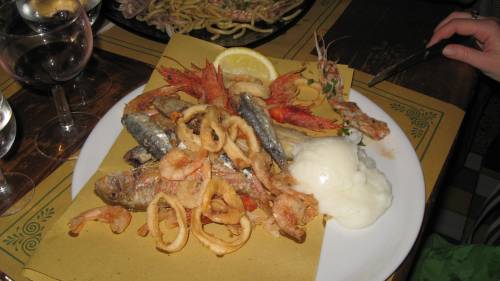
On the first night, we turned the corner from the little alley where we were renting an apartment (with 5 others from the American Academy), and happened upon Paradiso Perdito, a wonderfully unlost paradise of seafood, pasta, off-beat music, and attractive diners and servers both young and old.  Here’s a sampling of that meal.

IMG_2489

antipasti

IMG_2491

vino di casa pump

IMG_2492

frito misto

IMG_2493

amazingly flavorful garlicky pasta with a never seen before crustacean

IMG_2494

squid ink pasta

IMG_2496

Jack fell asleep on my lap.

IMG_2497

IMG_2499

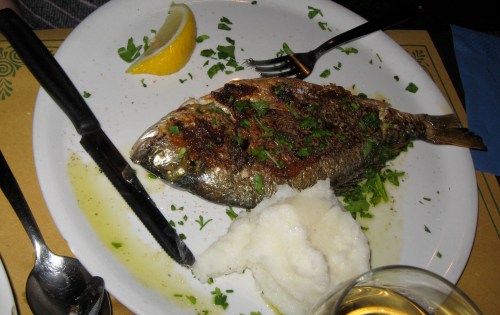
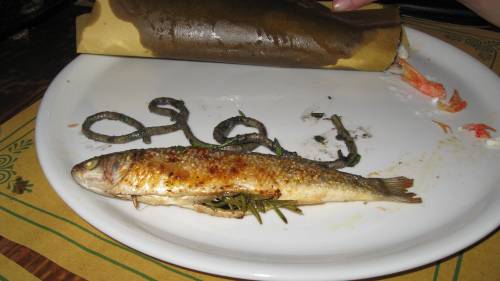
see the rosemary sprig?

IMG_2498

nicely boned

Other highlights: The dolci, which we all agreed were better than any in Rome.

IMG_2500

how many pistachios are in this torta?

This place especially, which Lisa discovered at 7:30 one morning, by following the aroma of buttery baking, had the most amazing almond croissants we’ve ever had.  They weren’t overly sweet and flabby like so many, but were improbably both dense and flaky, and were almost savory in their delicate sweetness.

IMG_2590

IMG_2595

IMG_2588

bread turtle?

I didn’t actually take any photos of anyone eating gelato, because I always had a drippy cone of my own to control, usually with some combination of fruity and nutty.  My favorite duo: cherry and hazelnut.  Jack’s favorite: strawberry and cherry.  But this is the place to get it:

IMG_2663

We happened upon this graffito, which to me says, “Is this a gelato I see before me?”

IMG_2614

We also saw lots and lots of art.  Jack was inspired to do some painting, and then ran off to chase pigeons.

IMG_2566

We took one gondola ride, but it only went across the Grand Canal, took two minutes, and cost 50 cents.  Still, it seemed to make everyone happy.

IMG_2618

IMG_2619

IMG_2623

Susanna & Stephen

IMG_2622

Peter

Our last meal was at the Anice Stellato—the Star Anise—and it was a meal to remember.  I wasn’t so good at photographing every plate, but my favorite dish was a lamb tenderloin rolled in crushed pistachios.  Oh, my….  The wine, a local carmenere blend, and an antipasto plate called sarde in saor, with sardines, polenta, and pickled onions, also stood out.

IMG_2672

IMG_2673

IMG_2674

Jack enjoyed hanging with the grown-ups.  And I think they liked his company too.

IMG_2669

Aurelia, Jack, Richard, me

(For more photos, check out my Flickr page.)

Read Full Post »

Tomorrow morning, transit workers are striking across Italy, but we have 9:50 tickets to Venice.  Word on the street is that we’ll be fine.  Eight of us from the Academy are renting an apartment for the weekend.  I won’t be bringing my computer, and will probably not be blogging.  But not to worry!  I’ll be keeping a food diary—and not one in the style of a dieter.

Other tidbits of interest?  I just cooked a simple dinner for myself and Jack made of mostly local things purchased around the neighborhood.  I sauteed peppers, onion, rosemary, and proscuitto.  I scrambled local organic eggs.  We ate warm pizza bianca from Panificio Beti.  I like that they put coarse salt on top. I opened some Lazio wine, but it was corked.

For dessert, Jack ate Greek yogurt with honey, and I ate a ciambellina vino rosso.

ciamb

I also started working on a new project today, as a volunteer for the Diversity for Life campaign.  In order to promote knowledge of the importance of agricultural biodiversity for the health of people, cultures, and the planet, they are launching an oral history project in Kenya and Italy this year.  (Other places will follow.)  For these oral history archives, school children will record interviews with their grandparents about what foods they used to grow, cook, and eat.  The aims are to foster an interest in old food traditions and in the foods themselves, to help the kind of agricultural biodiversity that’s been almost lost to monocultures and convenience food continue to thrive, and to encourage a reliance on varied diets which are more nutritious and can be grown in ways that are healthier for the planet.  I’ll be writing the pamphlet that will be distributed to school children in rural and urban Kenya, and which explains the project and the value of maintaining both agricultural biodiversity and continuity in the regional culture as it relates to food.  A lot of American school children could benefit from a similar campaign!

This weekend, though, I’ll be walking around beautiful Venice, taking notes about a very different kind of food culture.

Ciao!

Read Full Post »

« Newer Posts - Older Posts »